Notice: تابع WP_Block_Type_Registry::register به طورنادرست فراخوانی شد. نامهای نوع بلوک نباید حروف بزرگ داشته باشند. لطفاً برای اطلاعات بیشتر، اشکال زدایی در وردپرس را مشاهده کنید. (این پیام در نگارش 5.0.0 افزوده شده است.) in /home/ethicsho/public_html/wp-includes/functions.php on line 5313
Warning: Use of undefined constant TDC_PATH_LEGACY - assumed 'TDC_PATH_LEGACY' (this will throw an Error in a future version of PHP) in /home/ethicsho/public_html/wp-content/plugins/td-composer/td-composer.php on line 109
Warning: Use of undefined constant TDSP_THEME_PATH - assumed 'TDSP_THEME_PATH' (this will throw an Error in a future version of PHP) in /home/ethicsho/public_html/wp-content/plugins/td-composer/td-composer.php on line 113 بایگانیهای Self-actualization (Psychology) - Congresses - خانه اخلاق پژوهان جوان Notice: Trying to access array offset on value of type bool in /home/ethicsho/public_html/wp-content/plugins/wp-ulike/inc/general-functions.php on line 807
Sir Anthony Kenny here continues his fascinating account of the history of philosophy, focusing on the thousand-year-long medieval period. This is the second volume of a four-book set in which Kenny will unfold a magisterial new history of Western philosophy, the first major single-author history of philosophy to appear in decades. In this volume, Kenny takes us on a fascinating tour through more than a millennium of thought from 400 AD onwards, charting the story of philosophy from the founders of Christian and Islamic thought through to the Renaissance. The Middle Ages saw a great flourishing of philosophy, and the intellectual endeavor of the era reaches its climax in the thirteenth and fourteenth centuries, with the systems of the great schoolmen such as Thomas Aquinas and John Duns Scotus. With Kenny as guide, we see these major philosophers through the eyes of a man who has spent a lifetime contemplating their work. Thus we do not simply get an overview of philosophy, but also a penetrating and insightful critique of it. Kenny offers an illuminating account of various thinkers and schools of thought, from Augustine to Maimonides and from Grosseteste to Pomponazzi. And he offers much insight into medieval thinking about logic and language, knowledge, physics, metaphysics, the mind, the soul, and God. Vividly written, but serious and deep enough to offer a genuine understanding of the great philosophers, Kenny’s lucid and stimulating history will become the definitive work for anyone interested in the people and ideas that shaped the course of Western thought.
This book is an expanded and revised edition of the author’s critically acclaimed volume Nuts and Bolts for the Social Sciences. In twenty-six succinct chapters, Jon Elster provides an account of the nature of explanation in the social sciences. He offers an overview of key explanatory mechanisms in the social sciences, relying on hundreds of examples and drawing on a large variety of sources-psychology, behavioral economics, biology, political science, historical writings, philosophy and fiction. Written in accessible and jargon-free language, Elster aims at accuracy and clarity while eschewing formal models.
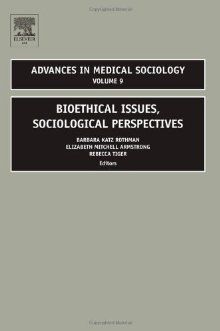
Book Summary of Bioethical Issues, Sociological PerspectivesThis volume deals with the topic of health inequalities and health disparities. The volume is divided into five sections. The first section includes an introductory look at the issue of health care inequalities and disparities and also an introduction to the volume. One of the backdrops to this topic in the United States was The National Healthcare Disparities Report and its focus on the ability of Americans to access health care and variation in the quality of care. Disparities related to socioeconomic status were included, as were disparities linked to race and ethnicity and the report also tried to explore the relationship between race/ethnicity and socioeconomic position, as explained in more detail in the first article in the book. The second article discusses a newer overall approach to issues related to health inequalities and health disparities.The remaining four sections of the book address more specific topics relating to inequalities and disparities. The second section examines racial and ethnic inequalities and disparities. The third section includes articles that address the issue from the perspective of research about health care providers and health care facilities. The last two sections of the book focus on consumers and topics of health care disparities, with Section 4 focused on issues related to substance abuse, mental health and related concerns. Section 5 includes articles looking at issues of vulnerable women, women with breast cancer and people with colorectal cancer.Inequalities and Disparities in Health Care and Health is important reading for medical sociologists and people working in other social science disciplines studying health-related issues. The volume also provides vital information for health services researchers, policy analysts and public health researchers..
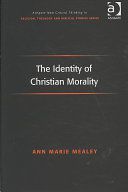
This book argues that moral theology has yet to embrace the recommendations of the Second Vatican Council concerning the ways in which moral theology is to be renewed. There is little or no consensus between theologians regarding the nature, content and uniqueness of Christian morality. After highlighting the strengths and weaknesses of the so-called autonomy and faith ethic schools of thought, Mealey argues that there is little dividing them and that, in some instances, both schools are simply defending one aspect of a hermeneutical dialectic.In an attempt to move away from the divisions between proponents of the faith-ethic and autonomy positions, Mealey enlists the help of the hermeneutical theory of Paul Ricoeur, arguing that the debate on the uniqueness of Christian morality can be mediated if scholars look to the possibilities opened up by Ricoeur’s hermeneutics of interpretation. Mealey also argues that the uniqueness of Christian morality is more adequately explained in terms of a specific identity (self) that is constantly subject to change and revision in light of many, often conflicting, moral sources. She advocates a move away from attempts to explain the uniqueness of Christian morality in terms of one specific, unchanging context, motivation, norm or divine command or value. By embracing the possibilities opened up by Ricoeurian hermeneutics, Mealey explains how concepts such as revelation, tradition, orthodoxy and moral conscience may be understood in a hermeneutical way without being deemed sectarian or unorthodox.
ما از اخلاق چه انتظاری داریم؟ این سوال شاید تاحدودی برای عموم مردم و یا متخصصان این رشته قابل پاسخ باشد؛ اینکه خوب بودن را به ما بیاموزد و در تنظیم روابط فردی م...

جشن کتاب تهران به ایستگاه سی و یکم رسیده است. حال و احوال نشر کتاب خوب نیست و باید فرهنگدوستان را به خرید و هدیه دادن کتاب ترغیب نمود. خانه اخلاقپژوهان جوان ب...

بنیاد کتابهای اخلاق اسلامی عمدتا پالایش جان از آلودگیها و آراستن آن به زیباییها است. اندیشه محوری این قبیل کتابها آن است که انسان فعلی آنی نیست که باید باشد...

-
0 Comments