Notice: تابع WP_Block_Type_Registry::register به طورنادرست فراخوانی شد. نامهای نوع بلوک نباید حروف بزرگ داشته باشند. لطفاً برای اطلاعات بیشتر، اشکال زدایی در وردپرس را مشاهده کنید. (این پیام در نگارش 5.0.0 افزوده شده است.) in /home/ethicsho/public_html/wp-includes/functions.php on line 5313
Warning: Use of undefined constant TDC_PATH_LEGACY - assumed 'TDC_PATH_LEGACY' (this will throw an Error in a future version of PHP) in /home/ethicsho/public_html/wp-content/plugins/td-composer/td-composer.php on line 109
Warning: Use of undefined constant TDSP_THEME_PATH - assumed 'TDSP_THEME_PATH' (this will throw an Error in a future version of PHP) in /home/ethicsho/public_html/wp-content/plugins/td-composer/td-composer.php on line 113 بایگانیهای Sales Promotion - خانه اخلاق پژوهان جوان Notice: Trying to access array offset on value of type bool in /home/ethicsho/public_html/wp-content/plugins/wp-ulike/inc/general-functions.php on line 807
Normativity and the Will collects fourteen important papers on moral psychology and practical reason by R. Jay Wallace, one of the leading philosophers currently working in these areas. The papers explore the interpenetration of normative and psychological issues in a series of debates that lie at the heart of moral philosophy. Themes that are addressed include reason, desire, and the will; responsibility, identification, and emotion; and the relation between morality and other normative domains. Wallace’s treatments of these topics are at once sophisticated and engaging. Taken together, they constitute an advertisement for a distinctive way of pursuing issues in moral psychology and the theory of practical reason, and they articulate and defend a unified framework for thinking about those issues. The volume also features a helpful new introduction.
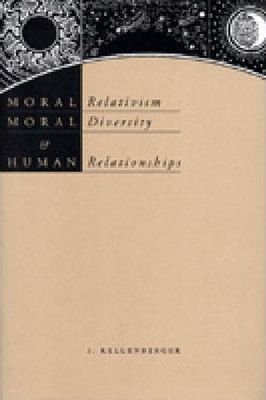
“Kellenberger’s book is thoughtful, evocative, well researched, and informative. He has managed to pull together a notable range of examples to illustrate his thesis that a proper understanding of person-person relationships can untangle differences between relativists and antirelativists…. Examples include abortion, marital Fidelity, the distribution of justice, famine relief, genital mutilation–all sensitive to such non-Western cultures as tribal Africa, Buddhism, and Hinduism….This book should find its place in many courses in ethics, philosophy of social science, cultural theory, and other courses concerned with multicultural themes.”
This volume is the first English-language book-length text to trace the development of bioethics in the Ibero-American context. Coverage is given to many particular countries within Latin America with an aim to present the historical development of bioethics therein. This history takes place against the backdrop of a tumultuous period of time in the history of Latin America. The volume also discusses the relationship of bioethics in Latin America to questions and issues in Roman Catholic moral theology and philosophy. Moreover, it specifically touches on how these issues affect women in the region.”Ibero-American Bioethics: History and Perspectives” is a landmark work, collecting the voices of those who participated in the founding and development of bioethics in Latin America, the Caribbean, and the Iberian Peninsula. The volume offers the reader a cluster of perspectives on the various births of bioethics in this region. The essays in part are irreplaceable first-person voices that give an account of how bioethics took shape within the Spanish and Portuguese cultures both in Europe and in the Americas. As such, the volume is a collection of primary sources, otherwise not available in English, that presents historical panoramas and explores the new perspectives born of the different phases of bioethics in Ibero-America – from its assimilation of bioethics to its creation of its own authentic voices. The volume also encompasses critical reflections from this region on the quite different ways in which its local bioethics have taken shape. As such, this volume also offers an introduction into the quite different concerns that frame and direct bioethics in the cultural context of Ibero-America.The book gives a rich, deep, broad, and pluralist presentation of Ibero-American bioethics and its contribution to the international phenomenon of bioethics. It is a volume for all readers interested in bioethics, Ibero-American studies, and international approaches to health care policy.
Introduction.Part I: Philosophy of Language.1. On Sense and Reference. (Gottlob Frege).2. Thought. (Gottlob Frege).3. On Denoting. (Bertrand Russell).4. On Referring. (P. F. Strawson).5. Meaning. (H. P. Grice).6. Truth and Meaning. (Donald Davidson).7. Identity and Necessity. (Saul Kripke).8. Meaning and Reference. (Hilary Putnam).Further Reading in Philosophy of Language.Part II: Metaphysics.9. On the Relations of Universals and Particulars. (Bertrand Russell).10. From the Tractatus Logico-Philosophicus. (Ludwig Wittgenstein).11. Particular and General. (P. F. Strawson).12. On What There Is. (W. V. Quine).13. The Identity of Indiscernibles. (Max Black).Further Reading in Metaphysics.Part III: Epistemology.14. Four Forms of Skepticism. (G. E. Moore).15. From On Certainty. (Ludwig Wittgenstein).16. Knowledge by Acquaintance and Knowledge by Description. (Bertrand Russell).17. The Problem of the Criterion. (Roderick Chisholm).18. Is Knowledge Justified True Belief? (Edmund Gettier).19. Aspects of Scientific Explanation. (Carl Hempel).20. The New Riddle of Induction. (Nelson Goodman).21. Epistemology Naturalized. (W. V. Quine).Further Reading in Epistemology.Part IV: Philosophy of Mind.22. The Nature of Mind. (David Armstrong).23. The Nature of Mental States. (Hilary Putnam).24. Mental Events. (Donald Davidson).25. What is it Like to Be a Bat? (Thomas Nagel).26. Mad Pain and Martian Pain. (David Lewis).27. Can Computers Think? (John Searle).Further Reading in Philosophy of Mind.Part V: Freedom and Personal Identity.28. The Conceivability of Mechanism. (Norman Malcolm).29. Freedom and Resentment. (P. F. Strawson).30. Human Freedom and the Self. (Roderick Chisholm).31. The Self and the Future. (Bernard Williams).32. Action, Reasons, and Causes. (Donald Davidson).Further Reading in Freedom and Personal Identity.Part VI: Ethics.33. The Subject Matter of Ethics. (G. E. Moore).34. The Emotive Meaning of Ethical Terms. (C. L. Stevenson).35. Justice as Fairness. (John Rawls).36. Modern Moral Philosophy. (G. E. M. Anscombe).37. Morality as a System of Hypothetical Imperatives. (Philippa Foot).Further Reading in Ethics.Part VII: Methodology.38. The Notion of Analysis in Moore’s Philosophy. (C. H. Langford).39. Reply to Langford. (G. E. Moore).40. The Elimination of Metaphysics. (A. J. Ayer).41. Empiricism, Semantics, and Ontology. (Rudolf Carnap).42. A Plea for Excuses. (J. L. Austin).43. Two Dogmas of Empiricism. (W. V. Quine).44. In Defense of a Dogma. (H. P. Grice and P. F. Strawson.45. Philosophy and the Scientific Image of Man. (Wilfrid Sellars).46. From The Blue and the Brown Books. (Ludwig Wittgenstein).Further Reading in Methodology.Index.
ما از اخلاق چه انتظاری داریم؟ این سوال شاید تاحدودی برای عموم مردم و یا متخصصان این رشته قابل پاسخ باشد؛ اینکه خوب بودن را به ما بیاموزد و در تنظیم روابط فردی م...

جشن کتاب تهران به ایستگاه سی و یکم رسیده است. حال و احوال نشر کتاب خوب نیست و باید فرهنگدوستان را به خرید و هدیه دادن کتاب ترغیب نمود. خانه اخلاقپژوهان جوان ب...

بنیاد کتابهای اخلاق اسلامی عمدتا پالایش جان از آلودگیها و آراستن آن به زیباییها است. اندیشه محوری این قبیل کتابها آن است که انسان فعلی آنی نیست که باید باشد...

-
0 Comments