Notice: تابع WP_Block_Type_Registry::register به طورنادرست فراخوانی شد. نامهای نوع بلوک نباید حروف بزرگ داشته باشند. لطفاً برای اطلاعات بیشتر، اشکال زدایی در وردپرس را مشاهده کنید. (این پیام در نگارش 5.0.0 افزوده شده است.) in /home/ethicsho/public_html/wp-includes/functions.php on line 5313
Warning: Use of undefined constant TDC_PATH_LEGACY - assumed 'TDC_PATH_LEGACY' (this will throw an Error in a future version of PHP) in /home/ethicsho/public_html/wp-content/plugins/td-composer/td-composer.php on line 109
Warning: Use of undefined constant TDSP_THEME_PATH - assumed 'TDSP_THEME_PATH' (this will throw an Error in a future version of PHP) in /home/ethicsho/public_html/wp-content/plugins/td-composer/td-composer.php on line 113 بایگانیهای Religious Life - Buddhism - خانه اخلاق پژوهان جوان Notice: Trying to access array offset on value of type bool in /home/ethicsho/public_html/wp-content/plugins/wp-ulike/inc/general-functions.php on line 807
Susan K. Sell s book shows how power in international politics is increasingly exercised by private interests rather than governments. In 1994 the WTO adopted the Agreement on Trade-Related Aspects of Intellectual Property Rights (TRIPS), which dictated to states how they should regulate the protection of intellectual property. This book argues that TRIPS resulted from lobbying by twelve powerful CEOs of multinational corporations who wished to mould international law to protect their markets. This book examines the politics leading up to TRIPS, the first seven years of its implementation, and the political backlash against TRIPS in the face of the HIV/AIDS crisis. Focusing on global capitalism, ideas, and economic coercion, this work explains the politics behind TRIPS and the controversies created in its wake. It is a fascinating study of the influence of private interests in government decision-making, and in the shaping of the global economy.
Examining the emergence and development of legal positivism as a distinctive and particularly powerful tradition in legal thought, this book places particular emphasis on its relationship to traditional understandings of the common law and on forms of idealism. The focus throughout is on the consequences positivism holds for the idea of the rule of law and of law’s role in maintaining (and perhaps creating) conditions of stable social order. The book examines the shifts in thinking about the rule of law and the wider significance of law, brought about by changing conceptions of the nature of law: from an understanding of law in which the primary focus is on rights, to an articulation of the legal order as a body of deliberately posited rules and, finally, to an understanding of law as a corpus of systematic rules and principles, underpinned by an abiding concern with individual rights.
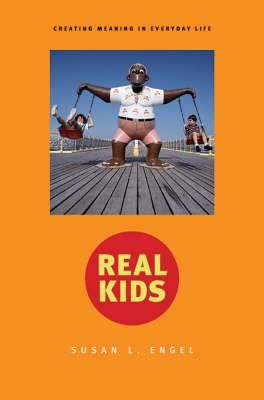
Decades of work in psychology labs have vastly enhanced our knowledge about how children perceive, think, and reason. But it has also encouraged a distorted view of children, argues psychologist Susan Engel in this provocative and passionate book–a view that has affected every parent who has tried to debate with a six-year-old. By focusing on the thinking processes prized by adults, too many expert opinions have rendered children as little adults. What has been lost is what is truly unique and mysterious–the childlike quality of a child’s mind. Engel draws on keen observations and descriptive research to take us into the nearly forgotten, untidy, phantasmagorical world of children’s inner lives. She reminds us that children fuse thought and emotion, play and reality; they swing wildly between different ways of interpreting and acting in the world. But just as a gawky child may grow into a beauty, illogical and sometimes maddening childishness can foreshadow great adult ability. Engel argues that the “scientist in a crib” view encourages parents and teachers to expect more logical reasoning and emotional self-control from children than they possess. She provides a concise and valuable overview of what modern developmental psychologists have learned about children’s developing powers of perception and capacity for reasoning, but also suggests new ways of studying children that better capture the truth about their young minds.
This volume was written in response to the Food and Agriculture Organization (FAO) Series of Ethics Papers that broached a series of previously neglected issues in international agricultural development. The volume contains a diverse collection of highly respected international scholars offer comments and elaboration on the FAO papers on the ethics of agricultural intensification and on intensification in animal agriculture. The full text of the FAO intensification paper is followed by chapters that mount specific reactions to its relevance for agricultural technology, environmental protection, globalization and animal welfare, and these four topics are further discussed, debated and elaborated by eight commentary chapters. Questions of agricultural development policy are addressed in terms of the relevance to farmers, consumers and other interested parties, as well as from key disciplinary and philosophical approaches. The rationale and purpose behind the FAO papers is explained and suggestions are offered on how to make ethics more central to programming and planning for agricultural development projects.
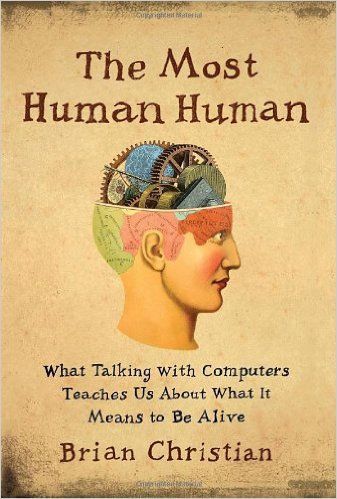
For the first time in history, we are interacting with computer programmes so sophisticated that we think they’re human beings . . .This is a remarkable feat of human ingenuity, but what does it say about our humanity? Are we really no better at being human than the machines we’ve created? In this brilliantly witty and inspiring investigation, Brian Christian explores first-hand the urgent moral and practical implications of this remarkable development. Drawing on science, philosophy, literature and the arts, and touching on aspects of life as diverse as language, work, school, chess, speed-dating, art, video games, psychiatry and the law, The Most Human Human shows that far from being a threat to our humanity, computers provide a better means than ever before of understanding what it is.In this book, you will discover . . . Why computers can fly planes but can’t ride bikes How Deep Blue beat Gary Kasparov but why it didn’t count Why arguments have in common with amnesia Why speaking to a computer is like a bad date What life is all about and how to live it better’A lively personable read and an empowering affirmation of our species.’ 4* Time Out ‘A fast-paced, witty and thoroughly winning style . . . fabulous.’ Publishers Weekly’An eye-opening inquest.’ David Eagleman, author’Strange, fertile and sometimes beautiful.’ Matthew Crawford, author
ما از اخلاق چه انتظاری داریم؟ این سوال شاید تاحدودی برای عموم مردم و یا متخصصان این رشته قابل پاسخ باشد؛ اینکه خوب بودن را به ما بیاموزد و در تنظیم روابط فردی م...

جشن کتاب تهران به ایستگاه سی و یکم رسیده است. حال و احوال نشر کتاب خوب نیست و باید فرهنگدوستان را به خرید و هدیه دادن کتاب ترغیب نمود. خانه اخلاقپژوهان جوان ب...

بنیاد کتابهای اخلاق اسلامی عمدتا پالایش جان از آلودگیها و آراستن آن به زیباییها است. اندیشه محوری این قبیل کتابها آن است که انسان فعلی آنی نیست که باید باشد...

-
0 Comments