
Notice: تابع WP_Block_Type_Registry::register به طورنادرست فراخوانی شد. نامهای نوع بلوک نباید حروف بزرگ داشته باشند. لطفاً برای اطلاعات بیشتر، اشکال زدایی در وردپرس را مشاهده کنید. (این پیام در نگارش 5.0.0 افزوده شده است.) in /home/ethicsho/public_html/wp-includes/functions.php on line 5313
Warning: Use of undefined constant TDC_PATH_LEGACY - assumed 'TDC_PATH_LEGACY' (this will throw an Error in a future version of PHP) in /home/ethicsho/public_html/wp-content/plugins/td-composer/td-composer.php on line 109
Warning: Use of undefined constant TDSP_THEME_PATH - assumed 'TDSP_THEME_PATH' (this will throw an Error in a future version of PHP) in /home/ethicsho/public_html/wp-content/plugins/td-composer/td-composer.php on line 113 بایگانیهای Religious Ethics - خانه اخلاق پژوهان جوان Notice: Trying to access array offset on value of type bool in /home/ethicsho/public_html/wp-content/plugins/wp-ulike/inc/general-functions.php on line 807
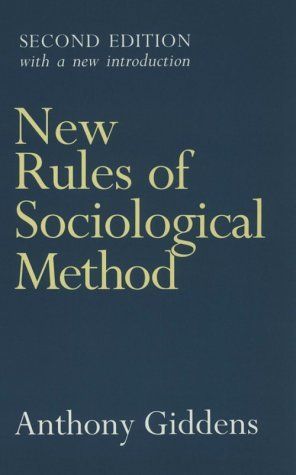
This new edition of a standard work—used as a text throughout the world—has been thoroughly re-edited and revised. In it Giddens tells how he believes social theory should be constructed and conducted and offers a critique of schools of social thought that continues to occupy a place in contemporary debates.
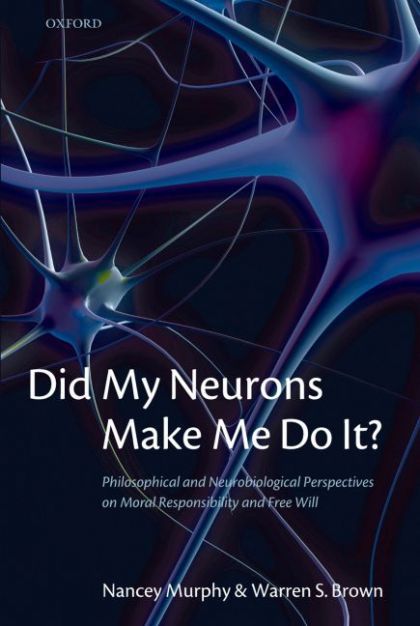
If humans are purely physical, and if it is the brain that does the work formerly assigned to the mind or soul, then how can it fail to be the case that all of our thoughts and actions are determined by the laws of neurobiology? If this is the case, then free will, moral responsibility, and, indeed, reason itself would appear to be in jeopardy. Nancey Murphy and Warren S. Brown here defend a non-reductive version of physicalism whereby humans are (sometimes) the authors of their own thoughts and actions. Did My Neurons Make Me Do It? brings together insights from both philosophy and the cognitive neurosciences to defeat neurobiological reductionism. One resource is a “post-Cartesian” account of mind as essentially embodied and constituted by action-feedback-evaluation-action loops in the environment, and “scaffolded” by cultural resources. Another is a non-mysterious account of downward (mental) causation explained in terms of a complex, higher-order system exercising constraints on lower-level causal processes. These resources are intrinsically related: the embeddedness of brain events in action-feedback loops is the key to their mentality, and those broader systems have causal effects on the brain itself. With these resources Murphy and Brown take on two problems in philosophy of mind: a response to the charges that physicalists cannot account for the meaningfulness of language nor the causal efficacy of the mental qua mental. Solutions to these problems are a prerequisite to addressing the central problem of the book: how can biological organisms be free and morally responsible? The authors argue that the free-will problem is badly framed if it is put in terms of neurobiological determinism; the real issue is neurobiological reductionism. If it is indeed possible to make sense of the notion of downward causation, then the relevant question is whether humans exert downward causation over some of their own parts and processes. If all organisms do this to some extent, what needs to be added to this animalian flexibility to constitute free and responsible action? The keys are sophisticated language and hierarchically ordered cognitive processes allowing (mature) humans to evaluate their own actions, motives, goals, and rational and moral principles.
This set addresses the many ethics issues that have come to prominence over the past decade. These include such religious topics as church-state separation, faith healers, Islamic ethics, the jihad concept, religion and violence, the Roman Catholic priests sexual abuse scandal, Scientology, and televangelists. The set also gives particular attention to business and labor ethics, with articles on such topics as advertising, computer misuse, corporate compensation, downsizing and outsourcing, and the tobacco industry. New topics on political and economic issues include Congress, distributive justice, famine as an instrument of oppression, care of the homeless, lobbying, lotteries, minimum wage laws, and the fairness of taxes.
“By integrating the fields of psychology and special education . . . [t]his book provides a valuable reference for graduate faculty members and students as well as practitioners.”Linda K. Knauss, PhD, Assistant Professor and Director of Internship TrainingP>”A must-read for any comprehensive school psychology law and ethics course. I could not imagine teaching the course without the support of this book.”Kara E. McGoey, PhD, Assistant ProfessorP>This completely updated edition of the leading ethics and law guide for students, as well as practicing school psychologists, provides authoritative, timely information on professional standards and legal requirements pertinent to the delivery of school psychological services. Ethics and Law for School Psychologists, Fourth Edition covers a host of ethical and legal issues that are unique to the field, including LI>Students’ and parents’ rights to privacy and informed consentLI>Confidentiality and the duty to protectLI>Psychoeducational assessment and interventionLI>Schooling for students with special needsLI>School discipline and violence preventionLI>Provision of culturally sensitive services to diverse clienteleLI>Protection of the rights of sexual minority studentsLI>Supervision of school psychologists in trainingP>Offering a wealth of new information, this book includes recent changes in professional standards such as the 2002 revision of the American Psychological Association’s “Ethical Principles and Code of Conduct” and the 2000 revision of the National Association of School Psychologists’ “Principles for Professional Ethics.” The discussion of the Individuals with Disabilities Education Act (IDEA) incorporates the 1999 regulations as well as recent developments in case law. The ethical and legal mandate to respect cultural, linguistic, and role differences is given greater emphasis throughout this edition
ما از اخلاق چه انتظاری داریم؟ این سوال شاید تاحدودی برای عموم مردم و یا متخصصان این رشته قابل پاسخ باشد؛ اینکه خوب بودن را به ما بیاموزد و در تنظیم روابط فردی م...

جشن کتاب تهران به ایستگاه سی و یکم رسیده است. حال و احوال نشر کتاب خوب نیست و باید فرهنگدوستان را به خرید و هدیه دادن کتاب ترغیب نمود. خانه اخلاقپژوهان جوان ب...

بنیاد کتابهای اخلاق اسلامی عمدتا پالایش جان از آلودگیها و آراستن آن به زیباییها است. اندیشه محوری این قبیل کتابها آن است که انسان فعلی آنی نیست که باید باشد...

-
0 Comments