
Notice: تابع WP_Block_Type_Registry::register به طورنادرست فراخوانی شد. نامهای نوع بلوک نباید حروف بزرگ داشته باشند. لطفاً برای اطلاعات بیشتر، اشکال زدایی در وردپرس را مشاهده کنید. (این پیام در نگارش 5.0.0 افزوده شده است.) in /home/ethicsho/public_html/wp-includes/functions.php on line 5313
Warning: Use of undefined constant TDC_PATH_LEGACY - assumed 'TDC_PATH_LEGACY' (this will throw an Error in a future version of PHP) in /home/ethicsho/public_html/wp-content/plugins/td-composer/td-composer.php on line 109
Warning: Use of undefined constant TDSP_THEME_PATH - assumed 'TDSP_THEME_PATH' (this will throw an Error in a future version of PHP) in /home/ethicsho/public_html/wp-content/plugins/td-composer/td-composer.php on line 113 بایگانیهای Religious Ethics - Comparative Studies - خانه اخلاق پژوهان جوان Notice: Trying to access array offset on value of type bool in /home/ethicsho/public_html/wp-content/plugins/wp-ulike/inc/general-functions.php on line 807
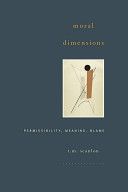
In a clear and elegant style, T. M. Scanlon reframes current philosophical debates as he explores the moral permissibility of an action. Permissibility may seem to depend on the agent’s reasons for performing an action. For example, there seems to be an important moral difference between tactical bombing and a campaign by terrorists—even if the same number of non-combatants are killed—and this difference may seem to lie in the agents’ respective aims. However, Scanlon argues that the apparent dependence of permissibility on the agent’s reasons in such cases is merely a failure to distinguish between two kinds of moral assessment: assessment of the permissibility of an action and assessment of the way an agent decided what to do. Distinguishing between these two forms of assessment leads Scanlon to an important distinction between the permissibility of an action and its meaning: the significance for others of the agent’s willingness to act in this way. An action’s meaning depends on the agent’s reasons for performing it in a way that its permissibility does not. Blame, he argues, is a response to the meaning of an action rather than its permissibility. This analysis leads to a novel account of the conditions of moral responsibility and to important conclusions about the ethics of blame.
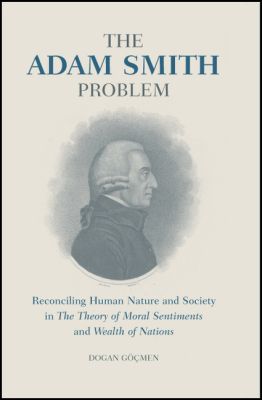
This is the first scholarly work to deal solely with the ‘Adam Smith problem’, namely the apparent contradiction between Adam Smith’s most famous works, The Theory of Moral Sentiments and The Nature and Causes of the Wealth of Nations. Since the 1840s scholars have puzzled over and attempted to explain the fact that these works offer two fundamentally different and contradictory concepts of human nature. In this radical new approach Dogan Göçmen makes a major contribution to the debate. Accepting that Smith does indeed put forward two different and varied ideas, he argues that the ethical position articulated in The Theory of Moral Sentiments can be, and was intended by Smith to be, applied as a basis for criticising the commercial society analysed in the Wealth of Nations. Göçmen argues that this ethical position points to the character of an ideal future society, Adam Smith’s Utopia, a society in which its social components are completely in sympathy – and therefore harmonious – with each other.
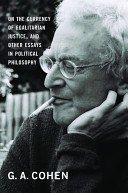
G. A. Cohen was one of the most gifted, influential, and progressive voices in contemporary political philosophy. At the time of his death in 2009, he had plans to bring together a number of his most significant papers. This is the first of three volumes to realize those plans. Drawing on three decades of work, it contains previously uncollected articles that have shaped many of the central debates in political philosophy, as well as papers published here for the first time. In these pieces, Cohen asks what egalitarians have most reason to equalize, he considers the relationship between freedom and property, and he reflects upon ideal theory and political practice.Included here are classic essays such as “Equality of What?” and “Capitalism, Freedom, and the Proletariat,” along with more recent contributions such as “Fairness and Legitimacy in Justice,” “Freedom and Money,” and the previously unpublished “How to Do Political Philosophy.” On ample display throughout are the clarity, rigor, conviction, and wit for which Cohen was renowned. Together, these essays demonstrate how his work provides a powerful account of liberty and equality to the left of Ronald Dworkin, John Rawls, Amartya Sen, and Isaiah Berlin.
ما از اخلاق چه انتظاری داریم؟ این سوال شاید تاحدودی برای عموم مردم و یا متخصصان این رشته قابل پاسخ باشد؛ اینکه خوب بودن را به ما بیاموزد و در تنظیم روابط فردی م...

جشن کتاب تهران به ایستگاه سی و یکم رسیده است. حال و احوال نشر کتاب خوب نیست و باید فرهنگدوستان را به خرید و هدیه دادن کتاب ترغیب نمود. خانه اخلاقپژوهان جوان ب...

بنیاد کتابهای اخلاق اسلامی عمدتا پالایش جان از آلودگیها و آراستن آن به زیباییها است. اندیشه محوری این قبیل کتابها آن است که انسان فعلی آنی نیست که باید باشد...

-
0 Comments