




Notice: تابع WP_Block_Type_Registry::register به طورنادرست فراخوانی شد. نامهای نوع بلوک نباید حروف بزرگ داشته باشند. لطفاً برای اطلاعات بیشتر، اشکال زدایی در وردپرس را مشاهده کنید. (این پیام در نگارش 5.0.0 افزوده شده است.) in /home/ethicsho/public_html/wp-includes/functions.php on line 5313
Warning: Use of undefined constant TDC_PATH_LEGACY - assumed 'TDC_PATH_LEGACY' (this will throw an Error in a future version of PHP) in /home/ethicsho/public_html/wp-content/plugins/td-composer/td-composer.php on line 109
Warning: Use of undefined constant TDSP_THEME_PATH - assumed 'TDSP_THEME_PATH' (this will throw an Error in a future version of PHP) in /home/ethicsho/public_html/wp-content/plugins/td-composer/td-composer.php on line 113 بایگانیهای Religion - خانه اخلاق پژوهان جوان Notice: Trying to access array offset on value of type bool in /home/ethicsho/public_html/wp-content/plugins/wp-ulike/inc/general-functions.php on line 807
Although Kantian autonomy is often considered independent of time and place, J.B. Schneewind’s landmark study, The Invention of Autonomy, has shown that much can be learned by analyzing Kant’s moral philosophy in the context of the history of modern moral philosophy. Distinguished contributors accordingly relate Kant’s work to the historical context of his predecessors (as well as the empirical context of human agency) in this valuable resource for professionals and advanced students.
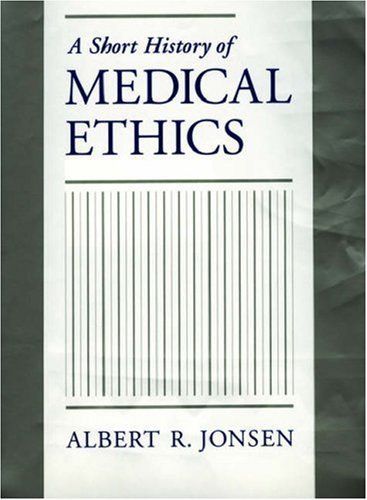
A physician says, “I have an ethical obligation never to cause the death of a patient,” another responds, “My ethical obligation is to relieve pain even if the patient dies.” The current argument over the role of physicians in assisting patients to die constantly refers to the ethical duties of the profession. References to the Hippocratic Oath are often heard. Many modern problems, from assisted suicide to accessible health care, raise questions about the traditional ethics of medicine and the medical profession. However, few know what the traditional ethics are and how they came into being. This book provides a brief tour of the complex story of medical ethics evolved over centuries in both Western and Eastern culture. It sets this story in the social and cultural contexts in which the work of healing was practiced and suggests that, behind the many different perceptions about the ethical duties of physicians, certain themes appear constantly, and may be relevant to modern debates. The book begins with the Hippocratic medicine of ancient Greece, moves through the Middle Ages, Renaissance and Enlightenment in Europe, and the long history of Indian 7nd Chinese medicine, ending as the problems raised modern medical science and technology challenge the settled ethics of the long tradition.
Is there a public good? A prevalent view in political science is that democracy is unavoidably chaotic, arbitrary, meaningless, and impossible. Such scepticism began with Condorcet in the eighteenth century, and continued most notably with Arrow and Riker in the twentieth century. In this powerful book, Gerry Mackie confronts and subdues these long-standing doubts about democratic governance. Problems of cycling, agenda control, strategic voting, and dimensional manipulation are not sufficiently harmful, frequent, or irremediable, he argues, to be of normative concern. Mackie also examines every serious empirical illustration of cycling and instability, including Rikers famous argument that the US Civil War was due to arbitrary dimensional manipulation. Almost every empirical claim is erroneous, and none is normatively troubling, Mackie says. This spirited defence of democratic institutions should prove both provocative and influential.
ما از اخلاق چه انتظاری داریم؟ این سوال شاید تاحدودی برای عموم مردم و یا متخصصان این رشته قابل پاسخ باشد؛ اینکه خوب بودن را به ما بیاموزد و در تنظیم روابط فردی م...

جشن کتاب تهران به ایستگاه سی و یکم رسیده است. حال و احوال نشر کتاب خوب نیست و باید فرهنگدوستان را به خرید و هدیه دادن کتاب ترغیب نمود. خانه اخلاقپژوهان جوان ب...

بنیاد کتابهای اخلاق اسلامی عمدتا پالایش جان از آلودگیها و آراستن آن به زیباییها است. اندیشه محوری این قبیل کتابها آن است که انسان فعلی آنی نیست که باید باشد...

-
0 Comments