Notice: تابع WP_Block_Type_Registry::register به طورنادرست فراخوانی شد. نامهای نوع بلوک نباید حروف بزرگ داشته باشند. لطفاً برای اطلاعات بیشتر، اشکال زدایی در وردپرس را مشاهده کنید. (این پیام در نگارش 5.0.0 افزوده شده است.) in /home/ethicsho/public_html/wp-includes/functions.php on line 5313
Warning: Use of undefined constant TDC_PATH_LEGACY - assumed 'TDC_PATH_LEGACY' (this will throw an Error in a future version of PHP) in /home/ethicsho/public_html/wp-content/plugins/td-composer/td-composer.php on line 109
Warning: Use of undefined constant TDSP_THEME_PATH - assumed 'TDSP_THEME_PATH' (this will throw an Error in a future version of PHP) in /home/ethicsho/public_html/wp-content/plugins/td-composer/td-composer.php on line 113 بایگانیهای Religion / Islam / General - خانه اخلاق پژوهان جوان Notice: Trying to access array offset on value of type bool in /home/ethicsho/public_html/wp-content/plugins/wp-ulike/inc/general-functions.php on line 807
Philosophy of Psychology is an introduction to philosophical problems that arise in the scientific study of cognition and behavior. José Luis Bermúdez introduces the philosophy of psychology as an interdisciplinary exploration of the nature and mechanisms of cognition. He charts out four influential “pictures of the mind” and uses them to explore central topics in the philosophical foundations of psychology, covering all the core concepts and themes found in undergraduate courses in philosophy and psychology, including: * Models of psychological explanation * The nature of commonsense psychology * Arguments for the autonomy of psychology * Fuctionalist approaches to cognition * Computational models of the mind * Neural network modeling * Rationality and mental causation * Perception, action and cognition * The language of thought and the architecture of cognition Philosophy of Psychology: AContemporary Introductionis a very clear and well-structured textbook from one of the leaders in the field.
The provocative contention of the postmodernist and feminist essays in Ethics of the Body is that conventional bioethics is out of touch, despite its growing profile. It is out of touch with an ongoing phenomenological sense of bodies themselves; with the impact of postmodernist theory as it problematizes the certainties of binary thinking; and with a postmodern culture in which bioscientific developments force us to question what is meant by the notion of the human self. The authors demonstrate that the conventional normative framework of bioethics is called into question by issues as wide ranging as genetic manipulation, disability, high-tech prosthetics, and intersexuality. The essays show how both the theory and practice of bioethics can benefit from postmodernism’s characteristic fluidity and multiplicity, as well as from the insights of a reconceived feminist bioethics. They address issues in philosophy, law, bioscientific research, psychiatry, cultural studies, and feminism from a “postconventional” perspective that looks beyond the familiar ideas of the body, proposing not a bioethics about the body but a radical ethics of the body.After exploring notions of difference in both feminist and postmodernist terms, the book considers specific issues—including HIV, addiction, borderline personality disorder, and cancer—that challenge the principles of conventional bioethics. The focus then turns to questions raised by biotechnology: one essay rethinks the traditional feminist ethics of care in the context of new reproductive technology, while others tackle genetic and genomic issues. Finally, the book looks at embodiment and some specifically anomalous forms of being-in-the-body, including a consideration of intersex infants and children that draws on feminist, postructuralist, and queer theory.
The book is a critical review of accountability conducted under the authority of the United Nations Security Council, by the International Criminal Tribunal for Rwanda (ICTR), and the United Nations Transitional Administration in East Timor (UNTAET). It is centred on two case studies: the 1999 events in Rwanda, which constituted genocide, “the crime of crimes”, and the 1999 mayhem in East Timor. The books subjects to testing cross-examination tools to hold accountable persons with “the greatest responsibility” for serious international humanitarian law violations.A detailed expose is made of conspiracy to commit genocide. Comparison is also made whether joint criminal enterprise, and the forms of co-perpetration embodied in the Statute of the International Criminal Court provide effective alternatives in the case of atrocity crimes. A unique aspect of the book is its high-light of lessons learn in prosecution strategies; approaches in profiling perpetrators, particularly those with the highest level of responsibility for international humanitarian law violations; victor’s justice; superior responsibility; guilty pleas, and the effectiveness of the East Timor and the Indonesian Ad Hoc Human Rights Court processes. In the final analysis, the book offers a Matrix on Accountability.
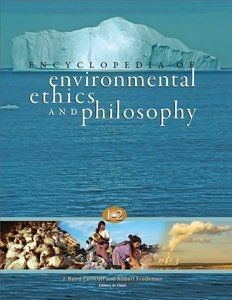
The field of environmental ethics is a new but now well-established sub-discipline of philosophy. Emerging in the mid-1970s, the field coalesced with the inaugural volume of the journal Environmental Ethics in 1979 and developed rapidly. By the turn of the century, most colleges and universities offered courses, if not major programs of study, in this important discipline. The Encyclopedia of Environmental Ethics and Philosophy addresses the needs of upper high school students, undergraduate researchers, teachers and professors, as well as general readers by examining the philosophical and ethical issues underlying contemporary and historical environmental issues, policies, and debates. More than 300 peer-reviewed articles cover concepts, institutions, topics, events and people, including global warming, animal rights, environmental movements, alternative energy, green chemistry, industrial ecology, and eco-sabotage. Encyclopedia of Environmental Ethics and Philosophy joins the suite of other MacMillan applied ethics titles: Encyclopedia of Bioethics and the Encyclopedia of Science, Technology, and Ethics. Additional features include 200 photographs and illustrations, thematic outline, annotated bibliography, and a comprehensive index.
ما از اخلاق چه انتظاری داریم؟ این سوال شاید تاحدودی برای عموم مردم و یا متخصصان این رشته قابل پاسخ باشد؛ اینکه خوب بودن را به ما بیاموزد و در تنظیم روابط فردی م...

جشن کتاب تهران به ایستگاه سی و یکم رسیده است. حال و احوال نشر کتاب خوب نیست و باید فرهنگدوستان را به خرید و هدیه دادن کتاب ترغیب نمود. خانه اخلاقپژوهان جوان ب...

بنیاد کتابهای اخلاق اسلامی عمدتا پالایش جان از آلودگیها و آراستن آن به زیباییها است. اندیشه محوری این قبیل کتابها آن است که انسان فعلی آنی نیست که باید باشد...

-
0 Comments