Notice: تابع WP_Block_Type_Registry::register به طورنادرست فراخوانی شد. نامهای نوع بلوک نباید حروف بزرگ داشته باشند. لطفاً برای اطلاعات بیشتر، اشکال زدایی در وردپرس را مشاهده کنید. (این پیام در نگارش 5.0.0 افزوده شده است.) in /home/ethicsho/public_html/wp-includes/functions.php on line 5313
Warning: Use of undefined constant TDC_PATH_LEGACY - assumed 'TDC_PATH_LEGACY' (this will throw an Error in a future version of PHP) in /home/ethicsho/public_html/wp-content/plugins/td-composer/td-composer.php on line 109
Warning: Use of undefined constant TDSP_THEME_PATH - assumed 'TDSP_THEME_PATH' (this will throw an Error in a future version of PHP) in /home/ethicsho/public_html/wp-content/plugins/td-composer/td-composer.php on line 113 بایگانیهای Genocide - Rwanda - خانه اخلاق پژوهان جوان Notice: Trying to access array offset on value of type bool in /home/ethicsho/public_html/wp-content/plugins/wp-ulike/inc/general-functions.php on line 807
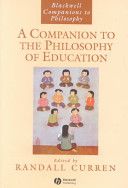
A Companion to the Philosophy of Education is a comprehensive guide to philosophical thinking about education. Offers a state-of-the-art account of current and controversial issues in education, including issues pertaining to multiculturalism, special education, sex education, and academic freedom. Written by an international team of leading experts, who are directly engaged with these profound and complex educational problems. Serves as an indispensable guide to the field of philosophy of education.
Experience and Value: Essays on John Dewey and Pragmatic Naturalism brings together twelve philosophical essays spanning the career of noted Dewey scholar, S. Morris Eames. The volume includes both critiques and interpretations of important issues in John Dewey’s value theory as well as the application of Eames’s pragmatic naturalism in addressing contemporary problems in social theory, education, and religion. The collection begins with a discussion of the underlying principles of Dewey’s pragmatic naturalism, including the concepts of nature, experience, and philosophic method. Essays “Experience and Philosophical Method in John Dewey” and “Primary Experience in the Philosophy of John Dewey” develop what Eames believed to be a central theme in Dewey’s thought and provide a theoretical framework for subsequent discussion. The volume continues with specific applications of this framework in the areas of value theory, moral theory, social philosophy, and the philosophy of religion. Eames’s analysis of value exposes the connection between the immediately felt values of experience and the more sophisticated judgments of value that are the product of reflection. From this basis in moral theory, Eames considers the derivation of judgments of obligation from judgments of fact. This discussion provides a grounding for a consideration of contemporary social issues directed by naturalistic and scientific principles. In the third section, with regard to educational theory, Eames considers possible resolutions of the current dichotomy between the factual worldview of science and the humanistic worldview of the liberal arts. The comprehensive article, “Dewey’s Views of Truth, Beauty, and Goodness,” connects the essays of the first and second sections and explores the placement of Dewey’s value theory with respect to morals and aesthetics. With “Creativity and Democracy,” in the fourth section, Eames also considers the concept of democracy from the standpoint of current and historical issues faced by society. This article hints at a major project of Eames’s intellectual life—the theory of democracy. The volume concludes with a discussion of the difficulty of maintaining the values of religious experience in a scientifically and technologically sophisticated world, the very topic that first brought Eames to philosophy—the meaning of religion and the religious life. Suggested solutions are offered in “The Lost Individual and Religious Unity.” Experience and Value: Essays on John Dewey and Pragmatic Naturalism illuminates Eames’ life of inquiry, a life that included moral, social, aesthetic, and religious dimensions of value—all suffused with the influence of John Dewey.
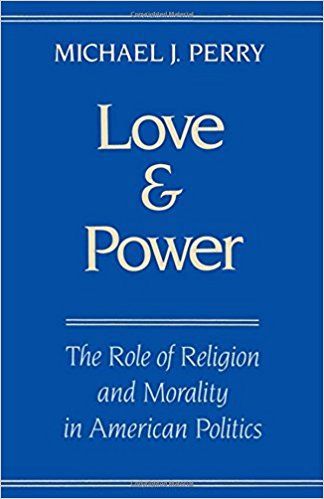
In this sequel to his Morality, Politics, and Law, Michael Perry addresses the proper relation of moral convictions to the politics of a morally pluralistic society. While his analysis focuses on religious morality, Perry’s argument applies to morality generally. Contending that no justification of a contested political choice can be neutral among competing conceptions of human good, the author develops an ideal of “ecumenical politics” in which moral convictions about human good can be brought to bear in a productive way in political argument.
ما از اخلاق چه انتظاری داریم؟ این سوال شاید تاحدودی برای عموم مردم و یا متخصصان این رشته قابل پاسخ باشد؛ اینکه خوب بودن را به ما بیاموزد و در تنظیم روابط فردی م...

جشن کتاب تهران به ایستگاه سی و یکم رسیده است. حال و احوال نشر کتاب خوب نیست و باید فرهنگدوستان را به خرید و هدیه دادن کتاب ترغیب نمود. خانه اخلاقپژوهان جوان ب...

بنیاد کتابهای اخلاق اسلامی عمدتا پالایش جان از آلودگیها و آراستن آن به زیباییها است. اندیشه محوری این قبیل کتابها آن است که انسان فعلی آنی نیست که باید باشد...

-
0 Comments