Notice: تابع WP_Block_Type_Registry::register به طورنادرست فراخوانی شد. نامهای نوع بلوک نباید حروف بزرگ داشته باشند. لطفاً برای اطلاعات بیشتر، اشکال زدایی در وردپرس را مشاهده کنید. (این پیام در نگارش 5.0.0 افزوده شده است.) in /home/ethicsho/public_html/wp-includes/functions.php on line 5313
Warning: Use of undefined constant TDC_PATH_LEGACY - assumed 'TDC_PATH_LEGACY' (this will throw an Error in a future version of PHP) in /home/ethicsho/public_html/wp-content/plugins/td-composer/td-composer.php on line 109
Warning: Use of undefined constant TDSP_THEME_PATH - assumed 'TDSP_THEME_PATH' (this will throw an Error in a future version of PHP) in /home/ethicsho/public_html/wp-content/plugins/td-composer/td-composer.php on line 113 بایگانیهای Religion / History - خانه اخلاق پژوهان جوان Notice: Trying to access array offset on value of type bool in /home/ethicsho/public_html/wp-content/plugins/wp-ulike/inc/general-functions.php on line 807
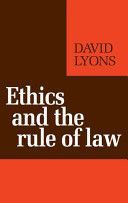
An introduction to the philosophy of law, which offers a modern and critical appraisal of all the main issues and problems. This has become a very active area in the last ten years, and one on which philosophers, legal practitioners and theorists and social scientists have tended to converge. The more abstract questions about the nature of law and its relationship to social norms and moral standards are now seen to be directly relevant to more practical and indeed pressing questions about the justification of punishment, civil disobedience, the enforcement of morality, and problems about justice, rights, welfare, and freedom. David Lyons is a shrewd, clear and systematic guide through this tangled area. The book presupposes no formal training in law or philosophy and is intended to serve as a textbook in a range of introductory courses.
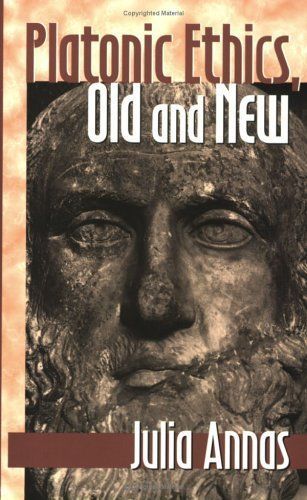
Offers a fundamental reexamination of Plato’s ethical thought, highlighting the differences between ancient & modern assumptions & stressing the need to be critical about our own.
PREFACE. THE nucleus of this little book is formed by an article on Ethics which I wrote some years ago for the E zc cIopaB f iiat nnnica. I found that, in the opinion of persons whose judgment had weight with me, this article appeared likely to meet the needs of English students desirous of obtaining a general knowledge of the history of ethical thought I have, therefore, by the permission of Messrs. Black, the publishers of the EnglcZop riaB ritannica, reprinted it in this separate form. In so doing, I have considerably altered and enlarged it but, aftcr some hesitation, I determined to adhere to the main outlines of the original article, according to which the chapter IV. dealing with the modern pcriod is mainly confined to English Ethics, and only deals with foreign ethical systems in a subordinate way, as sources of influence on English thought. I adopted this resolution, partly because it seemed to me that the merit of my article-if it had any-lay in a certain compact unity of movement which would v inevitably be lost if I tried to include a treatment of French and German moralists on a scale corresponding to my treatment of English moralists while at the same time a considerable portion of what I thus omitted appeared to me to have a distinctly subordinate interest for English readers as compared with what I included. I ought further to explain that, for somewhat similar reasons, I have taken pains to keep Ethics as separate as I conveniently could from Theology and Metaphysics, and also from Politics this separation, however, is naturally less complete in some parts of the subject than in others -e. g. in dealing with the medireval period the relations of Ethics to Theology arenecessarily more prominent than in the modern period. Finally, I may perhaps say that I have aimed throughout at the greatest possible impartiality and objectivity of treatment and in order better to attain this rcsult I have not attempted to deal with contemporary modes of ethical thought-with which I have been engaged controversially-except in a very brief and summary way. In the greater part of the book-i. e. in by far the larger part of Chapter II., in almost all Chapter IV., I draw attention to the words a consitlerable portion because they were overlooked by a reviewer who selected this sentence for severe criticism. The omission of the111 substitutes an o i ionur llicli I should regard as indelensi1 le for one which I still think almost incontrovertible. PREFACE vii and in some of Chapter 111.-my exposition is primarily based on my own study of the original authors. Where this is not the case I have tried to guard myself from error by comparing different historians of philosophy, and referring to the original authors whenever this comparison left me doubtful. And throughout I have endeavoured to correct and supplement the results of my own study by comparing them with the views expressed in other historical worlts. I a n especially indebted, as regards Chapter I I ., to Zellers Geschichte der Griechischen Philosophic but, in revising the chapter, I have also derived useful suggestions from Ziegler, Geschichte der Ethi, and from an excellent little book on Epicureanism by Rlr. Wallace. The account of Christian morality in Chapter 111…
ما از اخلاق چه انتظاری داریم؟ این سوال شاید تاحدودی برای عموم مردم و یا متخصصان این رشته قابل پاسخ باشد؛ اینکه خوب بودن را به ما بیاموزد و در تنظیم روابط فردی م...

جشن کتاب تهران به ایستگاه سی و یکم رسیده است. حال و احوال نشر کتاب خوب نیست و باید فرهنگدوستان را به خرید و هدیه دادن کتاب ترغیب نمود. خانه اخلاقپژوهان جوان ب...

بنیاد کتابهای اخلاق اسلامی عمدتا پالایش جان از آلودگیها و آراستن آن به زیباییها است. اندیشه محوری این قبیل کتابها آن است که انسان فعلی آنی نیست که باید باشد...

-
0 Comments