Notice: تابع WP_Block_Type_Registry::register به طورنادرست فراخوانی شد. نامهای نوع بلوک نباید حروف بزرگ داشته باشند. لطفاً برای اطلاعات بیشتر، اشکال زدایی در وردپرس را مشاهده کنید. (این پیام در نگارش 5.0.0 افزوده شده است.) in /home/ethicsho/public_html/wp-includes/functions.php on line 5313
Warning: Use of undefined constant TDC_PATH_LEGACY - assumed 'TDC_PATH_LEGACY' (this will throw an Error in a future version of PHP) in /home/ethicsho/public_html/wp-content/plugins/td-composer/td-composer.php on line 109
Warning: Use of undefined constant TDSP_THEME_PATH - assumed 'TDSP_THEME_PATH' (this will throw an Error in a future version of PHP) in /home/ethicsho/public_html/wp-content/plugins/td-composer/td-composer.php on line 113 بایگانیهای Religion / Biblical Studies / Paul's Letters - خانه اخلاق پژوهان جوان Notice: Trying to access array offset on value of type bool in /home/ethicsho/public_html/wp-content/plugins/wp-ulike/inc/general-functions.php on line 807
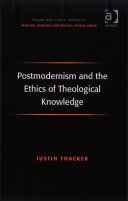
This book establishes the necessary integration of theological knowledge with theological ethics. It does this as a response to the postmodern critique of Christianity, as exemplified in Rorty and Lyotard. They argue that any claim to know God is necessarily tyrannical. Contemporary responses to such postmodern thinking often fail to address adequately the ethical critique that is made. This book redresses that balance by suggesting that our knowedge of God and love of the Other are so intimately connected that we cannot have one without the other. In the absence of love, then, we simply do not know God. Justin Thacker proposes that an effective theological response to postmodernity must address both knowledge and ethics in an integrated fashion as presented in this book.
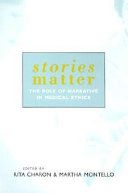
This text examines the many ways that narrative methods of analysis and interpretation are transforming the work of medicine and ethics. This edited collection provides conceptual foundations, guidelines and theory central to narrative ethics.
In this forward-looking volume the invited authors argue that the world must critically assess the potential pitfalls of new technologies in advance. Many of the developments in modern technology are complex, risky, and, to begin with, cloaked in uncertainty. How should we deal with such developments – that may not only have positive effects (such as an increase of our well-being or an improved ability to control and cure diseases) but also negative effects for human beings and the environment (such as global warming or the medicalisation of human beings)? The fact that technological ‘progress’ often occurs under conditions of uncertainty makes the issue even more pressing. Frequently, we are completely devoid of information concerning the applications of new technologies and what their impact will be on human beings and the environment. History has shown that taking a retrospective perspective by passively awaiting the practical consequences of new technologies is both dangerous and inappropriate, as often damage will already have occurred. The genie is well and truly out of the bottle and those who once had control over the new processes no longer have that power, as the science will have a momentum of its own, unheeding of belated attempts to stop it or slow it down. What is more, technology is often ‘logically malleable’, with far wider applications than even we can anticipate. Thus, say editors Sollie and Duwell, an anticipatory attitude is required towards dealing with new technology. This book addresses methodological issues with regard to the ethical evaluation of new and emerging technology. It focuses specifically on the concept of uncertainty that, unlike the notion of risk, is greatly undervalued in the field of ethics. It is a must-read for anyone involved in (ethical) technology assessment: philosophers, those involved in science and technology studies, and policy-makers alike.
ما از اخلاق چه انتظاری داریم؟ این سوال شاید تاحدودی برای عموم مردم و یا متخصصان این رشته قابل پاسخ باشد؛ اینکه خوب بودن را به ما بیاموزد و در تنظیم روابط فردی م...

جشن کتاب تهران به ایستگاه سی و یکم رسیده است. حال و احوال نشر کتاب خوب نیست و باید فرهنگدوستان را به خرید و هدیه دادن کتاب ترغیب نمود. خانه اخلاقپژوهان جوان ب...

بنیاد کتابهای اخلاق اسلامی عمدتا پالایش جان از آلودگیها و آراستن آن به زیباییها است. اندیشه محوری این قبیل کتابها آن است که انسان فعلی آنی نیست که باید باشد...

-
0 Comments