Notice: تابع WP_Block_Type_Registry::register به طورنادرست فراخوانی شد. نامهای نوع بلوک نباید حروف بزرگ داشته باشند. لطفاً برای اطلاعات بیشتر، اشکال زدایی در وردپرس را مشاهده کنید. (این پیام در نگارش 5.0.0 افزوده شده است.) in /home/ethicsho/public_html/wp-includes/functions.php on line 5313
Warning: Use of undefined constant TDC_PATH_LEGACY - assumed 'TDC_PATH_LEGACY' (this will throw an Error in a future version of PHP) in /home/ethicsho/public_html/wp-content/plugins/td-composer/td-composer.php on line 109
Warning: Use of undefined constant TDSP_THEME_PATH - assumed 'TDSP_THEME_PATH' (this will throw an Error in a future version of PHP) in /home/ethicsho/public_html/wp-content/plugins/td-composer/td-composer.php on line 113 بایگانیهای Religion / Biblical Criticism & Interpretation / Old Testament - خانه اخلاق پژوهان جوان Notice: Trying to access array offset on value of type bool in /home/ethicsho/public_html/wp-content/plugins/wp-ulike/inc/general-functions.php on line 807
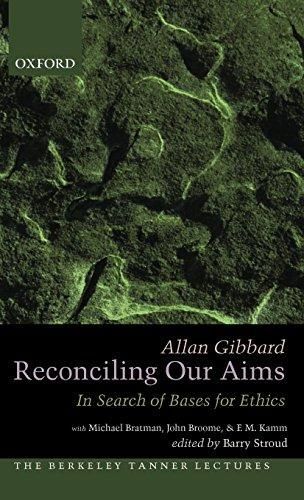
In these three Tanner lectures, distinguished ethical theorist Allan Gibbard explores the nature of normative thought and the bases of ethics. In the first lecture he explores the role of intuitions in moral thinking and offers a way of thinking about the intuitive method of moral inquiry that both places this activity within the natural world and makes sense of it as an indispensable part of our lives as planners. In the second and third lectures he takes up the kind of substantive ethical inquiry he has described in the first lecture, asking how we might live together on terms that none of us could reasonably reject. Since working at cross purposes loses fruits that might stem from cooperation, he argues, any consistent ethos that meets this test would be, in a crucial way, utilitarian. It would reconcile our individual aims to establish, in Kant’s phrase, a “kingdom of ends.” The volume also contains an introduction by Barry Stroud, the volume editor, critiques by Michael Bratman (Stanford University), John Broome (Oxford University), and F. M. Kamm (Harvard University), and Gibbard’s responses.
Programs of ethical relativism notoriously face two great difficulties: 1) how can they account for our need to make ethical judgements about other groups and individuals with whom we come into conflict? and 2) how can they allow for us to criticize the group, set of desires, etc. to which our ethical norms are said to be relative? “Integrity and Moral Relativism develops a moderate version of cultural relativism that can answer these questions. After examining and defending the notion of a “world-picture,” and of incommensurable differences across world-pictures, the book brings its theoretical framework together with the history of anthropology to argue that a culture is indeed the appropriate expression of a world picture. It then draws on literary, philosophical and historical resources to illustrate the way in which Western society, specifically, contains traditions distinguishing legitimate cross-cultural judgment, and legitimate from illegitimate cultural self-criticism. As long as there is a language for these possibilities, an individual can see ethics as culturally based without compromising his or her integrity.
Issues in bioethics often turn, at least in part, on the law and regulatory requirements. Consisting of chapters that address particular bioethics topics from the lawa?s perspective, this fascinating book includes: an introduction to the American legal system papers identifying the principal ways in which the law influences discussions and decisions concerning each of the topics highlighted supplemental papers on certain areas that address the influence and status of the law in countries other than the United States. Covering traditional topics in bioethics, such as determinations of death and health care decisions for vulnerable groups, the text also explores emerging areas such as conflicts of interest in research, genetics, and privacy and confidentiality in the electronic age. Incisive and thought-provoking, this volume provides readers with a rich context for understanding the intersection between the law on bioethicsand the central issues in bioethics.
ما از اخلاق چه انتظاری داریم؟ این سوال شاید تاحدودی برای عموم مردم و یا متخصصان این رشته قابل پاسخ باشد؛ اینکه خوب بودن را به ما بیاموزد و در تنظیم روابط فردی م...

جشن کتاب تهران به ایستگاه سی و یکم رسیده است. حال و احوال نشر کتاب خوب نیست و باید فرهنگدوستان را به خرید و هدیه دادن کتاب ترغیب نمود. خانه اخلاقپژوهان جوان ب...

بنیاد کتابهای اخلاق اسلامی عمدتا پالایش جان از آلودگیها و آراستن آن به زیباییها است. اندیشه محوری این قبیل کتابها آن است که انسان فعلی آنی نیست که باید باشد...

-
0 Comments