Notice: تابع WP_Block_Type_Registry::register به طورنادرست فراخوانی شد. نامهای نوع بلوک نباید حروف بزرگ داشته باشند. لطفاً برای اطلاعات بیشتر، اشکال زدایی در وردپرس را مشاهده کنید. (این پیام در نگارش 5.0.0 افزوده شده است.) in /home/ethicsho/public_html/wp-includes/functions.php on line 5313
Warning: Use of undefined constant TDC_PATH_LEGACY - assumed 'TDC_PATH_LEGACY' (this will throw an Error in a future version of PHP) in /home/ethicsho/public_html/wp-content/plugins/td-composer/td-composer.php on line 109
Warning: Use of undefined constant TDSP_THEME_PATH - assumed 'TDSP_THEME_PATH' (this will throw an Error in a future version of PHP) in /home/ethicsho/public_html/wp-content/plugins/td-composer/td-composer.php on line 113 بایگانیهای Reconstruction (U.S. History, 1865-1877) - خانه اخلاق پژوهان جوان Notice: Trying to access array offset on value of type bool in /home/ethicsho/public_html/wp-content/plugins/wp-ulike/inc/general-functions.php on line 807
Bryan W. Van Norden examines early Confucianism as a form of virtue ethics and Mohism, an anti-Confucian movement, as a version of consequentialism. The philosophical methodology is analytic, in that the emphasis is on clear exegesis of the texts and a critical examination of the philosophical arguments proposed by each side. Van Norden shows that Confucianism, while similar to Aristotelianism in being a form of virtue ethics, offers different conceptions of ‘the good life’, the virtues, human nature, and ethical cultivation. Mohism is akin to Western utilitarianism in being a form of consequentialism, but distinctive in its conception of the relevant consequences and in its specific thought-experiments and state-of-nature arguments. Van Norden makes use of the best current research on Chinese history, archaeology, and philology. His text is accessible to philosophers with no previous knowledge of Chinese culture and to Sinologists with no background in philosophy.
This exceptional book examines and explains Plato’s answer to the normative question, “How ought we to live?” It discusses Plato’s conception of the virtues; his views about the connection between the virtues and happiness; and the account of reason, desire, and motivation that underlies his arguments about the virtues. Plato’s answer to the epistemological question, “How can we know how we ought to live?” is also discussed. His views on knowledge, belief, and inquiry, and his theory of Forms, are examined, insofar as they are relevant to his ethical view. Terence Irwin traces the development of Plato’s moral philosophy, from the Socratic dialogues to its fullest exposition in the Republic. Plato’s Ethics discusses Plato’s reasons for abandoning or modifying some aspects of Socratic ethics, and for believing that he preserves Socrates’ essential insights. A brief and selective discussion of the Statesmen, Philebus, and Laws is included. Replacing Irwin’s earlier Plato’s Moral Theory (Oxford, 1977), this book gives a clearer and fuller account of the main questions and discusses some recent controversies in the interpretation of Plato’s ethics. It does not presuppose any knowledge of Greek or any extensive knowledge of Plato.
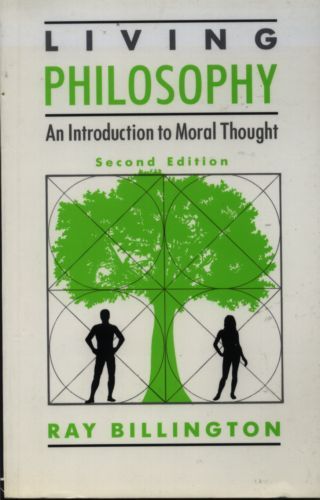
Living Philosophy: An introduction to moral thought, Third edition is a thoroughly revised and updated version of its highly successful and popular predecessor. Incorporating several brand new case studies and discussion pcints, the book introduces central questions in ethical theory to the student and assumes no previous knowledge of philosophy. Book jacket.
ما از اخلاق چه انتظاری داریم؟ این سوال شاید تاحدودی برای عموم مردم و یا متخصصان این رشته قابل پاسخ باشد؛ اینکه خوب بودن را به ما بیاموزد و در تنظیم روابط فردی م...

جشن کتاب تهران به ایستگاه سی و یکم رسیده است. حال و احوال نشر کتاب خوب نیست و باید فرهنگدوستان را به خرید و هدیه دادن کتاب ترغیب نمود. خانه اخلاقپژوهان جوان ب...

بنیاد کتابهای اخلاق اسلامی عمدتا پالایش جان از آلودگیها و آراستن آن به زیباییها است. اندیشه محوری این قبیل کتابها آن است که انسان فعلی آنی نیست که باید باشد...

-
0 Comments