Notice: تابع WP_Block_Type_Registry::register به طورنادرست فراخوانی شد. نامهای نوع بلوک نباید حروف بزرگ داشته باشند. لطفاً برای اطلاعات بیشتر، اشکال زدایی در وردپرس را مشاهده کنید. (این پیام در نگارش 5.0.0 افزوده شده است.) in /home/ethicsho/public_html/wp-includes/functions.php on line 5313
Warning: Use of undefined constant TDC_PATH_LEGACY - assumed 'TDC_PATH_LEGACY' (this will throw an Error in a future version of PHP) in /home/ethicsho/public_html/wp-content/plugins/td-composer/td-composer.php on line 109
Warning: Use of undefined constant TDSP_THEME_PATH - assumed 'TDSP_THEME_PATH' (this will throw an Error in a future version of PHP) in /home/ethicsho/public_html/wp-content/plugins/td-composer/td-composer.php on line 113 بایگانیهای Psychology / Interpersonal Relations - خانه اخلاق پژوهان جوان Notice: Trying to access array offset on value of type bool in /home/ethicsho/public_html/wp-content/plugins/wp-ulike/inc/general-functions.php on line 807
Everywhere we hear talk of decline, of a world that was better once, maybe fifty years ago, maybe centuries ago, but certainly before modernity drew us along its dubious path. While some lament the slide of Western culture into relativism and nihilism and others celebrate the trend as a liberating sort of progress, Charles Taylor calls on us to face the moral and political crises of our time, and to make the most of modernity’s challenges.At the heart of the modern malaise, according to most accounts, is the notion of authenticity, of self-fulfillment, which seems to render ineffective the whole tradition of common values and social commitment. Though Taylor recognizes the dangers associated with modernity’s drive toward self realization, he is not as quick as others to dismiss it. He calls for a freeze on cultural pessimism.In a discussion of ideas and ideologies from Friedrich Nietzsche to Gail Sheehy, from Allan Bloom to Michel Foucault, Taylor sorts out the good from the harmful in the modern cultivation of an authentic self. He sets forth the entire network of thought and morals that link our quest for self-creation with our impulse toward self-fashioning, and shows how such efforts must be conducted against an existing set of rules, or a gridwork of moral measurement. Seen against this network, our modern preoccupations with expression, rights, and the subjectivity of human thought reveal themselves as assets, not liabilities.By looking past simplistic, one-sided judgments of modern culture, by distinguishing the good and valuable from the socially and politically perilous, Taylor articulates the promise of our age. His bracing and provocative book gives voice to the challenge of modernity, and calls on all of us to answer it.
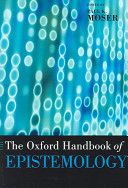
The Oxford Handbook of Epistemology contains 19 previously unpublished chapters by today’s leading figures in the field. These chapters function not only as a survey of key areas, but as original scholarship on a range of vital topics. Written accessibly for advanced undergraduates, graduate students, and professional philosophers, the Handbook explains the main ideas and problems of contemporary epistemology while avoiding overly technical detail.
Ethical questions and dilemmas are inherent to public relations, and ensuring that practitioners operate ethically is fundamental to the professionalism and credibility of the field. This updated edition of “Ethics in Public Relations” gives readers the tools and knowledge to enable them to make defensible decisions and outlines the important ethical concerns in public relations and corporate communications. Written in a practical and approachable style, this book provides clear insights into the personal and professional issues that affect public relations practitioners. It examines how an individual’s sense of morality has an impact on decision-making and ethical business behavior. This new edition includes new material on virtue ethics, personal ethics, ethics in social media, ghost writing and deception in PR, and moral responsibilities of organizations.
“In The Myth of Morality, Richard Joyce argues that moral discourse is hopelessly flawed. At the heart of ordinary moral judgments is a notion of moral inescapability, or practical authority, which, upon investigation, cannot be reasonably defended. Joyce argues that natural selection is to blame, in that it has provided us with a tendency to invest the world with values that it does not contain, and demands that it does not make. Should we therefore do away with morality, as we did away with other faulty notions such as witches? Possibly not. We may be able to carry on with morality as a useful fiction – allowing it to have a regulative influence on our lives and decisions, perhaps even playing a central role – while not committing ourselves to believing or asserting falsehoods, and thus not being subject to accusations of error.”–BOOK JACKET.
ما از اخلاق چه انتظاری داریم؟ این سوال شاید تاحدودی برای عموم مردم و یا متخصصان این رشته قابل پاسخ باشد؛ اینکه خوب بودن را به ما بیاموزد و در تنظیم روابط فردی م...

جشن کتاب تهران به ایستگاه سی و یکم رسیده است. حال و احوال نشر کتاب خوب نیست و باید فرهنگدوستان را به خرید و هدیه دادن کتاب ترغیب نمود. خانه اخلاقپژوهان جوان ب...

بنیاد کتابهای اخلاق اسلامی عمدتا پالایش جان از آلودگیها و آراستن آن به زیباییها است. اندیشه محوری این قبیل کتابها آن است که انسان فعلی آنی نیست که باید باشد...

-
0 Comments