Notice: تابع WP_Block_Type_Registry::register به طورنادرست فراخوانی شد. نامهای نوع بلوک نباید حروف بزرگ داشته باشند. لطفاً برای اطلاعات بیشتر، اشکال زدایی در وردپرس را مشاهده کنید. (این پیام در نگارش 5.0.0 افزوده شده است.) in /home/ethicsho/public_html/wp-includes/functions.php on line 5313
Warning: Use of undefined constant TDC_PATH_LEGACY - assumed 'TDC_PATH_LEGACY' (this will throw an Error in a future version of PHP) in /home/ethicsho/public_html/wp-content/plugins/td-composer/td-composer.php on line 109
Warning: Use of undefined constant TDSP_THEME_PATH - assumed 'TDSP_THEME_PATH' (this will throw an Error in a future version of PHP) in /home/ethicsho/public_html/wp-content/plugins/td-composer/td-composer.php on line 113 بایگانیهای Proportionality (Ethics) - خانه اخلاق پژوهان جوان Notice: Trying to access array offset on value of type bool in /home/ethicsho/public_html/wp-content/plugins/wp-ulike/inc/general-functions.php on line 807
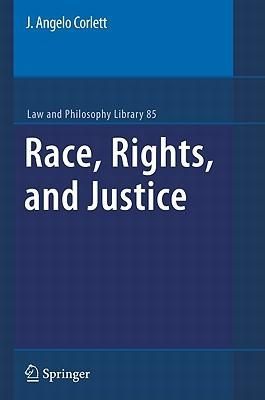
Race, Rights, and Justice explores questions of the nature of law and constitutional interpretation, international law and global justice, and the nature, function, and importance of rights each from a perspective that takes seriously the realities of race and racism. After a critical assessment of various contemporary theories of law is provided, a new theory of legal interpretation is set forth and defended. The respective words of Immanuel Kant and H. L. A. Hart on the possibility and desirability of international law are carefully explicated. Following this, Race, Rights, and Justice defends John Rawls’ Law of Peoples from the cosmopolitan liberal critique of it. The nature and importance of rights, both individual and collective, are clarified while correcting some political philosophies that have propagated confused rhetoric about rights. And the collective right to humanitarian intervention is investigated philosophically in terms of the recent problems in Colombia, with surprisingly original results. While the methodology of this book is thoroughly analytical, philosophically speaking, some of the conclusions drawn are substantially original, infusing the facts of race and racism into mainstream matters of philosophy of law.”In this collection of essays, J. Angelo Corlett continues his important work of bringing the perspective of indigenous peoples, and more generally of race, into mainstream philosophical debates about justice and rights. Corlett’s book also has very valuable insights into the nature of international law that will greatly enrich our contemporary debates.”Larry May, Washington University in St. Louis, USA”Angelo Corlett is a prolific writer whose work is invariably stimulating, provocative, and insightful. Race, Rights, and Justice is an important addition to the oeuvre. Corlett is not afraid to tackle big problems, and big names. See, for example, his scathing criticisms of Bork and Scalia on constitutional interpretation.”Burleigh T. Wilkins, University of California, Santa Barbara, USA
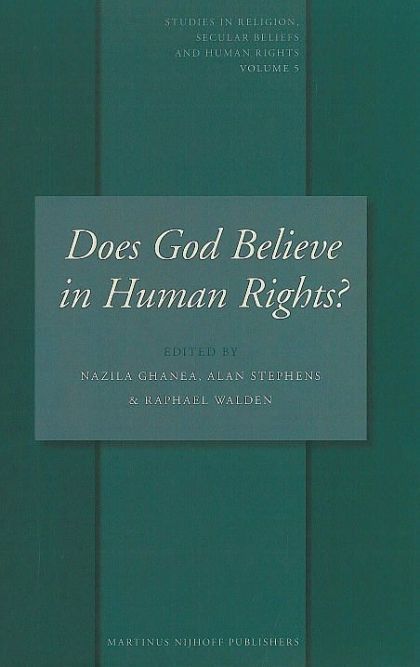
Where can religions find sources of legitimacy for human rights? How do, and how should, religious leaders and communities respond to human rights as defined in modern International Law? When religious precepts contradict human rights standards – for example in relation to freedom of expression or in relation to punishments – which should trump the other, and why? Can human rights and religious teachings be interpreted in a manner which brings reconciliation closer? Do the modern concept and system of human rights undermine the very vision of society that religions aim to impart? Is a reference to God in the discussion of human rights misplaced? Do human fallibilities with respect to interpretation, judicial reasoning and the understanding of human oneness and dignity provide the key to the undeniable and sometimes devastating conflicts that have arisen between, and within, religions and the human rights movement? In this volume, academics and lawyers tackle these most difficult questions head-on, with candour and creativity, and the collection is rendered unique by the further contributions of a remarkable range of other professionals, including senior religious leaders and representatives, journalists, diplomats and civil servants, both national and international. Most notably, the contributors do not shy away from the boldest question of all – summed up in the book’s title. The thoroughly edited and revised papers which make up this collection were originally prepared for a ground-breaking conference organised by the Clemens Nathan Research Centre, the University of London Institute of Commonwealth Studies and Martinus Nijhoff/Brill.
Epistemology, the philosophy of knowledge, is at the core of many of the central debates and issues in philosophy, interrogating the notions of truth, objectivity, trust, belief and perception. The Routledge Companion to Epistemologyprovides a comprehensive and the up-to-date survey of epistemology, charting its history, providing a thorough account of its key thinkers and movements, and addressing enduring questions and contemporary research in the field. Organized thematically, the Companionis divided into ten sections: Foundational Issues, The Analysis of Knowledge, The Structure of Knowledge, Kinds of Knowledge, Skepticism, Responses to Skepticism, Knowledge and Knowledge Attributions, Formal Epistemology, The History of Epistemology, and Metaepistemological Issues. Seventy-eight chapters, each between 5000 and 7000 words and written by the world “s leading epistemologists, provide students with an outstanding and accessible guide to the field. Designed to fit the most comprehensive syllabus in the discipline, this text will be an indispensible resource for anyone interested in this central area of philosophy. The Routledge Companion to Epistemologyis essential reading for students of philosophy.
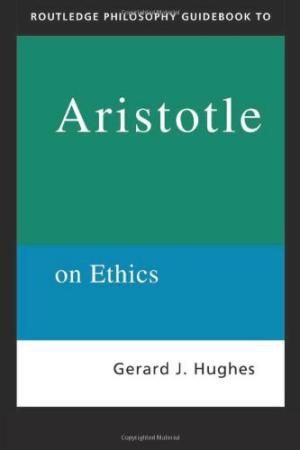
Hughes explains the key elements in Aristotle’sNichomachaean Ethicsterminology and highlights the controversy regarding the interpretations of his writings. He carefully explores each section of the text, and presents a detailed account of the problems Aristotle was trying to address. Hughes also examines the role that Aristotle’s ethics continue to play in contemporary moral philosophy by comparing and contrasting his views with those widely held today.
ما از اخلاق چه انتظاری داریم؟ این سوال شاید تاحدودی برای عموم مردم و یا متخصصان این رشته قابل پاسخ باشد؛ اینکه خوب بودن را به ما بیاموزد و در تنظیم روابط فردی م...

جشن کتاب تهران به ایستگاه سی و یکم رسیده است. حال و احوال نشر کتاب خوب نیست و باید فرهنگدوستان را به خرید و هدیه دادن کتاب ترغیب نمود. خانه اخلاقپژوهان جوان ب...

بنیاد کتابهای اخلاق اسلامی عمدتا پالایش جان از آلودگیها و آراستن آن به زیباییها است. اندیشه محوری این قبیل کتابها آن است که انسان فعلی آنی نیست که باید باشد...

-
0 Comments