Notice: تابع WP_Block_Type_Registry::register به طورنادرست فراخوانی شد. نامهای نوع بلوک نباید حروف بزرگ داشته باشند. لطفاً برای اطلاعات بیشتر، اشکال زدایی در وردپرس را مشاهده کنید. (این پیام در نگارش 5.0.0 افزوده شده است.) in /home/ethicsho/public_html/wp-includes/functions.php on line 5313
Warning: Use of undefined constant TDC_PATH_LEGACY - assumed 'TDC_PATH_LEGACY' (this will throw an Error in a future version of PHP) in /home/ethicsho/public_html/wp-content/plugins/td-composer/td-composer.php on line 109
Warning: Use of undefined constant TDSP_THEME_PATH - assumed 'TDSP_THEME_PATH' (this will throw an Error in a future version of PHP) in /home/ethicsho/public_html/wp-content/plugins/td-composer/td-composer.php on line 113 بایگانیهای Privacy, Right Of - United States - خانه اخلاق پژوهان جوان Notice: Trying to access array offset on value of type bool in /home/ethicsho/public_html/wp-content/plugins/wp-ulike/inc/general-functions.php on line 807
Max Weber’s best-known and most controversial work,The Protestant Ethic and the Spirit of Capitalism, first published in 1904, remains to this day a powerful and fascinating read. Weber’s highly accessible style is just one of many reasons for his continuing popularity. The book contends that the Protestant ethic made possible and encouraged the development of capitalism in the West. Widely considered as the most informed work ever written on the social effects of advanced capitalism,The Protestant Ethic and the Spirit of Capitalismholds its own as one of the most significant books of the twentieth century. The book is one of those rare works of scholarship which no informed citizen can afford to ignore.
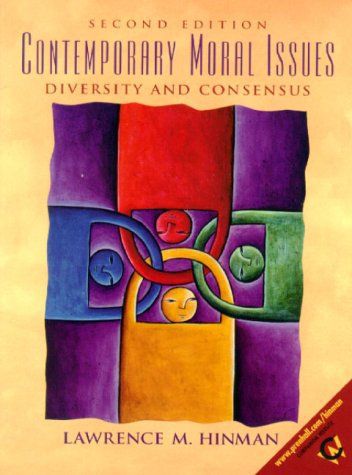
This anthology provides a comprehensive selection of readings on eleven contemporary social issues revolving around three general themes: Matters of Life and Death, Matters of Equality and Diversity, and Expanding the Circle (duties beyond borders, living together with animals, and environmental ethics). Each group of readings is accompanied by narrative selections that present the moral issues from a first person point of view; an extensive introduction surveys the problems and issues; and a bibliographical essay to relevant additional literature. Each selection is accompanied by pre- and post-reading questions. An ethical self-inventory–with pre-test and post-test–helps readers track changes in their own beliefs as they work through the readings, and a special section shows readers step-by-step how develop a personal position on ethical issues. A Pluralistic Approach to Moral Problems. How to Develop a Position on Ethical Issues. MATTERS OF LIFE AND DEATH: Abortion; Genetic Manipulation and Cloning; Euthanasia; Punishment and the Death Penalty. MATTERS OF EQUALITY AND DIVERSITY: Race and Ethnicity; Gender; Sexual Orientation; Poverty and Welfare; EXPANDING THE CIRCLE: Duties Beyond Borders; Living Together with Animals; Environmental Ethics. For anyone interested in Ethics, Social Ethics, and Contemporary Moral Problems.
In this significant contribution to Hegel scholarship, Robert Williams develops the most comprehensive account to date of Hegel’s concept of recognition (Anerkennung). Fichte introduced the concept of recognition as a presupposition of both Rousseau’s social contract and Kant’s ethics. Williams shows that Hegel appropriated the concept of recognition as the general pattern of his concept of ethical life, breaking with natural law theory yet incorporating the Aristotelian view that rights and virtues are possible only within a certain kind of community.He explores Hegel’s intersubjective concept of spirit (Geist) as the product of affirmative mutual recognition and his conception of recognition as the right to have rights. Examining Hegel’s Jena manuscripts, his Philosophy of Right, the Phenomenology of Spirit, and other works, Williams shows how the concept of recognition shapes and illumines Hegel’s understandings of crime and punishment, morality, the family, the state, sovereignty, international relations, and war. A concluding chapter on the reception and reworking of the concept of recognition by contemporary thinkers including Derrida, Levinas, and Deleuze demonstrates Hegel’s continuing centrality to the philosophical concerns of our age.
The past decade has seen an explosion of writing about media ethics and accountability. Most of the work has been focused on the normative side of the subject: ethical philosophies, ethics codes, suggestions for how journalists (and other media workers) can make justifiable decisions when faced with tough ethical questions.Empirical research into media ethics and accountability, by contrast, is hard to find. Relatively little of the past decade’s work–and virtually none of the book-length treatments of the subject–focus on how media accountability works in practice. The gap in practical knowledge is somewhat puzzling, given that most faculty who teach media ethics and accountability work in academic departments that have professional training as part of their academic mission.The underlying assumption of Holding the Media Accountable is that systems of norms such as media law and journalism ethics have meaning only in the context of the actual workings of mechanisms of accountability. No other volume has adopted such an approach.
“This book provides answers to both normative and metaethical questions in a way that shows the interconnection of both types of questions, and also shows how a complete theory of reasons can be developed by moving back and forth between the two types of questions. It offers an account of the nature of intimate relationships and of the nature of the reasons that intimacy provides, and then uses that account to defend a traditional intuitionist metaethics. The book thus combines attention to the details of the lived moral life – the context in which many of our most pressing moral questions arise, how we deliberate and make moral decisions, the complexities that plague our attempts to know what we ought to do – with theoretical rigor in offering an account of the nature of reasons, how we come to have moral knowledge, and how we can adjudicate between competing positions.”–BOOK JACKET.
ما از اخلاق چه انتظاری داریم؟ این سوال شاید تاحدودی برای عموم مردم و یا متخصصان این رشته قابل پاسخ باشد؛ اینکه خوب بودن را به ما بیاموزد و در تنظیم روابط فردی م...

جشن کتاب تهران به ایستگاه سی و یکم رسیده است. حال و احوال نشر کتاب خوب نیست و باید فرهنگدوستان را به خرید و هدیه دادن کتاب ترغیب نمود. خانه اخلاقپژوهان جوان ب...

بنیاد کتابهای اخلاق اسلامی عمدتا پالایش جان از آلودگیها و آراستن آن به زیباییها است. اندیشه محوری این قبیل کتابها آن است که انسان فعلی آنی نیست که باید باشد...

-
0 Comments