Notice: تابع WP_Block_Type_Registry::register به طورنادرست فراخوانی شد. نامهای نوع بلوک نباید حروف بزرگ داشته باشند. لطفاً برای اطلاعات بیشتر، اشکال زدایی در وردپرس را مشاهده کنید. (این پیام در نگارش 5.0.0 افزوده شده است.) in /home/ethicsho/public_html/wp-includes/functions.php on line 5313
Warning: Use of undefined constant TDC_PATH_LEGACY - assumed 'TDC_PATH_LEGACY' (this will throw an Error in a future version of PHP) in /home/ethicsho/public_html/wp-content/plugins/td-composer/td-composer.php on line 109
Warning: Use of undefined constant TDSP_THEME_PATH - assumed 'TDSP_THEME_PATH' (this will throw an Error in a future version of PHP) in /home/ethicsho/public_html/wp-content/plugins/td-composer/td-composer.php on line 113 بایگانیهای Pr?ferenztheorie - خانه اخلاق پژوهان جوان Notice: Trying to access array offset on value of type bool in /home/ethicsho/public_html/wp-content/plugins/wp-ulike/inc/general-functions.php on line 807
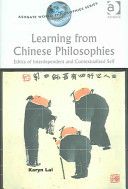
Learning from Chinese Philosophies engages Confucian and Daoist philosophies in creative interplay, developing a theory of interdependent selfhood in the two philosophical traditions. Karyn Lai draws on the unique insights of the two philosophies to address contemporary debates on ethics, community and government. Issues discussed include questions on selfhood, attachment, moral development, government, culture and tradition, and feminist queries regarding biases and dualism in ethics. Throughout the book, Lai demonstrates that Chinese philosophies embody novel and insightful ideas for addressing contemporary issues and problems.
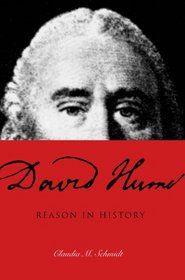
In his seminal Philosophy of David Hume (1941), Norman Kemp Smith called for a study of Hume “in all his manifold activities: as philosopher, as political theorist, as economist, as historian, and as man of letters, ” indicating that “Hume’s philosophy, as the attitude of mind which found for itself these various forms of expression, will then have been presented, adequately and in due perspective, for the first time.” Claudia Schmidt seeks to address this long-standing need in Hume scholarship. Against the charges that Hume holds no consistent philosophical position, offers no constructive account of rationality, and sees no positive relation between philosophy and other areas of inquiry, Schmidt argues for the overall coherence of Hume’s thought as a study of “reason in history.” She develops this interpretation by tracing Hume’s constructive account of human cognition and its historical dimension as a unifying theme across the full range of his writings. Hume, she shows, provides a positive account of the ways in which our concepts, beliefs, emotions, and standards of judgment in different areas of inquiry are shaped by experience, both in the personal history of the individual and in the life of a community. This book is valuable at many levels: for students, as an introduction to Hume’s writings and issues in their interpretation; for Hume specialists, as a unified and intriguing interpretation of his thought; for philosophers generally, as a synthesis of recent developments in Hume scholarship; and for scholars in other disciplines, as a guide to Hume’s contributions to their own fields.
Harry G. Frankfurt begins his inquiry by asking, “What is it about human beings that makes it possible for us to take ourselves seriously?” Based on The Tanner Lectures in Moral Philosophy, Taking Ourselves Seriously and Getting It Right delves into this provocative and original question. The author maintains that taking ourselves seriously presupposes an inward-directed, reflexive oversight that enables us to focus our attention directly upon ourselves, and “[it] means that we are not prepared to accept ourselves just as we come. We want our thoughts, our feelings, our choices, and our behavior to make sense. We are not satisfied to think that our ideas are formed haphazardly, or that our actions are driven by transient and opaque impulses or by mindless decisions. We need to direct ourselves—or at any rate to believe that we are directing ourselves—in thoughtful conformity to stable and appropriate norms. We want to get things right.” The essays delineate two features that have a critical role to play in this: our rationality, and our ability to love. Frankfurt incisively explores the roles of reason and of love in our active lives, and considers the relation between these two motivating forces of our actions. The argument is that the authority of practical reason is less fundamental than the authority of love. Love, as the author defines it, is a volitional matter, that is, it consists in what we are actually committed to caring about. Frankfurt adds that “The object of love can be almost anything—a life, a quality of experience, a person, a group, a moral ideal, a nonmoral ideal, a tradition, whatever.” However, these objects and ideals are difficult to comprehend and often in conflict with each other. Moral principles play an important supporting role in this process as they help us develop and elucidate a vision that inspires our love.The first section of the book consists of the two lectures, which are entitled “Taking Ourselves Seriously” and “Getting It Right.” The second section consists of comments in response by Christine M. Korsgaard, Michael E. Bratman, and Meir Dan-Cohen. The book includes a preface by Debra Satz.
ما از اخلاق چه انتظاری داریم؟ این سوال شاید تاحدودی برای عموم مردم و یا متخصصان این رشته قابل پاسخ باشد؛ اینکه خوب بودن را به ما بیاموزد و در تنظیم روابط فردی م...

جشن کتاب تهران به ایستگاه سی و یکم رسیده است. حال و احوال نشر کتاب خوب نیست و باید فرهنگدوستان را به خرید و هدیه دادن کتاب ترغیب نمود. خانه اخلاقپژوهان جوان ب...

بنیاد کتابهای اخلاق اسلامی عمدتا پالایش جان از آلودگیها و آراستن آن به زیباییها است. اندیشه محوری این قبیل کتابها آن است که انسان فعلی آنی نیست که باید باشد...

-
0 Comments