Notice: تابع WP_Block_Type_Registry::register به طورنادرست فراخوانی شد. نامهای نوع بلوک نباید حروف بزرگ داشته باشند. لطفاً برای اطلاعات بیشتر، اشکال زدایی در وردپرس را مشاهده کنید. (این پیام در نگارش 5.0.0 افزوده شده است.) in /home/ethicsho/public_html/wp-includes/functions.php on line 5313
Warning: Use of undefined constant TDC_PATH_LEGACY - assumed 'TDC_PATH_LEGACY' (this will throw an Error in a future version of PHP) in /home/ethicsho/public_html/wp-content/plugins/td-composer/td-composer.php on line 109
Warning: Use of undefined constant TDSP_THEME_PATH - assumed 'TDSP_THEME_PATH' (this will throw an Error in a future version of PHP) in /home/ethicsho/public_html/wp-content/plugins/td-composer/td-composer.php on line 113 بایگانیهای Plato - Ancient Greek Philosophy - خانه اخلاق پژوهان جوان Notice: Trying to access array offset on value of type bool in /home/ethicsho/public_html/wp-content/plugins/wp-ulike/inc/general-functions.php on line 807
‘We know much more about the global politics of intellectual property than we do about national political contests over the ownership of knowledge. Haunss and Shadlen have identified this gap in the literature and have done a fine job of bringing together a set of essays that helps to fill this gap in our understanding of the multi-layered nature of intellectual property politics.’ Peter Drahos, Australian National University ‘This thought-provoking volume provides invaluable new insights and is a major contribution to the debate on the politics of intellectual property rights.’ Duncan Matthews, Queen Mary, University of London, UK This book offers empirical analyses of conflicts over the ownership, control, and use of knowledge and information in developed and developing countries. Sebastian Haunss and Kenneth C. Shadlen, along with a collection of eminent contributors, focus on how business organizations, farmers, social movements, legal communities, state officials, transnational enterprises, and international organizations shape IP policies in areas such as health, information-communication technologies, indigenous knowledge, genetic resources, and many others. The innovative and original chapters examine conflicts over the rules governing various dimensions of IP, including patents, copyrights, traditional knowledge, and biosafety regulations. Written from a political perspective, this book is a must-read for political scientists, sociologists and anthropologists who study IP and conflicts over property. It is also an essential read for stakeholders in institutions, NGOs and industry interested in knowledge governance and IP politics.
This second edition of Ethics in Practice is a comprehensive collection of more than 60 new, newly-revised, and classic essays on fourteen contemporary moral questions. Through the selection of essays, organization of sections, and incisive general and section introductions, this book integrates ethical theory and the discussion of practical moral problems. In addition to the more familiar issues, such as abortion, euthanasia, animal rights, preferential treatment, and the environment, the volume includes coverage of less familiar, but equally important issues such as immigration, political correctness, free speech, the use of drugs, world hunger, and economic justice. The second edition includes 21 essays not in the first edition, with expanded sections discussing three more topics: reproductive technologies, gun control, and capital punishment. This volume features accessible and engaging, yet philosophically rigorous essays that encourage the student to think critically about a wide range of practical moral issues. The supporting website at http://www.stpt.usf.edu/hhl/papers/ethics.in.practice.2nd.htm contains extensive links to sources on the topics, ethical theories, and guides on writing papers. These features make Ethics in Practice the ideal text for introductory and applied ethics courses.
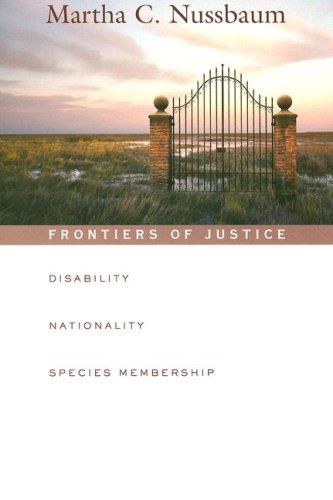
Theories of social justice are necessarily abstract, reaching beyond the particular and the immediate to the general and the timeless. Yet such theories, addressing the world and its problems, must respond to the real and changing dilemmas of the day. A brilliant work of practical philosophy, Frontiers of Justice is dedicated to this proposition. Taking up three urgent problems of social justice neglected by current theories and thus harder to tackle in practical terms and everyday life, Martha Nussbaum seeks a theory of social justice that can guide us to a richer, more responsive approach to social cooperation.The idea of the social contract–especially as developed in the work of John Rawls–is one of the most powerful approaches to social justice in the Western tradition. But as Nussbaum demonstrates, even Rawls’s theory, suggesting a contract for mutual advantage among approximate equals, cannot address questions of social justice posed by unequal parties. How, for instance, can we extend the equal rights of citizenship–education, health care, political rights and liberties–to those with physical and mental disabilities? How can we extend justice and dignified life conditions to all citizens of the world? And how, finally, can we bring our treatment of nonhuman animals into our notions of social justice? Exploring the limitations of the social contract in these three areas, Nussbaum devises an alternative theory based on the idea of “capabilities.” She helps us to think more clearly about the purposes of political cooperation and the nature of political principles–and to look to a future of greater justice for all.
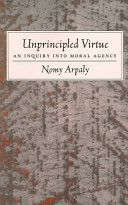
Nomy Arpaly rejects the model of rationality used by most ethicists and action theorists. Both observation and psychology indicate that people act rationally without deliberation, and act irrationally with deliberation. By questioning the notion that our own minds are comprehensible to us–and therefore questioning much of the current work of action theorists and ethicists–Arpaly attempts to develop a more realistic conception of moral agency.
ما از اخلاق چه انتظاری داریم؟ این سوال شاید تاحدودی برای عموم مردم و یا متخصصان این رشته قابل پاسخ باشد؛ اینکه خوب بودن را به ما بیاموزد و در تنظیم روابط فردی م...

جشن کتاب تهران به ایستگاه سی و یکم رسیده است. حال و احوال نشر کتاب خوب نیست و باید فرهنگدوستان را به خرید و هدیه دادن کتاب ترغیب نمود. خانه اخلاقپژوهان جوان ب...

بنیاد کتابهای اخلاق اسلامی عمدتا پالایش جان از آلودگیها و آراستن آن به زیباییها است. اندیشه محوری این قبیل کتابها آن است که انسان فعلی آنی نیست که باید باشد...

-
0 Comments