

Notice: تابع WP_Block_Type_Registry::register به طورنادرست فراخوانی شد. نامهای نوع بلوک نباید حروف بزرگ داشته باشند. لطفاً برای اطلاعات بیشتر، اشکال زدایی در وردپرس را مشاهده کنید. (این پیام در نگارش 5.0.0 افزوده شده است.) in /home/ethicsho/public_html/wp-includes/functions.php on line 5313
Warning: Use of undefined constant TDC_PATH_LEGACY - assumed 'TDC_PATH_LEGACY' (this will throw an Error in a future version of PHP) in /home/ethicsho/public_html/wp-content/plugins/td-composer/td-composer.php on line 109
Warning: Use of undefined constant TDSP_THEME_PATH - assumed 'TDSP_THEME_PATH' (this will throw an Error in a future version of PHP) in /home/ethicsho/public_html/wp-content/plugins/td-composer/td-composer.php on line 113 بایگانیهای Philosophy / History & Surveys / Modern - صفحه 3 از 6 - خانه اخلاق پژوهان جوان Notice: Trying to access array offset on value of type bool in /home/ethicsho/public_html/wp-content/plugins/wp-ulike/inc/general-functions.php on line 807
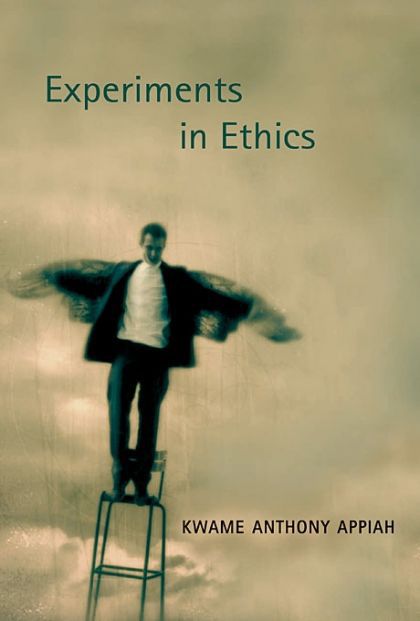
In the past few decades, scientists of human nature–including experimental and cognitive psychologists, neuroscientists, evolutionary theorists, and behavioral economists–have explored the way we arrive at moral judgments. They have called into question commonplaces about character and offered troubling explanations for various moral intuitions. Research like this may help explain what, in fact, we do and feel. But can it tell us what we ought to do or feel? In Experiments in Ethics, the philosopher Kwame Anthony Appiah explores how the new empirical moral psychology relates to the age-old project of philosophical ethics.Some moral theorists hold that the realm of morality must be autonomous of the sciences; others maintain that science undermines the authority of moral reasons. Appiah elaborates a vision of naturalism that resists both temptations. He traces an intellectual genealogy of the burgeoning discipline of “experimental philosophy,” provides a balanced, lucid account of the work being done in this controversial and increasingly influential field, and offers a fresh way of thinking about ethics in the classical tradition.Appiah urges that the relation between empirical research and morality, now so often antagonistic, should be seen in terms of dialogue, not contest. And he shows how experimental philosophy, far from being something new, is actually as old as philosophy itself. Beyond illuminating debates about the connection between psychology and ethics, intuition and theory, his book helps us to rethink the very nature of the philosophical enterprise.
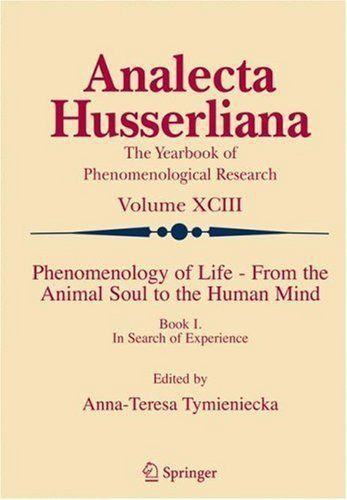
Transcendental phenomenology presumed to have overcome the classic mind-body dichotomy in terms of consciousness, yet, according to progress in scientific studies, the biological functions of the brain seem to appropriate significant functions attributed traditionally to consciousness. Should we indeed dissolve the specificity of human consciousness by explaining human experience in its multiple sense-giving modalities through the physiological functions of the brain? The present collection of studies addresses this crucial question challenging such “naturalizing” reductionism from multiple angles. In search for the roots of “The Specifically Human Experience” (Bombala), moving along the line of “Animality and Intellection”(Gosetti-Ferencei), “Naturalistic Attitude and Personalistic Attitude”(Villela-Petit), and numerous other perspectives, we arrive at a novel proposal to explain the scholar functional differentiation of conscious modalities. We reach their source in the ontopoietic thread conducting the Logos of Life in its stepwise “Evolutive Unfolding”(Carmen Cozma), and in “sentience” as its quintessential core of further irreducible continuity (Tymieniecka) dispelling dichotomies and reductionisms. Papers by: Grahame Lock, Anna-Teresa Tymieniecka, Daniela Verducci, Ted Toadvine, Mary Trachsel, Martin Holt, Mary Jeanne Larrabee, Leszek Pyra, Bronislaw Bombala, Konrad Rokstad, Ilja Maso, Nancy Mardas, Jennifer Anna Gosetti-Ferencei, Maria Villela-Petit, Mara Stafecka, Carmen Cozma, Francesco Totaro, Andreas Brenner, Sinan Kadir Celik, Osvaldo Rossi, Maria Manuela Brinto Martins, Elga Freiberga, Klymet Selvi, J.C. Couciero-Bueno, Patricia Trutty-Coohill, Walter Lammi, Ljudmila Molodkina, Martin Nkafu Nkemnkia.
How can we improve our ethical beliefs? How great are our capacities for moral improvement? What constitutes a good life? What role can philosophy play in answering these questions? In this important new book, one of our leading moral philosophers looks at central issues of ethics and emerges with the fullest and most elegant account of his fundamental ethical theory. James Griffin examines influential schools of ethical thought and finds deontology, virtue ethics, and most forms of utilitarianism to be overly ambitious. He argues that ethics cannot be what philosophers in these traditions expect because agents cannot be what the philosophies need them to be. Clear, compelling, and original, this new account of ethics will be of interest to anyone concerned with thinking about values: not only philosophers but legal, political, and economic theorists as well.
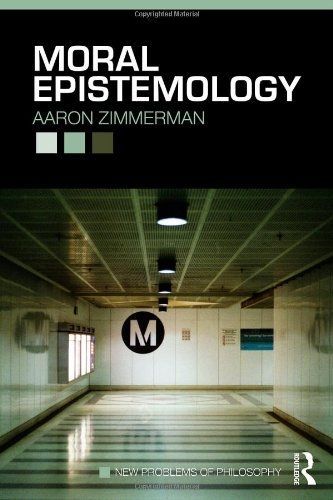
How do we know right from wrong? Do we even have moral knowledge? Moral epistemology studies these and related questions about our understanding of virtue and vice. It is one of philosophy’s perennial problems, reaching back to Plato, Aristotle, Aquinas, Locke, Hume and Kant, and has recently been the subject of intense debate as a result of findings in developmental and social psychology.In this outstanding introduction to the subject Aaron Zimmerman covers the following key topics: What is moral epistemology? What are its methods? Including a discussion of Socrates, Gettier and contemporary theories of knowledgeSkepticism about moral knowledge based on the anthropological record of deep and persistent moral disagreement, including contextualismMoral nihilism, including debates concerning God and morality and the relation between moral knowledge and our motives and reasons to act morallyEpistemic moral scepticism, intuitionism and the possibility of inferring ‘ought’ from ‘is,’ discussing the views of Locke, Hume, Kant, Ross, Audi, Thomson, Harman, Sturgeon and many othersHow children acquire moral concepts and become more reliable judges.Criticisms of those who would reduce moral knowledge to value-neutral knowledge or attempt to replace moral belief with emotion.Throughout the book Zimmerman argues that our belief in moral knowledge can survive sceptical challenges. He also draws on a rich range of examples from Plato’s Meno and Dickens’s David Copperfield to Bernard Madoff and Saddam Hussein.Including chapter summaries and annotated further reading at the end of each chapter, Moral Epistemology is essential reading for all students of ethics, epistemology and moral psychology.
ما از اخلاق چه انتظاری داریم؟ این سوال شاید تاحدودی برای عموم مردم و یا متخصصان این رشته قابل پاسخ باشد؛ اینکه خوب بودن را به ما بیاموزد و در تنظیم روابط فردی م...

جشن کتاب تهران به ایستگاه سی و یکم رسیده است. حال و احوال نشر کتاب خوب نیست و باید فرهنگدوستان را به خرید و هدیه دادن کتاب ترغیب نمود. خانه اخلاقپژوهان جوان ب...

بنیاد کتابهای اخلاق اسلامی عمدتا پالایش جان از آلودگیها و آراستن آن به زیباییها است. اندیشه محوری این قبیل کتابها آن است که انسان فعلی آنی نیست که باید باشد...

-
0 Comments