Notice: تابع WP_Block_Type_Registry::register به طورنادرست فراخوانی شد. نامهای نوع بلوک نباید حروف بزرگ داشته باشند. لطفاً برای اطلاعات بیشتر، اشکال زدایی در وردپرس را مشاهده کنید. (این پیام در نگارش 5.0.0 افزوده شده است.) in /home/ethicsho/public_html/wp-includes/functions.php on line 5313
Warning: Use of undefined constant TDC_PATH_LEGACY - assumed 'TDC_PATH_LEGACY' (this will throw an Error in a future version of PHP) in /home/ethicsho/public_html/wp-content/plugins/td-composer/td-composer.php on line 109
Warning: Use of undefined constant TDSP_THEME_PATH - assumed 'TDSP_THEME_PATH' (this will throw an Error in a future version of PHP) in /home/ethicsho/public_html/wp-content/plugins/td-composer/td-composer.php on line 113 بایگانیهای Occupational Therapists/ Professional Ethics - خانه اخلاق پژوهان جوان Notice: Trying to access array offset on value of type bool in /home/ethicsho/public_html/wp-content/plugins/wp-ulike/inc/general-functions.php on line 807
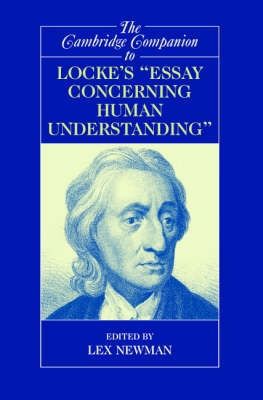
First published in 1689, John Locke’s Essay Concerning Human Understanding is widely recognised as among the greatest works in the history of Western philosophy. The Essay puts forward a systematic empiricist theory of mind, detailing how all ideas and knowledge arise from sense experience. Locke was trained in mechanical philosophy and he crafted his account to be consistent with the best natural science of his day. The Essay was highly influential and its rendering of empiricism would become the standard for subsequent theorists. This Companion volume includes fifteen new essays from leading scholars. Covering the major themes of Locke’s work, they explain his views while situating the ideas in the historical context of Locke’s day and often clarifying their relationship to ongoing work in philosophy. Pitched to advanced undergraduates and graduate students, it is ideal for use in courses on early modern philosophy, British empiricism and John Locke.
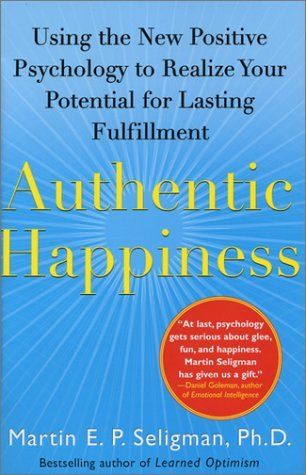
In this national bestseller — Martin Seligman’s most stimulating, persuasive book to date — the acclaimed author of Learned Optimism introduces yet another revolutionary idea. Drawing on groundbreaking scientific research, Seligman shows how Positive Psychology is shifting the profession’s paradigm away from its narrow-minded focus on pathology, victimology, and mental illness to positive emotion and mental health. Happiness, studies show, is not the result of good genes or luck. It can be cultivated by identifying and nurturing traits that we already possess — including kindness, originality, humor, optimism, and generosity.Seligman provides the tools you need in order to ascertain your most positive traits or strengths. Then he explains how, by frequently calling upon these “signature strengths” in all the crucial realms of life — health, relationships, career — you will not only develop natural buffers against misfortune and negative emotion, but also achieve new and sustainable levels of authentic contentment, gratification, and meaning.
In The Ethics of Romanticism Laurence Lockridge vigorously revives ethical criticism and at the same time brings to light the Romantics’ profound engagement with ethical questions. He argues that a will to value is the pervasive motive of Romantic writers from Blake, Wordsworth, Coleridge and De Quincey to Shelley, Hazlitt, Keats and Byron. They articulate a compelling ethics that has had a significant influence on modern thought. Yet its character has never before been systematically explored within the larger contexts of European thought. Lockridge argues that a focus on the ethical dimension of literature is the single most powerful strategy for structuring a writer’s work as a whole, and that it can even prove congenial. He gives original, interrelated readings of the eight major British Romantic writers. In discussing the place of ethical criticism in modern letters, he qualifies or refutes opposing views – conservative, Marxist, and deconstructive. His book gives strong evidence of one direction criticism might fruitfully take in future years.
The works of Paul Grice collected in this volume present his metaphysical defense of value, and represent a modern attempt to provide a metaphysical foundation for value. Value judgments are viewed as objective; value is part of the world we live in, but nonetheless is constructed by us. We inherit, or seem to inherit, the Aristotelian world in which objects and creatures are characterized in terms of what they are supposed to do. We are thereby enabled to evaluate by reference to function and finality. The most striking part of Grice’s position, however, is his contention that the legitimacy of such evaluations rests ultimately on an argument for absolute value.
How can we enhance police integrity? The authors surveyed over 3000 police officers from 30 U.S. police departments on how they would respond to typical scenarios where integrity is challenged. They studied three police agencies which scored highly on the integrity scale: Charlotte-Mecklenburg, North Carolina; Charleston, South Carolina; and St. Petersburg, Florida. The authors conclude that enhancing police integrity goes well beyond culling out “bad apple” police officers. Police administrators should focus on four aspects: organizational rulemaking; detecting, investigating and disciplining rule violations; circumscribing the informal “code of silence” that prohibits police from reporting the misconduct of their colleagues; and understanding the influence of public expectations and agency history.
ما از اخلاق چه انتظاری داریم؟ این سوال شاید تاحدودی برای عموم مردم و یا متخصصان این رشته قابل پاسخ باشد؛ اینکه خوب بودن را به ما بیاموزد و در تنظیم روابط فردی م...

جشن کتاب تهران به ایستگاه سی و یکم رسیده است. حال و احوال نشر کتاب خوب نیست و باید فرهنگدوستان را به خرید و هدیه دادن کتاب ترغیب نمود. خانه اخلاقپژوهان جوان ب...

بنیاد کتابهای اخلاق اسلامی عمدتا پالایش جان از آلودگیها و آراستن آن به زیباییها است. اندیشه محوری این قبیل کتابها آن است که انسان فعلی آنی نیست که باید باشد...

-
0 Comments