Notice: تابع WP_Block_Type_Registry::register به طورنادرست فراخوانی شد. نامهای نوع بلوک نباید حروف بزرگ داشته باشند. لطفاً برای اطلاعات بیشتر، اشکال زدایی در وردپرس را مشاهده کنید. (این پیام در نگارش 5.0.0 افزوده شده است.) in /home/ethicsho/public_html/wp-includes/functions.php on line 5313
Warning: Use of undefined constant TDC_PATH_LEGACY - assumed 'TDC_PATH_LEGACY' (this will throw an Error in a future version of PHP) in /home/ethicsho/public_html/wp-content/plugins/td-composer/td-composer.php on line 109
Warning: Use of undefined constant TDSP_THEME_PATH - assumed 'TDSP_THEME_PATH' (this will throw an Error in a future version of PHP) in /home/ethicsho/public_html/wp-content/plugins/td-composer/td-composer.php on line 113 بایگانیهای Normativity (Ethics)/ Congresses - خانه اخلاق پژوهان جوان Notice: Trying to access array offset on value of type bool in /home/ethicsho/public_html/wp-content/plugins/wp-ulike/inc/general-functions.php on line 807
Robert Merrihew Adams has been a leader in renewing philosophical respect for the idea that moral obligation may be founded on the commands of God. This collection of Adams’ essays, two of which are previously unpublished, draws from his extensive writings on philosophical theology that discuss metaphysical, epistemological, and ethical issues surrounding the concept of God–whether God exists or not, what God is or would be like, and how we ought to relate ourselves to such a being. Adams studies the relation between religion and ethics, delving into an analysis of moral arguments for theistic belief. In several essays, he applies contemporary studies in the metaphysics of individuality, possibility and necessity, and counterfactual conditionals to issues surrounding the existence of God and problems of evil.
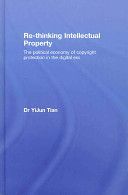
Copyright laws, along with other Intellectual Property Rights (IPRs), constitute the legal foundation for the “global knowledge-based economy” and copyright law now plays an increasingly important role in the creation of business fortunes, the access to and dissemination of knowledge, and human development in general. This book examines major problems in the current IPR regime, particularly the copyright regime, in the context of digitization, knowledge economy, and globalization. The book contends that the final goals of IP law and policy-making are to enhance the progress of science and economic development, and the use and even-distribution of intellectual resource at the global level. By referring to major international IP consensus, recent developments in regional IP forums and the successful experiences of various countries, YiJun Tian is able to provide specific theoretical, policy and legislative suggestions for addressing current copyright challenges. The book contends that each nation should strengthen the coordination of its IP protection and development strategies, adopt a more systematic and heterogeneous approach, and make IP theory, policy, specific legal mechanisms, marketing forces and all other available measures work collectively to deal with digital challenges and in a way that contributes to the establishment of a knowledge equilibrium international society.
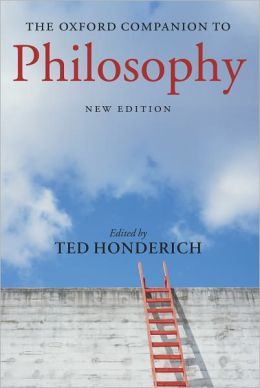
Offering clear and reliable guidance to the ideas of philosophers from antiquity to the present day and to the major philosophical systems around the globe, he Oxford Companion to Philosophy is the definitive philosophical reference work for readers at all levels. For ten years the original volume has served as a stimulating introduction for general readers and as an indispensable guide for students and scholars. A distinguished international assembly of 249 philosophers contributed almost 2,000 entries, and many of these have now been considerably revised and updated in this major new edition; to these are added over 300 brand-new pieces on a fascinating range of current topics such as animal consciousness, cloning, corporate responsibility, the family, globalization, terrorism . Here is, indeed, a world of thought, with entries on idealism and empiricism, epicureanism and stoicism, passion and emotion, deism and pantheism. The contributors represent a veritable who’s who of modern philosophy, including such eminent figures as Isaiah Berlin, Sissela Bok, Ronald Dworkin, John Searle, Michael Walzer, and W. V. Quine. We meet the great thinkers–from Aristotle and Plato, to Augustine and Aquinas, to Descartes and Kant, to Nietzsche and Schopenhauer, right up to contemporary thinkers such as Richard Rorty, Jacques Derrida, Luce Iragaray, and Noam Chomsky. There are short entries on key concepts such as personal identity and the mind-body problem, major doctrines from utilitarianism to Marxism, schools of thought such as the Heidelberg School or the Vienna Circle, and contentious public issues such as abortion, capital punishment, and welfare. In addition, the book offers short explanations of philosophical terms (qualia, supervenience, iff), puzzles (the Achilles paradox, the prisoner’s dilemma), and curiosities (the philosopher’s stone, slime). Almost every entry is accompanied by suggestions for further reading, and the book includes both a chronological chart of the history of philosophy and a gallery of portraits of eighty eminent philosophers. An indispensable guide and a constant source of stimulation and enlightenment, The Oxford Companion to Philosophy will appeal to everyone interested in abstract thought, the eternal questions, and the foundations of human understanding.
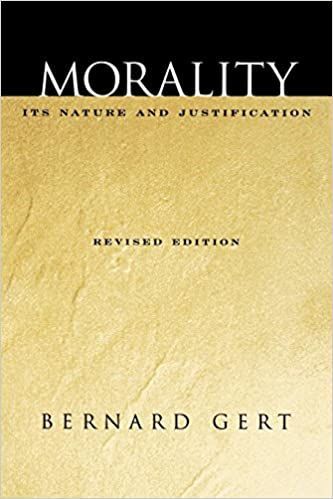
Bernard Gert’s classic work Morality, in which he argues his distinctive and comprehensive moral theory, is now in its sixth edition. Gert argues that morality is an informal system that does not provide answers to every moral question but does always limit the range of morally acceptable options and so explains why some moral questions cannot be resolved. Gert describes the two-step procedure that is used in moral decisions and judgments, and he shows that moral rules cannot be understood independently of the system in which they are embedded. Although his moral theory is sophisticated, it is presented with a clarity that will appeal to undergraduate and graduate students alike, as well as anyone with a general interest in applied ethics. In this new edition, Gert perfects the consistency of his views by presenting his argument in greater detail; he also revises the text in light of a critical book and two symposia dedicated to his theory that have surfaced since the book’s last publication. This is the definitive edition to the work that has received so much attention and acclaim.
Is medical ethics in times of armed conflict identical to medical ethics in times of peace, as the World Medical Association declares? In Bioethics and Armed Conflict, the first comprehensive study of medical ethics in conventional, unconventional, and low-intensity war, Michael Gross examines the dilemmas that arise when bioethical principles clash with military necessity—when physicians try to save lives during an endeavor dedicated to taking them—and describes both the conflicts and congruencies of military and medical ethics.Gross describes how the principles of contemporary just war, unlike those of medical ethics, often go beyond the welfare of the individual to consider the collective interests of combatants and noncombatants and the general interests of the state. Military necessity plays havoc with such patients’ rights as the right to life, the right to medical care, informed consent, confidentiality, and the right to die. The principles of triage in battle conditions dictate not need-based treatment but the distribution of resources that will return the greatest number of soldiers to active duty. And unconventional warfare, including current “wars” on terrorism, challenges the traditional concept of medical neutrality as physicians who have sworn to “do no harm” are called upon to lend their expertise to “interrogational” torture or to the development of biological or chemical weapons. Difficult dilemmas inevitably arise during armed conflict, and medicine, Gross concludes, is not above the fray. Medical ethics in time of war cannot be identical to medical ethics in peacetime.
ما از اخلاق چه انتظاری داریم؟ این سوال شاید تاحدودی برای عموم مردم و یا متخصصان این رشته قابل پاسخ باشد؛ اینکه خوب بودن را به ما بیاموزد و در تنظیم روابط فردی م...

جشن کتاب تهران به ایستگاه سی و یکم رسیده است. حال و احوال نشر کتاب خوب نیست و باید فرهنگدوستان را به خرید و هدیه دادن کتاب ترغیب نمود. خانه اخلاقپژوهان جوان ب...

بنیاد کتابهای اخلاق اسلامی عمدتا پالایش جان از آلودگیها و آراستن آن به زیباییها است. اندیشه محوری این قبیل کتابها آن است که انسان فعلی آنی نیست که باید باشد...

-
0 Comments