Notice: تابع WP_Block_Type_Registry::register به طورنادرست فراخوانی شد. نامهای نوع بلوک نباید حروف بزرگ داشته باشند. لطفاً برای اطلاعات بیشتر، اشکال زدایی در وردپرس را مشاهده کنید. (این پیام در نگارش 5.0.0 افزوده شده است.) in /home/ethicsho/public_html/wp-includes/functions.php on line 5313
Warning: Use of undefined constant TDC_PATH_LEGACY - assumed 'TDC_PATH_LEGACY' (this will throw an Error in a future version of PHP) in /home/ethicsho/public_html/wp-content/plugins/td-composer/td-composer.php on line 109
Warning: Use of undefined constant TDSP_THEME_PATH - assumed 'TDSP_THEME_PATH' (this will throw an Error in a future version of PHP) in /home/ethicsho/public_html/wp-content/plugins/td-composer/td-composer.php on line 113 بایگانیهای Nihilism - خانه اخلاق پژوهان جوان Notice: Trying to access array offset on value of type bool in /home/ethicsho/public_html/wp-content/plugins/wp-ulike/inc/general-functions.php on line 807
The latter half of the twentieth century witnessed a growing interest in Buddhism, and it continues to capture the imagination of many in the West who see it as either an alternative or a supplement to their own religious beliefs. Numerous introductory books have appeared in recent years to cater for this growing interest, but almost none devotes attention to the specifically ethical dimension of the tradition. For complex cultural and historical reasons, ethics has not received as much attention in traditional Buddhist thought as it has in the West, and publications on the subject are few and far between. Here, Damien Keown, author of Buddhism: A Very Short Introduction , illustrates how Buddhism might approach a range of fascinating moral issues ranging from abortion and suicide to cloning.
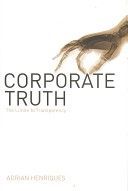
In the corporate jungle inhabited by Enrons and WorldComs, a lack of transparency is the root of all scandal, yet delivering transparency seems immensely difficult with the often competing interests of shareholders, corporate boards, government regulators, and other stakeholders. Written by noted corporate social responsibility practitioner Adrian Henriques and drawing on a vast wealth of real-life examples from the commercial world, this lively business book goes in search of the appropriate limits of transparency. From commercial confidentiality to the ethics of marketing to lobbying and corporate corruption, the author addresses the position, significance, and limits of transparency in modern corporate life and works through the dilemmas that the increasing calls for transparency present. From the secrets of the board room to the struggles of NGOs, transparency is a persistent challenge-how much is enough? How much do we need? How do we do it? This book, ideally suited to business leaders and managers, consultants and business students alike addresses these questions and more.
The seventeenth century saw a major revolution in our ways of thinking about such issues as the method appropriate to philosophy and science, the relation between mind and body, the nature of substance, and the place of humanity in nature. While not neglecting the lesser but still influential figures, such as Arnauld and Malebranche, John Cottingham focuses primarily on the three great “rationalists”: Descartes, Spinoza, and Leibniz. He examines how they approached central problems of philosophy, and shows how closely their ideas are related, despite the radically different philosophical systems they produced. He not only places the major thinkers in their historical and philosophical contexts, but engages their ideas in a vigorously critical way, revealing their capacity to throw light on major philosophical topics that are still very much alive today.
Bonnie Steinbock presents The Oxford Handbook of Bioethics –an authoritative, state-of-the-art guide to current issues in bioethics. Thirty-four contributors reflect the interdisciplinarity that is characteristic of bioethics, and its increasingly international character. Thirty topics are covered in original essays written by some of the world’s leading figures in the field, as well as by some newer “up-and-comers.” The essays address both perennial issues, such as the methodology of bioethics, autonomy, justice, death, and moral status, and newer issues, such as biobanking, stem cell research, cloning, pharmacogenomics, and bioterrorism. Other topics concern mental illness and moral agency, the rule of double effect, justice and the elderly, the definition of death, organ transplantation, feminist approaches to commodification of the body, life extension, advance directives, physician-assisted death, abortion, genetic research, population screening, enhancement, research ethics, and the implications of public and global health for bioethics. Anyone who wants to know how the central debates in bioethics have developed in recent years, and where the debates are going, will want to consult this book. It will be an invaluable resource not only for scholars and graduate students in bioethics, but also for those in philosophy, medicine, law, theology, social science, public policy, and public health who wish to keep abreast of developments in bioethics.
Containing material from hundreds of highly distinguished contributors representing the world’s top universities and institutions, the second edition has a truly global perspective. It contains more than 2,100 entries — including more than 450 new articles. Among the many topics covered are African, Islamic, Jewish, Russian, Chinese, and Buddhist philosophies; bioethics and biomedical ethics; art and aesthetics; epistemology; metaphysics; peace and war; social and political philosophy; the Holocaust; feminist thought; and much more. Additionally, the second edition also features 1,000 biographical entries on major figures in philosophical thought throughout history.
ما از اخلاق چه انتظاری داریم؟ این سوال شاید تاحدودی برای عموم مردم و یا متخصصان این رشته قابل پاسخ باشد؛ اینکه خوب بودن را به ما بیاموزد و در تنظیم روابط فردی م...

جشن کتاب تهران به ایستگاه سی و یکم رسیده است. حال و احوال نشر کتاب خوب نیست و باید فرهنگدوستان را به خرید و هدیه دادن کتاب ترغیب نمود. خانه اخلاقپژوهان جوان ب...

بنیاد کتابهای اخلاق اسلامی عمدتا پالایش جان از آلودگیها و آراستن آن به زیباییها است. اندیشه محوری این قبیل کتابها آن است که انسان فعلی آنی نیست که باید باشد...

-
0 Comments