Notice: تابع WP_Block_Type_Registry::register به طورنادرست فراخوانی شد. نامهای نوع بلوک نباید حروف بزرگ داشته باشند. لطفاً برای اطلاعات بیشتر، اشکال زدایی در وردپرس را مشاهده کنید. (این پیام در نگارش 5.0.0 افزوده شده است.) in /home/ethicsho/public_html/wp-includes/functions.php on line 5313
Warning: Use of undefined constant TDC_PATH_LEGACY - assumed 'TDC_PATH_LEGACY' (this will throw an Error in a future version of PHP) in /home/ethicsho/public_html/wp-content/plugins/td-composer/td-composer.php on line 109
Warning: Use of undefined constant TDSP_THEME_PATH - assumed 'TDSP_THEME_PATH' (this will throw an Error in a future version of PHP) in /home/ethicsho/public_html/wp-content/plugins/td-composer/td-composer.php on line 113 بایگانیهای Nietzsche, Friedrich Wilhelm - Ethics - خانه اخلاق پژوهان جوان Notice: Trying to access array offset on value of type bool in /home/ethicsho/public_html/wp-content/plugins/wp-ulike/inc/general-functions.php on line 807
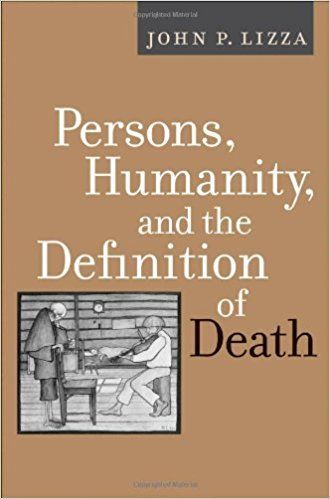
In this riveting and timely work, John P. Lizza presents the first comprehensive analysis of personhood and humanity in the context of defining death. Rejecting the common assumption that human or personal death is simply a biological phenomenon for biologists or physicians to define, Lizza argues that the definition of death is also a matter for metaphysical reflection, moral choice, and cultural acceptance. Lizza maintains that defining death remains problematic because basic ontological, ethical, and cultural issues have never been adequately addressed. Advances in life-sustaining technology and organ transplantation have led to revision of the legal definition of death. It is generally accepted that death occurs when all functions of the brain have ceased. However, legal and clinical cases involving postmortem pregnancy, individuals in permanent vegetative state, those with anencephaly, and those with severe dementia challenge the neurological criteria. Is “brain death” really death? Should the neurological criteria be expanded to include individuals in permanent vegetative state, with anencephaly, and those with severe dementia? What metaphysical, ethical, and cultural considerations are relevant to answering such questions? Although Lizza accepts a pluralistic approach to the legal definition of death, he proposes a nonreductive, substantive view in which persons are understood as “constituted by” human organisms. This view, he argues, provides the best account of human nature as biological, moral, and cultural and supports a consciousness-related formulation of death. Through an analysis of legal and clinical cases and a discussion of alternative concepts of personhood, Lizza casts greater light on the underlying themes of a complex debate.
In this brief history, philosopher Nicholas White reviews 2,500 years of philosophical thought about happiness.Addresses key questions such as: What is happiness? Should happiness play such a dominant role in our lives? How can we deal with conflicts between the various things that make us happy? Considers the ways in which major thinkers from antiquity to the modern day have treated happiness: from Plato’s notion of the harmony of the soul, through to Nietzsche’s championing of conflict over harmony. Relates questions about happiness to ethics and to practical philosophy.
‘This is an outline of a coherence theory of law. Its basic ideas are: reasonable support and weighing of reasons. All the rest is commentary.’These words at the beginning of the preface of this book perfectly indicate what On Law and Reason is about. It is a theory about the nature of the law which emphasises the role of reason in the law and which refuses to limit the role of reason to the application of deductive logic.In 1989, when the first edition of On Law and Reason appeared, this book was ground breaking for several reasons. It provided a rationalistic theory of the law in the language of analytic philosophy and based on a thorough understanding of the results, including technical ones, of analytic philosophy. That was not an obvious combination at the time of the book’s first appearance and still is not. The result is an analytical rigor that is usually associated with positivist theories of the law, combined with a philosophical position that is not natural law in a strict sense, but which shares with it the emphasis on the role of reason in determining what the law is. If only for this rare combination, On Law and Reason still deserves careful study.On Law and Reason also foreshadowed and influenced a development in the field of Legal Logic that would take place in the nineties of the 20th century, namely the development of non-monotonic (‘defeasible’) logics for the analysis of legal reasoning. In the new Introduction to this second edition, this aspect is explored in some more detail.
ما از اخلاق چه انتظاری داریم؟ این سوال شاید تاحدودی برای عموم مردم و یا متخصصان این رشته قابل پاسخ باشد؛ اینکه خوب بودن را به ما بیاموزد و در تنظیم روابط فردی م...

جشن کتاب تهران به ایستگاه سی و یکم رسیده است. حال و احوال نشر کتاب خوب نیست و باید فرهنگدوستان را به خرید و هدیه دادن کتاب ترغیب نمود. خانه اخلاقپژوهان جوان ب...

بنیاد کتابهای اخلاق اسلامی عمدتا پالایش جان از آلودگیها و آراستن آن به زیباییها است. اندیشه محوری این قبیل کتابها آن است که انسان فعلی آنی نیست که باید باشد...

-
0 Comments