Notice: تابع WP_Block_Type_Registry::register به طورنادرست فراخوانی شد. نامهای نوع بلوک نباید حروف بزرگ داشته باشند. لطفاً برای اطلاعات بیشتر، اشکال زدایی در وردپرس را مشاهده کنید. (این پیام در نگارش 5.0.0 افزوده شده است.) in /home/ethicsho/public_html/wp-includes/functions.php on line 5313
Warning: Use of undefined constant TDC_PATH_LEGACY - assumed 'TDC_PATH_LEGACY' (this will throw an Error in a future version of PHP) in /home/ethicsho/public_html/wp-content/plugins/td-composer/td-composer.php on line 109
Warning: Use of undefined constant TDSP_THEME_PATH - assumed 'TDSP_THEME_PATH' (this will throw an Error in a future version of PHP) in /home/ethicsho/public_html/wp-content/plugins/td-composer/td-composer.php on line 113 بایگانیهای Nanotechnology/ Social Aspects - خانه اخلاق پژوهان جوان Notice: Trying to access array offset on value of type bool in /home/ethicsho/public_html/wp-content/plugins/wp-ulike/inc/general-functions.php on line 807
Greenhouse Economics: Values and Ethics examines the serious nature of global warming. In particular it explores the responsibilities the current generation might have to its successors, and how this should influence our economic approach. It challenges current literature on greenhouse economics, which has tended to shy away from these issues. The book will be of interest to advanced undergraduates and post graduates in environmental economics and ecological economics.
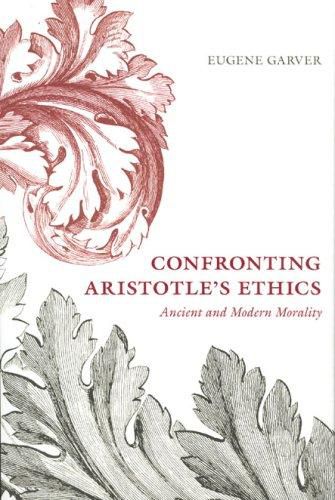
Book Summary of Confronting Aristotle’s Ethics: Ancient And Modern MoralityWhat is the good life? Posing this question today would likely elicit very different answers. Some might say that the good life means doing good?improving one?s community and the lives of others. Others might respond that it means doing well?cultivating one?s own abilities in a meaningful way. But for Aristotle these two distinct ideas?doing good and doing well?were one and the same and could be realized in a single life. In Confronting Aristotle?s Ethics, Eugene Garver examines how we can draw this conclusion from Aristotle’s works, while also studying how this conception of the good life relates to contemporary ideas ofmorality. The key to Aristotle?s views on ethics, argues Garver, lies in the Metaphysics or, more specifically, in his thoughts on activities, actions, and capacities. For Aristotle, Garver shows, it is only possible to be truly active when acting for the common good, and it is only possible to be truly happy when active to the extent of one?s own powers. But does this mean we should aspire to Aristotle?s impossibly demanding vision of the good life? In a word, no. Garver stresses the enormous gap between life in Aristotle?s time and ours. As a result, this book will be a welcome rumination on not only Aristotle, but the relationship between the individual and society in everyday life..
Does action always arise out of desire? G. F. Schueler examines this hotly debated topic in philosophy of action and moral philosophy, arguing that once two senses of “desire” are distinguished – roughly, genuine desires and pro attitudes – apparently plausible explanations of action in terms of the agent’s desires can be seen to be mistaken.Desire probes a fundamental issue in philosophy of mind, the nature of desires and how, if at all, they motivate and justify our actions. At least since Hume argued that reason “is and of right ought to be the slave of the passions,” many philosophers have held that desires play an essential role both in practical reason and in the explanation of intentional action. G. F. Schueler looks at contemporary accounts of both roles in various belief-desire models of reasons and explanation and argues that the usual belief-desire accounts need to be replaced.Schueler contends that the plausibility of the standard belief-desire accounts rests largely on a failure to distinguish “desires proper,” like a craving for sushi, from so-called “pro attitudes,” which may take the form of beliefs and other cognitive states as well as desires proper. Schueler’s “deliberative model” of practical reasoning suggests a different view of the place of desire in practical reason and the explanation of action. He holds that we can arrive at an intention to act by weighing the relevant considerations and that these may not include desires proper at all.A Bradford Book
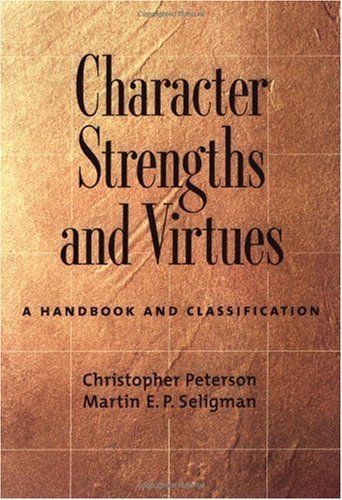
“Character” has become a front-and-center topic in contemporary discourse, but this term does not have a fixed meaning. Character may be simply defined by what someone does not do, but a more active and thorough definition is necessary, one that addresses certain vital questions. Is character a singular characteristic of an individual, or is it composed of different aspects? Does character–however we define it–exist in degrees, or is it simply something one happens to have? How can character be developed? Can it be learned? Relatedly, can it be taught, and who might be the most effective teacher? What roles are played by family, schools, the media, religion, and the larger culture? This groundbreaking handbook of character strengths and virtues is the first progress report from a prestigious group of researchers who have undertaken the systematic classification and measurement of widely valued positive traits. They approach good character in terms of separate strengths-authenticity, persistence, kindness, gratitude, hope, humor, and so on-each of which exists in degrees. Character Strengths and Virtues classifies twenty-four specific strengths under six broad virtues that consistently emerge across history and culture: wisdom, courage, humanity, justice, temperance, and transcendence. Each strength is thoroughly examined in its own chapter, with special attention to its meaning, explanation, measurement, causes, correlates, consequences, and development across the life span, as well as to strategies for its deliberate cultivation. This book demands the attention of anyone interested in psychology and what it can teach about the good life.
ما از اخلاق چه انتظاری داریم؟ این سوال شاید تاحدودی برای عموم مردم و یا متخصصان این رشته قابل پاسخ باشد؛ اینکه خوب بودن را به ما بیاموزد و در تنظیم روابط فردی م...

جشن کتاب تهران به ایستگاه سی و یکم رسیده است. حال و احوال نشر کتاب خوب نیست و باید فرهنگدوستان را به خرید و هدیه دادن کتاب ترغیب نمود. خانه اخلاقپژوهان جوان ب...

بنیاد کتابهای اخلاق اسلامی عمدتا پالایش جان از آلودگیها و آراستن آن به زیباییها است. اندیشه محوری این قبیل کتابها آن است که انسان فعلی آنی نیست که باید باشد...

-
0 Comments