Notice: تابع WP_Block_Type_Registry::register به طورنادرست فراخوانی شد. نامهای نوع بلوک نباید حروف بزرگ داشته باشند. لطفاً برای اطلاعات بیشتر، اشکال زدایی در وردپرس را مشاهده کنید. (این پیام در نگارش 5.0.0 افزوده شده است.) in /home/ethicsho/public_html/wp-includes/functions.php on line 5313
Warning: Use of undefined constant TDC_PATH_LEGACY - assumed 'TDC_PATH_LEGACY' (this will throw an Error in a future version of PHP) in /home/ethicsho/public_html/wp-content/plugins/td-composer/td-composer.php on line 109
Warning: Use of undefined constant TDSP_THEME_PATH - assumed 'TDSP_THEME_PATH' (this will throw an Error in a future version of PHP) in /home/ethicsho/public_html/wp-content/plugins/td-composer/td-composer.php on line 113 بایگانیهای Minorities/ United States/ Social Conditions/ Encyclopedias - خانه اخلاق پژوهان جوان Notice: Trying to access array offset on value of type bool in /home/ethicsho/public_html/wp-content/plugins/wp-ulike/inc/general-functions.php on line 807
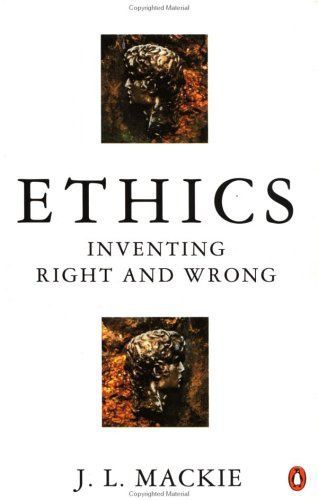
John Mackie’s stimulating book is a complete and clear treatise on moral theory. His writings on normative ethics-the moral principles he recommends-offer a fresh approach on a much neglected subject, and the work as a whole is undoubtedly a major contribution to modern philosophy.The author deals first with the status of ethics, arguing that there are not objective values, that morality cannot be discovered but must be made. He examines next the content of ethics, seeing morality as a functional device, basically the same at all times but changing significantly in response to changes in the human condition. He sketches a practical moral system, criticizing but also borrowing from both utilitarian and absolutist views. Thirdly, the frontiers of ethics, areas of contact with psychology, metaphysics, theology, law and politcs, are explored.Throughout, his aim is to discuss a wide range of questions that are both philosophical and practical, working within a distinctive version of subjectivism-an “error” theory of the apparent objectivity of values. John Mackie has drawn on the contributions of such classic thinkers as Plato, Aristotle, Hobbes, Hume, Kant and Sidgwick, and on more recent discussions, to produce a thought-provoking account that will inspire both the general reader and the student of philosophy.
Social Motivation, Justice, and the Moral Emotions proposes an attribution theory of interpersonal or social motivation that distinguishes between the role of thinking and feeling in determining action. The place of this theory within the larger fields of motivation and attributional analyses is explored. It features new thoughts concerning social motivation on such topics as help giving, aggression, achievement evaluation, compliance to commit a transgression, as well as new contributions to the understanding of social justice. Included also is material on moral emotions, with discussions of admiration, contempt, envy, gratitude, and other affects not considered in Professor Weiner’s prior work. The text also contains previously unexamined topics regarding social inferences of arrogance and modesty and the role of mediators versus moderators in theory building. Divided into five chapters, this book: *Considers the logical development and structure of a proposed theory of social motivation and justice; *Reviews meta-analytic tests of the theory within the contexts of help giving and aggression and examines issues related to cultural and individual differences; *Focuses on moral emotions including an analysis of admiration, envy, gratitude, jealousy, scorn, and others; *Discusses conditions where reward decreases motivation while punishment augments strivings; and *Provides applications that are beneficial in the classroom, in therapy, and in training programs. Social Motivation, Justice, and the Moral Emotions appeals to practicing and research psychologists and advanced students in a variety of fields including social, educational, personality, political/legal, health, and clinical psychology. It will also serve as a supplement in courses on motivational psychology, emotion and motivation, altruism and/or pro-social behavior, aggression, social judgment, and morality. Also included is the raw material (e.g., questionnaires, surveys, etc.) for 13 experiments relating to core predictions of the proposed attribution theory.
What makes us human? Why do people think, feel and act as they do? What is the essence of human nature? What is the basic relationship between the individual and society? These questions have fascinated both great thinkers and ordinary humans for centuries. Now, at last, there is a solid basis for answering them, in the form of accumulated efforts and studies by thousands of psychology researchers. We no longer have to rely on navel-gazing and speculation to understand why people are the way they are – we can instead turn to solid, objective findings. This book, by an eminent social psychologist at the peak of his career, not only summarizes what we know about people – it also offers a coherent, easy-to-understand, though radical, explanation. Turning conventional wisdom on its head, the author argues that culture shaped human evolution. Contrary to theories that depict the individual’s relation to society as one of victimization, endless malleability, or just a square peg in a round hole, he proposes that the individual human being is designed by nature to be part of society. Moreover, he argues that we need to briefly set aside the endless study of cultural differences to look at what most cultures have in common – because that holds the key to human nature. Culture is in our genes, although cultural differences may not be. This core theme is further developed by a powerful tour through the main dimension of human psychology. What do people want? How do people think? How do emotions operate? How do people behave? And how do they interact with each other? The answers are often surprising, and along the way the author explains how human desire, thought, feeling, and action are connected.
Tradition, Rationality, and Virtue provides the first comprehensive and detailed treatment of the work of Alasdair MacIntyre. In this book Thomas D’Andrea presents an accessible critical study of the full range of MacIntyre’s thought across ethical theory, psychoanalytic theory, social and political philosophy, Marxist theory, and the philosophy of religion. Moving from the roots of MacIntyre’s thought in ethical inquiry, this book examines MacIntyre’s treatment of Marx, Christianity, and the nature of human action and discusses in depth the development and applications of MacIntyre’s After Virtue project. The book culminates in an examination of major internal and external criticisms of MacIntyre’s work and a consideration of its future directions.
ما از اخلاق چه انتظاری داریم؟ این سوال شاید تاحدودی برای عموم مردم و یا متخصصان این رشته قابل پاسخ باشد؛ اینکه خوب بودن را به ما بیاموزد و در تنظیم روابط فردی م...

جشن کتاب تهران به ایستگاه سی و یکم رسیده است. حال و احوال نشر کتاب خوب نیست و باید فرهنگدوستان را به خرید و هدیه دادن کتاب ترغیب نمود. خانه اخلاقپژوهان جوان ب...

بنیاد کتابهای اخلاق اسلامی عمدتا پالایش جان از آلودگیها و آراستن آن به زیباییها است. اندیشه محوری این قبیل کتابها آن است که انسان فعلی آنی نیست که باید باشد...

-
0 Comments