Notice: تابع WP_Block_Type_Registry::register به طورنادرست فراخوانی شد. نامهای نوع بلوک نباید حروف بزرگ داشته باشند. لطفاً برای اطلاعات بیشتر، اشکال زدایی در وردپرس را مشاهده کنید. (این پیام در نگارش 5.0.0 افزوده شده است.) in /home/ethicsho/public_html/wp-includes/functions.php on line 5313
Warning: Use of undefined constant TDC_PATH_LEGACY - assumed 'TDC_PATH_LEGACY' (this will throw an Error in a future version of PHP) in /home/ethicsho/public_html/wp-content/plugins/td-composer/td-composer.php on line 109
Warning: Use of undefined constant TDSP_THEME_PATH - assumed 'TDSP_THEME_PATH' (this will throw an Error in a future version of PHP) in /home/ethicsho/public_html/wp-content/plugins/td-composer/td-composer.php on line 113 بایگانیهای Middle Class - History. - United States - خانه اخلاق پژوهان جوان Notice: Trying to access array offset on value of type bool in /home/ethicsho/public_html/wp-content/plugins/wp-ulike/inc/general-functions.php on line 807
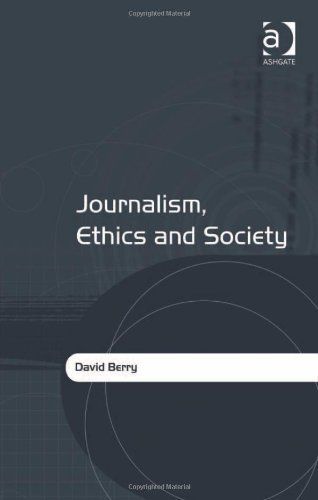
“Journalism, Ethics and Society provides a comprehensive overview and critical analysis of debates within media ethics in relation to the purpose of news and journalism for society. It assesses how the meaning of news and journalism is central to a discourse in ethics and further evaluates the continuing role of liberalism in helping to define both theory and practice.” “A timely and topical book, providing new ways of thinking about media ethics, Journalism, Ethics and Society will be of interest to students and researchers working within the field of media, cultural studies and journalism, as well as to scholars of philosophy.”–BOOK JACKET.
The demand to be beautiful is increasingly important in today’s visual and virtual culture. Rightly or wrongly, being perfect has become an ethical ideal to live by, and according to which we judge ourselves good or bad, a success or a failure. Perfect Me explores the changing nature of the beauty ideal, showing how it is more dominant, more demanding, and more global than ever before. Heather Widdows argues that our perception of the self is changing. More and more, we locate the self in the body–not just our actual, flawed bodies but our transforming and imagined ones. As this happens, we further embrace the beauty ideal. Nobody is firm enough, thin enough, smooth enough, or buff enough-not without significant effort and cosmetic intervention. And as more demanding practices become the norm, more will be required of us, and the beauty ideal will be harder and harder to resist. If you have ever felt the urge to “make the best of yourself” or worried that you were “letting yourself go,” this book explains why. Perfect Me examines how the beauty ideal has come to define how we see ourselves and others and how we structure our daily practices-and how it enthralls us with promises of the good life that are dubious at best. Perfect Me demonstrates that we must first recognize the ethical nature of the beauty ideal if we are ever to address its harms.
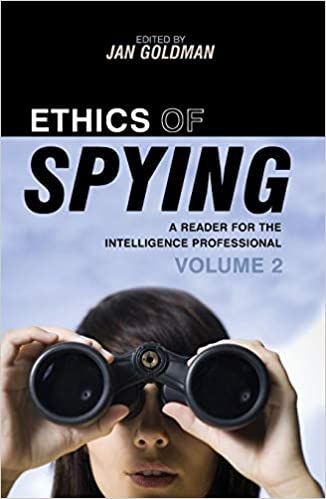
Ethics of Spying: A Reader for the Intelligence Professional, Volume 2 continues where the first book ended, but with a twist. It begins with a historical perspective of the expectations of the moral and ethical conduct of intelligence personnel. A previously classified memo from 1941 and a report from 1954 provide a sense of both the history and the perception of standard professional conduct by government officials-both describing intelligence as an amoral albeit necessary profession. The first half of the book defines an intelligence professional, while the second half seeks to apply theoretical and practical perspectives to that definition.
One of the most important developments in modern moral philosophy is the resurgence of interest in the virtues. In this new book, Daniel Russell explores two important hopes for such an approach to moral thought: that starting from the virtues should cast light on what makes an action right, and that notions like character, virtue, and vice should yield a plausible picture of human psychology. Russell argues that the key to each of these hopes is an understanding of the cognitive and deliberative skills involved in the virtues. If right action is defined in terms of acting generously or kindly, then these virtues must involve skills for determining what the kind or generous thing to do would be on a given occasion. Likewise, Russell argues that understanding virtuous action as the intelligent pursuit of virtuous goals yields a promising picture of the psychology of virtue. This book develops an Aristotelian account of the virtue of practical intelligence or “phronesis”–an excellence of deliberating and making choices–which Russell argues is a necessary part of every virtue. This emphasis on the roots of the virtues in the practical intellect contrasts with ambivalence about the practical intellect in much recent work on the virtues–a trend Russell argues is ultimately perilous for virtue theory. This book also takes a penetrating look at issues like the unity of the virtues, responsibility for character, and that elusive figure, ‘the virtuous person’. Written in a clear and careful manner, Practical Intelligence and the Virtues will appeal to philosophers and students alike in moral philosophy and moral psychology.
ما از اخلاق چه انتظاری داریم؟ این سوال شاید تاحدودی برای عموم مردم و یا متخصصان این رشته قابل پاسخ باشد؛ اینکه خوب بودن را به ما بیاموزد و در تنظیم روابط فردی م...

جشن کتاب تهران به ایستگاه سی و یکم رسیده است. حال و احوال نشر کتاب خوب نیست و باید فرهنگدوستان را به خرید و هدیه دادن کتاب ترغیب نمود. خانه اخلاقپژوهان جوان ب...

بنیاد کتابهای اخلاق اسلامی عمدتا پالایش جان از آلودگیها و آراستن آن به زیباییها است. اندیشه محوری این قبیل کتابها آن است که انسان فعلی آنی نیست که باید باشد...

-
0 Comments