Notice: تابع WP_Block_Type_Registry::register به طورنادرست فراخوانی شد. نامهای نوع بلوک نباید حروف بزرگ داشته باشند. لطفاً برای اطلاعات بیشتر، اشکال زدایی در وردپرس را مشاهده کنید. (این پیام در نگارش 5.0.0 افزوده شده است.) in /home/ethicsho/public_html/wp-includes/functions.php on line 5313
Warning: Use of undefined constant TDC_PATH_LEGACY - assumed 'TDC_PATH_LEGACY' (this will throw an Error in a future version of PHP) in /home/ethicsho/public_html/wp-content/plugins/td-composer/td-composer.php on line 109
Warning: Use of undefined constant TDSP_THEME_PATH - assumed 'TDSP_THEME_PATH' (this will throw an Error in a future version of PHP) in /home/ethicsho/public_html/wp-content/plugins/td-composer/td-composer.php on line 113 بایگانیهای Mental Health Personnel - خانه اخلاق پژوهان جوان Notice: Trying to access array offset on value of type bool in /home/ethicsho/public_html/wp-content/plugins/wp-ulike/inc/general-functions.php on line 807
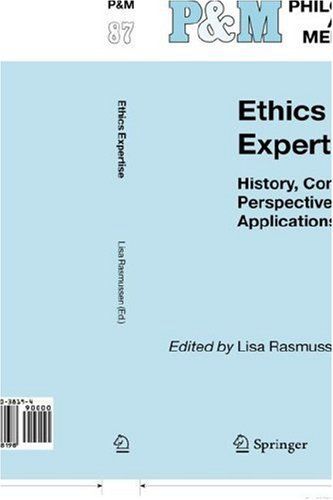
Section I examines historical philosophical understandings of expertise in order to situate the current institution of bioethics. Section II focuses on philosophical analyses of the concept of expertise, asking, among other things, how it should be understood, how it can be acquired, and what such expertise warrants. Finally, section III addresses topics in bioethics and how ethics expertise should or should not be brought to bear in these areas, including expertise in the court room, in the hospital room, in the media, and in making policy. 2. A GUIDED HISTORICAL TOUR As Scott LaBarge points out, Plato’s dialogues can be viewed as an extended treatment of the concept of moral expertise, so it is fitting to begin the volume with an examination of “Socrates and Moral Expertise”. Given Socrates’ protestations (the Oracle at Delphi notwithstanding) that he knows nothing, LaBarge observes that it would be interesting to determine both what a Socratic theory of moral expertise might be and whether Socrates qualified as such an expert. Plato’s model of moral expertise is what LaBarge calls “demonstrable expertise”, which is concerned mainly with the ability to attain a goal and to explain how one did it. The problem with this account is that when one tries to solve the various problems in the model – for example, allowing that moral expertise is not an all-or-nothing skill – then one is immediately faced with the “credentials problem”. As LaBarge puts it, “. . .
“A Letter Concerning Toleration is an English translation of a Latin work, the Epistola de Tolerantia , that John Locke wrote towards the end of the year 1685, while living – often in hiding – in the Dutch Republic. The Epistola was not however published until 1689, after Locke’s return to England, and the English translation followed very shortly after. It soon met with a critical reply, in a pamphlet written by the Oxford chaplain Jonas Proast, which was to launch a polemical exchange in the course of which Locke wrote three further defences of his argument for toleration. Unlike the Epistola/Letter (hereafter: Letter ), which is intense and compactly expressed, these defences are lengthy and often repetitive. But they comprise Locke’s most fully elaborated statement of his case; they are valuable, too, because the pressure of controversy led him to clarify the priorities among his arguments”–
ما از اخلاق چه انتظاری داریم؟ این سوال شاید تاحدودی برای عموم مردم و یا متخصصان این رشته قابل پاسخ باشد؛ اینکه خوب بودن را به ما بیاموزد و در تنظیم روابط فردی م...

جشن کتاب تهران به ایستگاه سی و یکم رسیده است. حال و احوال نشر کتاب خوب نیست و باید فرهنگدوستان را به خرید و هدیه دادن کتاب ترغیب نمود. خانه اخلاقپژوهان جوان ب...

بنیاد کتابهای اخلاق اسلامی عمدتا پالایش جان از آلودگیها و آراستن آن به زیباییها است. اندیشه محوری این قبیل کتابها آن است که انسان فعلی آنی نیست که باید باشد...

-
0 Comments