Notice: تابع WP_Block_Type_Registry::register به طورنادرست فراخوانی شد. نامهای نوع بلوک نباید حروف بزرگ داشته باشند. لطفاً برای اطلاعات بیشتر، اشکال زدایی در وردپرس را مشاهده کنید. (این پیام در نگارش 5.0.0 افزوده شده است.) in /home/ethicsho/public_html/wp-includes/functions.php on line 5313
Warning: Use of undefined constant TDC_PATH_LEGACY - assumed 'TDC_PATH_LEGACY' (this will throw an Error in a future version of PHP) in /home/ethicsho/public_html/wp-content/plugins/td-composer/td-composer.php on line 109
Warning: Use of undefined constant TDSP_THEME_PATH - assumed 'TDSP_THEME_PATH' (this will throw an Error in a future version of PHP) in /home/ethicsho/public_html/wp-content/plugins/td-composer/td-composer.php on line 113 بایگانیهای Medicine/ Religious Aspects/ Christianity - خانه اخلاق پژوهان جوان Notice: Trying to access array offset on value of type bool in /home/ethicsho/public_html/wp-content/plugins/wp-ulike/inc/general-functions.php on line 807
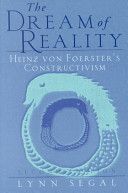
What if there were no objective facts, no objective truth, no objectivity at all, only our belief in them? What if our consciousness itself is an unconscious invention, constructed out of logic and language? In this thought-provoking volume, Lynn Segal describes how the ideas of Heinz von Foerster compel us to explore the question, “Do we discover the world or do we invent it?” and suggests that we must first know how we think before we can claim knowledge of the world. The resulting philosophy, Constructivism, examines the limits of what we can know and argues that understanding these limits can lead us to be more responsible for our personal and collective behavior. After tracing the historical transition from religious belief to a belief in science, Segal examines objectivity from semantic, philosophical, and neurological perspectives. Segal shows that we can never achieve objectivity and that the scientific method ensures only a consensus among observers. Next, he details how language and logic unwittingly predetermine the very conclusions we derive when we try to know the world. Finally, he describes a computational model of cognition that does not depend on first positing the world to account for cognition and consciousness. While Constructivism may seem relevant only to those in the cognitive sciences, it is, in fact, highly relevant to everyone. Paradoxically, grasping the limits of our own under-standing can free us to live more creative and meaningful personal and professional lives.
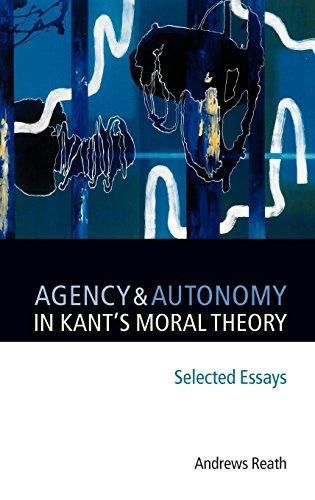
Andrews Reath presents a selection of his best essays on various features of Kant’s moral psychology and moral theory, with particular emphasis on his conception of rational agency and his conception of autonomy. Together the essays articulate Reath’s original approach to Kant’s views about human autonomy, which explains Kant’s belief that objective moral requirements are based on principles we choose for ourselves. With two new papers, and revised versions of several others, the volume will be of great interest to all students and scholars of Kant and of moral philosophy.
A comprehensive update of the best-selling first edition, this revitalized new text presents readers with a series of clear, well-written entries focusing on fifty of the most influential philosophers from the last two thousand years. Chosen to present the traditional mainstream of European philosophy, the text also provides a critical survey that meets the needs of readers seeking a broad basic understanding as well as a foundation for further philosophical enquiry. Encompassing a wide range of ancient, medieval and modern philosophers, features of the second edition include: new entries on Dewey, Collingwood, Popper, Quine, Merleau-Ponty, Ayer and Rawls a thorough revision of existing entries a complete update of the further reading section an expanded glossary the addition of an alphabetical table of contents and an index for ease of use. Authoritative and highly readable, this book is a vital reference tool for all those wishing to improve their understanding of some of the world’s most fascinating intellectual figures.
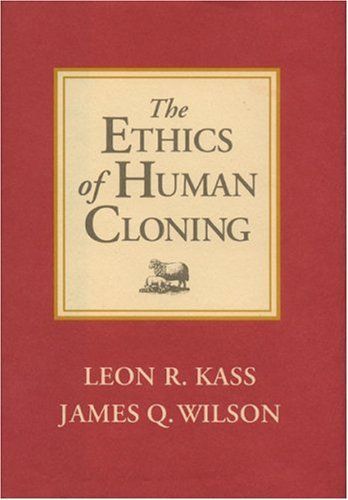
In this engaging book, Leon R. Kass, the noted teacher, scientist, and humanist, and James Q. Wilson, the preeminent political scientist to whom four U.S. presidents have turned for advice on crime, drug abuse, education, and other crises in American life, explore the ethics of human cloning, reproductive technology, and the teleology of human sexuality. Although in their lively dialogue both authors share a fundamental distrust of the notion of human cloning, they base their reticence on different views of the role of sexual reproduction and the role of the family. Professor Kass contends that in vitro fertilization and other assisted reproduction technologies that place the origin of human life in human hands have eroded the respect for the mystery of sexuality and human renewal. Professor Wilson, on the other hand, asserts that whether a human life is created naturally or artificially is immaterial as long as the child is raised by loving parents in a two-parent family and is not harmed by the means of its conception. This accessible volume promises to inform the public policy debate over the permissible conduct of genetic research and the permissible uses of its discoveries.
ما از اخلاق چه انتظاری داریم؟ این سوال شاید تاحدودی برای عموم مردم و یا متخصصان این رشته قابل پاسخ باشد؛ اینکه خوب بودن را به ما بیاموزد و در تنظیم روابط فردی م...

جشن کتاب تهران به ایستگاه سی و یکم رسیده است. حال و احوال نشر کتاب خوب نیست و باید فرهنگدوستان را به خرید و هدیه دادن کتاب ترغیب نمود. خانه اخلاقپژوهان جوان ب...

بنیاد کتابهای اخلاق اسلامی عمدتا پالایش جان از آلودگیها و آراستن آن به زیباییها است. اندیشه محوری این قبیل کتابها آن است که انسان فعلی آنی نیست که باید باشد...

-
0 Comments