Notice: تابع WP_Block_Type_Registry::register به طورنادرست فراخوانی شد. نامهای نوع بلوک نباید حروف بزرگ داشته باشند. لطفاً برای اطلاعات بیشتر، اشکال زدایی در وردپرس را مشاهده کنید. (این پیام در نگارش 5.0.0 افزوده شده است.) in /home/ethicsho/public_html/wp-includes/functions.php on line 5313
Warning: Use of undefined constant TDC_PATH_LEGACY - assumed 'TDC_PATH_LEGACY' (this will throw an Error in a future version of PHP) in /home/ethicsho/public_html/wp-content/plugins/td-composer/td-composer.php on line 109
Warning: Use of undefined constant TDSP_THEME_PATH - assumed 'TDSP_THEME_PATH' (this will throw an Error in a future version of PHP) in /home/ethicsho/public_html/wp-content/plugins/td-composer/td-composer.php on line 113 بایگانیهای Medicine, Arab - Moral And Ethical Aspects - خانه اخلاق پژوهان جوان Notice: Trying to access array offset on value of type bool in /home/ethicsho/public_html/wp-content/plugins/wp-ulike/inc/general-functions.php on line 807
Moral thinking today finds itself stranded between the particular and the universal. Alasdair MacIntyre’s work on narrative, discussed here along with that of Stanley Hauerwas and H. T. Engelhardt, aims to undo the perceived damage done by the Enlightenment by returning to narrative and abandoning the illusion of a disembodied reason that claims to be able give a coherent explanation for everything. It is precisely this – a theory that holds good for all cases – that John Rawls proposed, drawing on the heritage of Emmanuel Kant. Who is right? Must universality be abandoned? Must we only think about morality in terms that are relative, bound by space and time? Alexander Lucie-Smith attempts to answer these questions by examining the nature of narrative itself as well as the particular narratives of Rawls and St Augustine. Bound and rooted as they are in history and personal experience, narratives nevertheless strain at the limits imposed on them. It is Lucie-Smith’s contention that each narrative that points to a lived morality exists against the background of an infinite horizon; and thus it is that the particular and the rooted can also make us aware of the universal and unchanging.
In this exploration of new territory between ethics and epistemology, Miranda Fricker argues that there is a distinctively epistemic type of injustice, in which someone is wronged specifically in their capacity as a knower. Justice is one of the oldest and most central themes in philosophy, but in order to reveal the ethical dimension of our epistemic practices the focus must shift to injustice. Fricker adjusts the philosophical lens so that we see through to the negative space that is epistemic injustice. The book explores two different types of epistemic injustice, each driven by a form of prejudice, and from this exploration comes a positive account of two corrective ethical-intellectual virtues. The characterization of these phenomena casts light on many issues, such as social power, prejudice, virtue, and the genealogy of knowledge, and it proposes a virtue epistemological account of testimony. In this ground-breaking book, the entanglements of reason and social power are traced in a new way, to reveal the different forms of epistemic injustice and their place in the broad pattern of social injustice.
America’s first question to give more power to the individual, or to a central power? set the stage for an ongoing struggle between the Feds, the States and the Citizen. The balance of power is certainly shifting as we enter the 21st century. Upcoming Supreme Court appointments are a major weapon in this struggle. George Stephens shows how far we have come from the Founders? original intentions
Philosophers have increasingly advocated a virtue-based ethics that challenges traditional moral theories founded on moral obligation and delineation of right or wrong in given situations. Stan van Hooft provides a broad overview of the history of virtue ethics from Aristotle to Nietzsche to the ideas of contemporary writers Ricoeur and Levinas. He explores the major themes of moral theory and shows how a virtue ethics approach differs from those of other traditions. Van Hooft considers how morally complex practical problems, such as abortion, euthanasia, and integrity in politics, might be approached from a virtue perspective and addresses the charges of relativism and egoism that are often mounted against virtue ethics, arguing that virtue ethics is highly relevant to our understanding of the moral dimensions of professional roles.
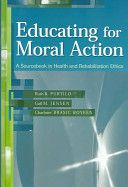
This new resource is written for physical therapy and occupational therapy administrators, curriculum coordinators and educators. Stemming from the summer 2003 “Dreamcatchers” Conference, Creighton University’s “Leadership in Ethics Education,” the authors have assembled a veritable “who’s who” of PT and OT academics to share their insights regarding contemporary issues in health and rehabilitation ethics. Going beyond the “nuts and bolts” of teaching ethics, the text aims to present pedagogical strategies that will ultimately change the face of how educators think, and consequently, how they teach ethics to the next generation of health professionals.
ما از اخلاق چه انتظاری داریم؟ این سوال شاید تاحدودی برای عموم مردم و یا متخصصان این رشته قابل پاسخ باشد؛ اینکه خوب بودن را به ما بیاموزد و در تنظیم روابط فردی م...

جشن کتاب تهران به ایستگاه سی و یکم رسیده است. حال و احوال نشر کتاب خوب نیست و باید فرهنگدوستان را به خرید و هدیه دادن کتاب ترغیب نمود. خانه اخلاقپژوهان جوان ب...

بنیاد کتابهای اخلاق اسلامی عمدتا پالایش جان از آلودگیها و آراستن آن به زیباییها است. اندیشه محوری این قبیل کتابها آن است که انسان فعلی آنی نیست که باید باشد...

-
0 Comments