Notice: تابع WP_Block_Type_Registry::register به طورنادرست فراخوانی شد. نامهای نوع بلوک نباید حروف بزرگ داشته باشند. لطفاً برای اطلاعات بیشتر، اشکال زدایی در وردپرس را مشاهده کنید. (این پیام در نگارش 5.0.0 افزوده شده است.) in /home/ethicsho/public_html/wp-includes/functions.php on line 5313
Warning: Use of undefined constant TDC_PATH_LEGACY - assumed 'TDC_PATH_LEGACY' (this will throw an Error in a future version of PHP) in /home/ethicsho/public_html/wp-content/plugins/td-composer/td-composer.php on line 109
Warning: Use of undefined constant TDSP_THEME_PATH - assumed 'TDSP_THEME_PATH' (this will throw an Error in a future version of PHP) in /home/ethicsho/public_html/wp-content/plugins/td-composer/td-composer.php on line 113 بایگانیهای Medicine - Philosophy - خانه اخلاق پژوهان جوان Notice: Trying to access array offset on value of type bool in /home/ethicsho/public_html/wp-content/plugins/wp-ulike/inc/general-functions.php on line 807
This long-awaited book sets out the implications of Habermas’s theory of communicative action for moral theory. ‘Discourse ethics’ attempts to reconstruct a moral point of view from which normative claims can be imperative with a procedure of justification based on reasoned agreement among participants in practical discourse.
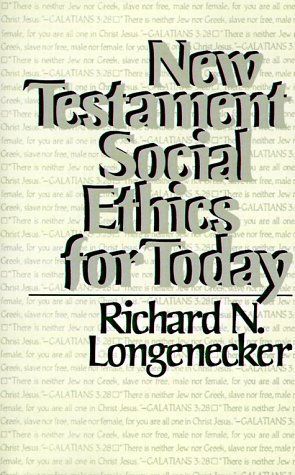
To Answer the Question of what role the New Testament should play in the formation and expression of Christian social morality today, Richard Longenecker here proposes a developmental hermeneutic, which distinguishes between “dedared principles” and “described practices” in the New Testament writings. With this distinction in mind; he focuses on the three couplets of Galatians 3:28 – “neither Jew nor Greek, slave nor free, male nor female” – showing how these matters were treated in early Christian thought and explaining their meaning for us today. In so doing, Longenecker lays a hermeneutical foundation for the much larger discussion of Christian social ethics. Book jacket.
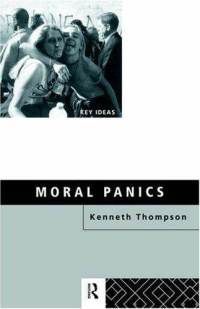
It is widely acknowledged that this is the age of moral panics. From the Bulger case to mad cow disease, newspaper headlines continually warn of some new danger and television programmes echo the theme with sensational docmenturies.This concise survey will help student trace the development of ideas of moral panic and to analyse how changing public perceptions are shaped and reflected through the media over time. Using examples drawn from:* club culture and raves* mugging* sex and AIDS* children, violence and the family.
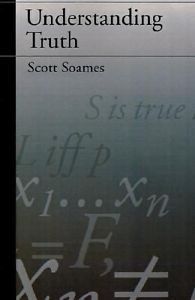
In this book, Scott Soames illuminates the notion of truth and the role it plays in our ordinary thought as well as in our logical, philosophical, and scientific theories. Soames aims to integrate and deepen the most significant insights on truth from a variety of sources. He powerfully brings together the best technical work and the most important philosophical reflection on truth and shows how each can illuminate the other. Investigating such questions as whether we need a truth predicate at all, what theoretical tasks it allows us to accomplish, and how we are to understand the content of any predicate capable of accomplishing these tasks, Soames organizes his discussion into three parts. Part I addresses crucial foundational issues as it identifies the bearers of truth, provides a basis for distinguishing truth from other notions (like certainty, with which it is often confused), and formulates positive responses to well-known forms of truth-skepticism. Part II explicates the formal theories of Alfred Tarski and Saul Kripke and evaluates the philosophical significance of their work. It discusses their treatments of the Liar paradox, the relationship between truth and proof, the notion of a partially defined predicate, the concepts of logical truth and logical consequence, and the connection between truth and meaning. Part III extends important lessons drawn from Tarski and Kripke into new domains: vague predicates, the Sorites paradox, and the development of a larger, deflationary perspective on truth. Throughout the book, Soames examines a wide range of deflationary theories of truth, and attempts to separate what is correct and worth preserving in them from what is not. In doing so, he seeks to clear up many of the most significant philosophical doubts about truth. Written for a general audience while offering engaging material to the specialist, this rich study will be profitably read by both.
ما از اخلاق چه انتظاری داریم؟ این سوال شاید تاحدودی برای عموم مردم و یا متخصصان این رشته قابل پاسخ باشد؛ اینکه خوب بودن را به ما بیاموزد و در تنظیم روابط فردی م...

جشن کتاب تهران به ایستگاه سی و یکم رسیده است. حال و احوال نشر کتاب خوب نیست و باید فرهنگدوستان را به خرید و هدیه دادن کتاب ترغیب نمود. خانه اخلاقپژوهان جوان ب...

بنیاد کتابهای اخلاق اسلامی عمدتا پالایش جان از آلودگیها و آراستن آن به زیباییها است. اندیشه محوری این قبیل کتابها آن است که انسان فعلی آنی نیست که باید باشد...

-
0 Comments