



Notice: تابع WP_Block_Type_Registry::register به طورنادرست فراخوانی شد. نامهای نوع بلوک نباید حروف بزرگ داشته باشند. لطفاً برای اطلاعات بیشتر، اشکال زدایی در وردپرس را مشاهده کنید. (این پیام در نگارش 5.0.0 افزوده شده است.) in /home/ethicsho/public_html/wp-includes/functions.php on line 5313
Warning: Use of undefined constant TDC_PATH_LEGACY - assumed 'TDC_PATH_LEGACY' (this will throw an Error in a future version of PHP) in /home/ethicsho/public_html/wp-content/plugins/td-composer/td-composer.php on line 109
Warning: Use of undefined constant TDSP_THEME_PATH - assumed 'TDSP_THEME_PATH' (this will throw an Error in a future version of PHP) in /home/ethicsho/public_html/wp-content/plugins/td-composer/td-composer.php on line 113 بایگانیهای Medical Ethics - صفحه 2 از 6 - خانه اخلاق پژوهان جوان Notice: Trying to access array offset on value of type bool in /home/ethicsho/public_html/wp-content/plugins/wp-ulike/inc/general-functions.php on line 807
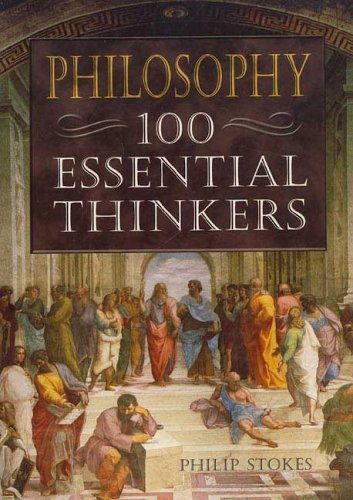
An excellent guide through a complex and fascinating world of ideas that is sure to provoke further investigation.Knowledge and the sudden experience of understanding can be as thrilling as the solution to any puzzle or riddle, since knowledge always resolves a mystery-that of not knowing. Most people are familiar with the names Plato, Machiavelli, Spinoza, and Simone de Beauvoir, but remain unsure of their significance. Philosophy: 100 Essential Thinkers provides succinct descriptions of the essential thought of one hundred major philosophers, including some who are not seen primarily as philosophers, such as Darwin, Freud, and Einstein. Presenting biographical details, quotations, and clear explanations, Philosophy serves as a thorough and accessible introduction to the Western intellectual tradition, covering philosophical, scientific, political, and religious thought over a period of 2,500 years.
‘De Anima’ is one of the most influential and widely-studied of Aristotle’s works. This volume offers discussions of all aspects of this work by leading philosophers. Covering topics such as the relation between soul and body, memory, desire, and thought the essays present the philosophical substance of Aristotle’s views to the modern reader.
In this book, S. A. Lloyd offers a radically new interpretation of Hobbes’s laws of nature, revealing them to be not egoistic precepts of personal prudence but rather moral instructions for obtaining the common good. This account of Hobbes’s moral philosophy stands in contrast to both divine command and rational choice interpretations. Drawing from the core notion of reciprocity, Lloyd explains Hobbes’s system of “cases in the law of nature” and situates Hobbes’s moral philosophy in the broader context of his political philosophy and views on religion. Offering ingenious new arguments, Lloyd defends a reciprocity interpretation of the laws of nature through which humanity’s common good is secured.
K. Danner Clouser is one of the most important figures in establishing and shaping the fields of medical ethics, bioethics, and the philosophy of education in the second half of the twentieth century. Clouser challenged many established approaches to moral theory and offered innovative strategies for integrating the humanities into professional education, especially that of physicians and nurses. The contributions published in Building Bioethics: Conversations with Clouser and Friends on Medical Ethics are unique both in their devotion to a critical review of his contributions, and in bringing together internationally known figures in bioethics, medical ethics, and philosophy of medicine to comment upon Clouser’s work. These leaders of the field include Tom Beauchamp, Daniel Callahan, James Childress, Nancy Dubler, H. Tristram Engelhardt, Al Jonsen, Loretta Kopelman, Larry McCullough, John Moskop, and Robert Veatch. This book merits special attention from those interested in bioethics, philosophy of medicine, medical ethics, philosophy, medical education, religious studies, and nursing education.
Liberalism, the founding philosophy of many constitutional democracies, has been criticized in recent years from both the left and the right for placing too much faith in individual rights and distributive justice. David Johnston argues for a reinterpretation of liberal principles he contends will restore liberalism to a position of intellectual leadership from which it can guide political and social reforms. He begins by surveying the three major contemporary schools of liberal political thought–rights-based, perfectionist, and political liberalism– and, by weeding out their weaknesses, sketches a new approach he calls humanist liberalism. Valuable not only for its contribution to academic scholarship but also as a means of introducing liberal political thought to serious undergraduate students.–Choice Raises … a tremendous number of criticisms of the standard accounts of liberal politics. The book is novel, built on solid foundations, [and] very powerful, clever, well thought out.–Alan Ryan, Princeton University This clear and useful new work moves through a swift yet thorough critique of three leading liberal philosophies to reach a sketch of a new, improved theory.–Virginia Quarterly Review
ما از اخلاق چه انتظاری داریم؟ این سوال شاید تاحدودی برای عموم مردم و یا متخصصان این رشته قابل پاسخ باشد؛ اینکه خوب بودن را به ما بیاموزد و در تنظیم روابط فردی م...

جشن کتاب تهران به ایستگاه سی و یکم رسیده است. حال و احوال نشر کتاب خوب نیست و باید فرهنگدوستان را به خرید و هدیه دادن کتاب ترغیب نمود. خانه اخلاقپژوهان جوان ب...

بنیاد کتابهای اخلاق اسلامی عمدتا پالایش جان از آلودگیها و آراستن آن به زیباییها است. اندیشه محوری این قبیل کتابها آن است که انسان فعلی آنی نیست که باید باشد...

-
0 Comments