Notice: تابع WP_Block_Type_Registry::register به طورنادرست فراخوانی شد. نامهای نوع بلوک نباید حروف بزرگ داشته باشند. لطفاً برای اطلاعات بیشتر، اشکال زدایی در وردپرس را مشاهده کنید. (این پیام در نگارش 5.0.0 افزوده شده است.) in /home/ethicsho/public_html/wp-includes/functions.php on line 5313
Warning: Use of undefined constant TDC_PATH_LEGACY - assumed 'TDC_PATH_LEGACY' (this will throw an Error in a future version of PHP) in /home/ethicsho/public_html/wp-content/plugins/td-composer/td-composer.php on line 109
Warning: Use of undefined constant TDSP_THEME_PATH - assumed 'TDSP_THEME_PATH' (this will throw an Error in a future version of PHP) in /home/ethicsho/public_html/wp-content/plugins/td-composer/td-composer.php on line 113 بایگانیهای Loyalty - خانه اخلاق پژوهان جوان Notice: Trying to access array offset on value of type bool in /home/ethicsho/public_html/wp-content/plugins/wp-ulike/inc/general-functions.php on line 807
Defending Life is arguably the most comprehensive defense of the prolife position on abortion – morally, legally, and politically – that has ever been published in an academic monograph. It offers a detailed and critical analysis of Roe v. Wade and Planned Parenthood v. Casey as well as arguments by those who defend a Rawlsian case for abortion-choice, such as J. J. Thomson. The author defends the substance view of persons as the view with the most explanatory power. The substance view entails that the unborn is a subject of moral rights from conception. While defending this view, the author responds to the arguments of thinkers such as Boonin, Dworkin, Stretton, Ford, and Brody. He also critiques Thomson’s famous violinist argument and its revisions by Boonin and McDonagh. Defending Life includes chapters critiquing arguments found in popular politics and the controversy over cloning and stem cell research.
A companion volume to Free Will: A Philosophical Study, this new anthology collects influential essays on free will, including both well-known contemporary classics and exciting recent work. Agency and Responsibility: Essays on the Metaphysics of Freedom is divided into three parts. The essays in the first section address metaphysical issues concerning free will and causal determinism. The second section groups papers presenting a positive account of the nature of free action, including competing compatibilist and incompatibilist analyses. The third section concerns free will and moral responsibility, including theories of moral responsibility and the challenge to an alternative possibilities condition posed by Frankurt-type scenarios. Distinguished by its balance and consistently high quality, the volume presents papers selected for their significance, innovation, and clarity of expression. Contributors include Harry Frankfurt, Peter van Inwagen, David Lewis, Elizabeth Anscombe, John Martin Fischer, Michael Bratman, Roderick Chisholm, Robert Kane, Peter Strawson, and Susan Wolf. The anthology serves as an up-to-date resource for scholars as well as a useful text for courses in ethics, philosophy of religion, or metaphysics. In addition, paired with Free Will: A Philosophical Study, it would form an excellent upper-level undergraduate or graduate-level course in free will, responsibility, motivation, or action theory.
The predominant view of moral virtue can be traced back to Aristotle. He believed that moral virtue must involve intellectual excellence. To have moral virtue one must have practical wisdom – the ability to deliberate well and to see what is morally relevant in a given context. Julia Driver challenges this classical theory of virtue, arguing that it fails to take into account virtues which do seem to involve ignorance or epistemic defect. Some ‘virtues of ignorance’ are counterexamples to accounts of virtue which hold that moral virtue must involve practical wisdom. Modesty, for example, is generally considered to be a virtue even though the modest person may be making an inaccurate assessment of his or her accomplishments. Driver argues that we should abandon the highly intellectualist view of virtue and instead adopt a consequentialist perspective which holds that virtue is simply a character trait which systematically produces good consequences.
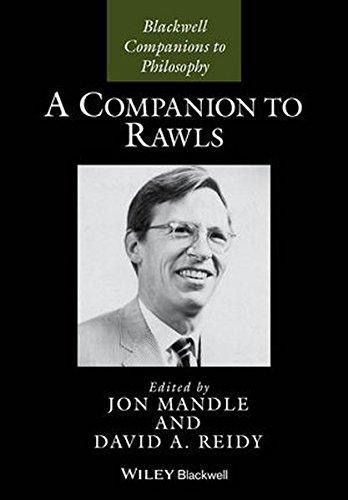
Wide ranging and up to date, this is the single most comprehensive treatment of the most influential political philosopher of the 20th century, John Rawls. An unprecedented survey that reflects the surge of Rawls scholarship since his death, and the lively debates that have emerged from his work Features an outstanding list of contributors, including senior as well as “next generation” Rawls scholars Provides careful, textually informed exegesis and well-developed critical commentary across all areas of his work, including non-Rawlsian perspectives Includes discussion of new material, covering Rawls’s work from the newly published undergraduate thesis to the final writings on public reason and the law of peoples Covers Rawls’s moral and political philosophy, his distinctive methodological commitments, and his relationships to the history of moral and political philosophy and to jurisprudence and the social sciences Includes discussion of his monumental 1971 book, A Theory of Justice, which is often credited as having revitalized political philosophy
ما از اخلاق چه انتظاری داریم؟ این سوال شاید تاحدودی برای عموم مردم و یا متخصصان این رشته قابل پاسخ باشد؛ اینکه خوب بودن را به ما بیاموزد و در تنظیم روابط فردی م...

جشن کتاب تهران به ایستگاه سی و یکم رسیده است. حال و احوال نشر کتاب خوب نیست و باید فرهنگدوستان را به خرید و هدیه دادن کتاب ترغیب نمود. خانه اخلاقپژوهان جوان ب...

بنیاد کتابهای اخلاق اسلامی عمدتا پالایش جان از آلودگیها و آراستن آن به زیباییها است. اندیشه محوری این قبیل کتابها آن است که انسان فعلی آنی نیست که باید باشد...

-
0 Comments