Notice: تابع WP_Block_Type_Registry::register به طورنادرست فراخوانی شد. نامهای نوع بلوک نباید حروف بزرگ داشته باشند. لطفاً برای اطلاعات بیشتر، اشکال زدایی در وردپرس را مشاهده کنید. (این پیام در نگارش 5.0.0 افزوده شده است.) in /home/ethicsho/public_html/wp-includes/functions.php on line 5313
Warning: Use of undefined constant TDC_PATH_LEGACY - assumed 'TDC_PATH_LEGACY' (this will throw an Error in a future version of PHP) in /home/ethicsho/public_html/wp-content/plugins/td-composer/td-composer.php on line 109
Warning: Use of undefined constant TDSP_THEME_PATH - assumed 'TDSP_THEME_PATH' (this will throw an Error in a future version of PHP) in /home/ethicsho/public_html/wp-content/plugins/td-composer/td-composer.php on line 113 بایگانیهای Liberalismus - خانه اخلاق پژوهان جوان Notice: Trying to access array offset on value of type bool in /home/ethicsho/public_html/wp-content/plugins/wp-ulike/inc/general-functions.php on line 807
The Blackwell Companion to Christian Ethics presents an innovative exposition of Christian ethics, seen through the lens of Christian worship. Editors Stanley Hauerwas and Samuel Wells challenge conventional approaches to the subject, contending that it is Christian worship that shapes the moral life of Christians. In this way, they restore a sense of the integral connection between Christian ethics and theology. The structure of the volume reflects this fresh approach to the discipline, following the practices of the Eucharist in a liturgical sequence from the “Gathering” through to the “Dismissal”.The Companion is ecumenical in spirit and embraces contributions from leading commentators within the Roman Catholic, Anglican, Methodist, Presbyterian, Mennonite, and Pentecostal traditions. Designed to be accessible to introductory students, it will have a major impact on the study of Christian ethics. The Blackwell Companion to Christian Ethics presents an innovative exposition of Christian ethics, seen through the lens of Christian worship. Editors Stanley Hauerwas and Samuel Wells challenge conventional approaches to the subject, contending that it is Christian worship that shapes the moral life of Christians. In this way, they restore a sense of the integral connection between Christian ethics and theology. The structure of the volume reflects this fresh approach to the discipline, following the practices of the Eucharist in a liturgical sequence from the “Gathering” through to the “Dismissal”.The Companion is ecumenical in spirit and embraces contributions from leading commentators within the Roman Catholic, Anglican, Methodist, Presbyterian, Mennonite, and Pentecostal traditions. Designed to be accessible to introductory students, it will have a major impact on the study of Christian ethics.
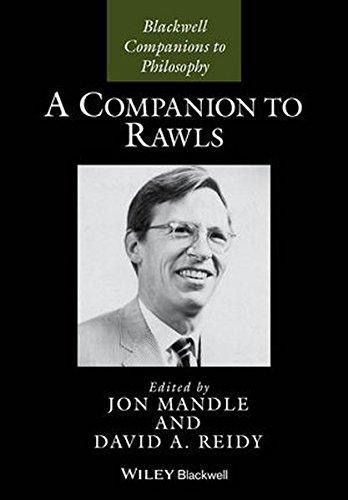
Wide ranging and up to date, this is the single most comprehensive treatment of the most influential political philosopher of the 20th century, John Rawls. An unprecedented survey that reflects the surge of Rawls scholarship since his death, and the lively debates that have emerged from his work Features an outstanding list of contributors, including senior as well as “next generation” Rawls scholars Provides careful, textually informed exegesis and well-developed critical commentary across all areas of his work, including non-Rawlsian perspectives Includes discussion of new material, covering Rawls’s work from the newly published undergraduate thesis to the final writings on public reason and the law of peoples Covers Rawls’s moral and political philosophy, his distinctive methodological commitments, and his relationships to the history of moral and political philosophy and to jurisprudence and the social sciences Includes discussion of his monumental 1971 book, A Theory of Justice, which is often credited as having revitalized political philosophy
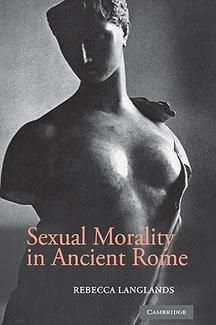
Traditionally, scholars have approached Roman sexuality using categories of sexual ethics drawn from contemporary, Western society. In this book Dr Langlands seeks to move away from these towards a deeper understanding of the issues that mattered to the Romans themselves, and the ways in which they negotiated them, by focusing on the untranslatable concept of pudicitia (broadly meaning ‘sexual virtue’). She offers a series of nuanced close readings of texts from a wide spectrum of Latin literature, including history, oratory, love poetry and Valerius Maximus’ work Memorable Deeds and Sayings. Pudicitia emerges as a controversial and unsettled topic, at the heart of Roman debates about the difference between men and women, the relation between mind and body, and the ethics of power and status differentiation within Roman culture. The book develops strategies for approaching the study of an ancient culture through sensitive critical readings of its literary productions.
ما از اخلاق چه انتظاری داریم؟ این سوال شاید تاحدودی برای عموم مردم و یا متخصصان این رشته قابل پاسخ باشد؛ اینکه خوب بودن را به ما بیاموزد و در تنظیم روابط فردی م...

جشن کتاب تهران به ایستگاه سی و یکم رسیده است. حال و احوال نشر کتاب خوب نیست و باید فرهنگدوستان را به خرید و هدیه دادن کتاب ترغیب نمود. خانه اخلاقپژوهان جوان ب...

بنیاد کتابهای اخلاق اسلامی عمدتا پالایش جان از آلودگیها و آراستن آن به زیباییها است. اندیشه محوری این قبیل کتابها آن است که انسان فعلی آنی نیست که باید باشد...

-
0 Comments