Notice: تابع WP_Block_Type_Registry::register به طورنادرست فراخوانی شد. نامهای نوع بلوک نباید حروف بزرگ داشته باشند. لطفاً برای اطلاعات بیشتر، اشکال زدایی در وردپرس را مشاهده کنید. (این پیام در نگارش 5.0.0 افزوده شده است.) in /home/ethicsho/public_html/wp-includes/functions.php on line 5313
Warning: Use of undefined constant TDC_PATH_LEGACY - assumed 'TDC_PATH_LEGACY' (this will throw an Error in a future version of PHP) in /home/ethicsho/public_html/wp-content/plugins/td-composer/td-composer.php on line 109
Warning: Use of undefined constant TDSP_THEME_PATH - assumed 'TDSP_THEME_PATH' (this will throw an Error in a future version of PHP) in /home/ethicsho/public_html/wp-content/plugins/td-composer/td-composer.php on line 113 بایگانیهای Learning And Scholarship - خانه اخلاق پژوهان جوان Notice: Trying to access array offset on value of type bool in /home/ethicsho/public_html/wp-content/plugins/wp-ulike/inc/general-functions.php on line 807
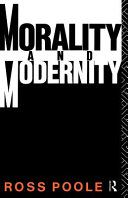
Ross Poole displays the social content of the various conceptions of morality at work in contemporary society, and casts a strikingly fresh light on such fundamental problems as the place of reason in ethics, moral objectivity and the distinction between duty and virtue. The book provides a critical account of the moral theories of a number of major philosophers, including Kant, Marx, Nietzsche, Habermas, Rawls, Gewirth and MacIntyre. It also presents a systematic critique of three of the most significant responses to modernity: liberalism, nationalism and nihilism. It takes seriously the suggestion that men and women are subject to different conceptions of morality, and places the issue of gender at the centre of moral philosophy.
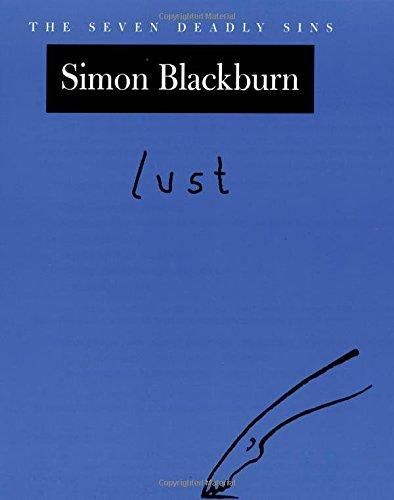
Lust, says Simon Blackburn, is furtive, headlong, always sizing up opportunities. It is a trail of clothing in the hallway, the trashy cousin of love. But be that as it may, the aim of this delightful book is to rescue lust “from the denunciations of old men of the deserts, to deliver it from the pallid and envious confessor and the stocks and pillories of the Puritans, to drag it from the category of sin to that of virtue.” Blackburn, author of such popular philosophy books as Think and Being Good, here offers a sharp-edged probe into the heart of lust, blending together insight from some of the world’s greatest thinkers on sex, human nature, and our common cultural foibles. Blackburn takes a wide ranging, historical approach, discussing lust as viewed by Aristophanes and Plato, lust in the light of the Stoic mistrust of emotion, and the Christian fear of the flesh that catapulted lust to the level of deadly sin. He describes how philosophical pessimists like Schopenhauer and Sartre contributed to our thinking about lust and explores the false starts in understanding lust represented by Freud, Kinsey, and modern “evolutionary psychology.” But most important, Blackburn reminds us that lust is also life-affirming, invigorating, fun. He points to the work of David Hume (Blackburn’s favorite philosopher) who saw lust not only as a sensual delight but also “a joy of the mind.” Written by one of the most eminent living philosophers, attractively illustrated and colorfully packaged, Lust is a book that anyone would lust over.
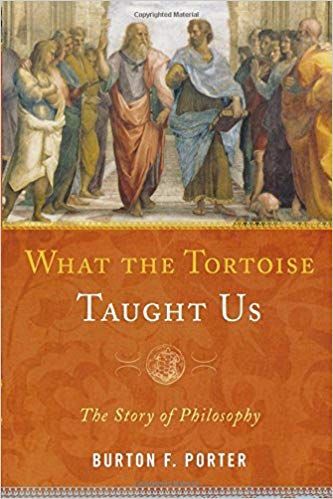
What the Tortoise Taught Us offers a lively, concise journey through Western philosophy that explores the lives of major philosophers, their ideas, and how their thinking continues to influence our lives today. Using a chronological approach, Burton F. Porter shows how various philosophers address life’s big questions. By putting each philosopher and their ideas into historical context, he helps us understand how certain ideas developed based on the thinking of the time and how those ideas have influenced our modern perspectives.Using familiar language and interesting anecdotes, Porter provides an extremely readable and lively history that takes themes that characterize each age to reflect on the greater human experience. The book includes the philosophies and lives of the ancient philosophers such as Socrates, Plato, and Aristotle and continues through time into the Middle Ages with St. Thomas Aquinas to the Renaissance and beyond. Porter explores the metaphysics of Descartes and Hobbes, the epistemology of Hume and Berkeley, and the ethics of Kant and Mill among others. Finally he concludes with contemporary issues, including racism, abortion, and modern feminism.
ما از اخلاق چه انتظاری داریم؟ این سوال شاید تاحدودی برای عموم مردم و یا متخصصان این رشته قابل پاسخ باشد؛ اینکه خوب بودن را به ما بیاموزد و در تنظیم روابط فردی م...

جشن کتاب تهران به ایستگاه سی و یکم رسیده است. حال و احوال نشر کتاب خوب نیست و باید فرهنگدوستان را به خرید و هدیه دادن کتاب ترغیب نمود. خانه اخلاقپژوهان جوان ب...

بنیاد کتابهای اخلاق اسلامی عمدتا پالایش جان از آلودگیها و آراستن آن به زیباییها است. اندیشه محوری این قبیل کتابها آن است که انسان فعلی آنی نیست که باید باشد...

-
0 Comments