Notice: تابع WP_Block_Type_Registry::register به طورنادرست فراخوانی شد. نامهای نوع بلوک نباید حروف بزرگ داشته باشند. لطفاً برای اطلاعات بیشتر، اشکال زدایی در وردپرس را مشاهده کنید. (این پیام در نگارش 5.0.0 افزوده شده است.) in /home/ethicsho/public_html/wp-includes/functions.php on line 5313
Warning: Use of undefined constant TDC_PATH_LEGACY - assumed 'TDC_PATH_LEGACY' (this will throw an Error in a future version of PHP) in /home/ethicsho/public_html/wp-content/plugins/td-composer/td-composer.php on line 109
Warning: Use of undefined constant TDSP_THEME_PATH - assumed 'TDSP_THEME_PATH' (this will throw an Error in a future version of PHP) in /home/ethicsho/public_html/wp-content/plugins/td-composer/td-composer.php on line 113 بایگانیهای Biotechnology - Patents - خانه اخلاق پژوهان جوان Notice: Trying to access array offset on value of type bool in /home/ethicsho/public_html/wp-content/plugins/wp-ulike/inc/general-functions.php on line 807
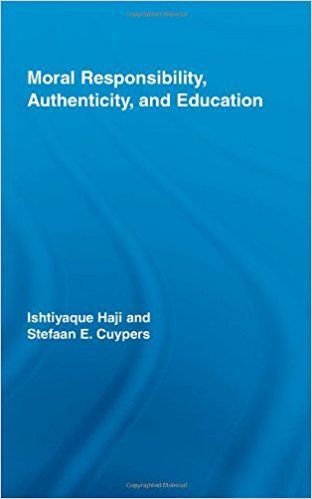
The primary purpose of this book is to explain the distinction, on the one hand, between indoctrination and education, and, on the other, between responsibility-subverting manipulation and mere causation. Both are elucidated by an appeal to common ground, an account of when our motivations and other springs of action are “truly our own” or “authentic.” The book progresses from analyses of the sort of agency that responsibility requires and the authenticity of our motivations, together with a discussion of the relevance of these analyses to manipulation and related problems in the philosophy of education, to a defense of the thesis that responsibility from love’s standpoint is of vital significance, and the implications of this thesis for what the authors deem to be legitimate goals of education and other issues in free will. Philosophers and advanced students working in free will, moral psychology, and the philosophy of education will find this text to be extremely useful.
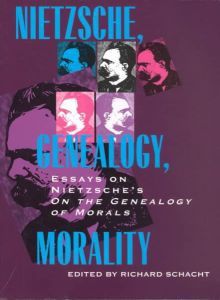
Written at the height of the philosopher’s intellectual powers, Friedrich Nietzsche’s On the Genealogy of Morals has become one of the key texts of recent Western philosophy. Its essayistic style affords a unique opportunity to observe many of Nietzsche’s persisting concerns coming together in an illuminating constellation. A profound influence on psychoanalysis, antihistoricism, and poststructuralism and an abiding challenge to ethical theory, Nietzsche’s book addresses many of the major philosophical problems and possibilities of modernity.In this unique collection focusing on the Genealogy, twenty-five notable philosophers offer diverse discussions of the book’s central themes and concepts. They explore such notions as ressentiment, asceticism, “slave” and “master” moralities, and what Nietzsche calls “genealogy” and its relation to other forms of inquiry in his work. The book presents a cross section of contemporary Nietzsche scholarship and philosophical investigation that is certain to interest philosophers, intellectual and cultural historians, and anyone concerned with one of the master thinkers of the modern age. Written at the height of the philosopher’s intellectual powers, Friedrich Nietzsche’s On the Genealogy of Morals has become one of the key texts of recent Western philosophy. Its essayistic style affords a unique opportunity to observe many of Nietzsche’s persisting concerns coming together in an illuminating constellation. A profound influence on psychoanalysis, antihistoricism, and poststructuralism and an abiding challenge to ethical theory, Nietzsche’s book addresses many of the major philosophical problems and possibilities of modernity.In this unique collection focusing on the Genealogy, twenty-five notable philosophers offer diverse discussions of the book’s central themes and concepts. They explore such notions as ressentiment, asceticism, “slave” and “master” moralities, and what Nietzsche calls “genealogy” and its relation to other forms of inquiry in his work. The book presents a cross section of contemporary Nietzsche scholarship and philosophical investigation that is certain to interest philosophers, intellectual and cultural historians, and anyone concerned with one of the master thinkers of the modern age.
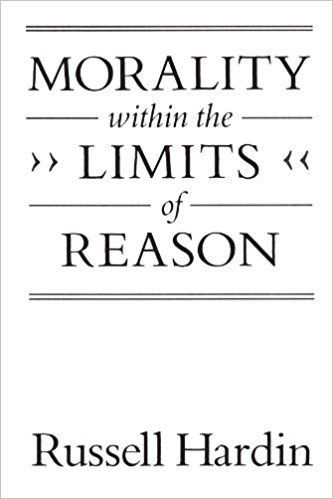
This provocative, lucidly written reconstruction of utilitarianism focuses on the practical constraints involved in ethical choice: information may be inadequate, and understanding of causes and effects may be limited. Good decision making may be especially constrained if other people are closely involved in determining an outcome. Hardin demonstrates that many of these structural issues can and should be distinguished from the thornier problems of utilitarian value theory, and he is able to show what kinds of moral conclusions we can reach within the limits of reason.
ما از اخلاق چه انتظاری داریم؟ این سوال شاید تاحدودی برای عموم مردم و یا متخصصان این رشته قابل پاسخ باشد؛ اینکه خوب بودن را به ما بیاموزد و در تنظیم روابط فردی م...

جشن کتاب تهران به ایستگاه سی و یکم رسیده است. حال و احوال نشر کتاب خوب نیست و باید فرهنگدوستان را به خرید و هدیه دادن کتاب ترغیب نمود. خانه اخلاقپژوهان جوان ب...

بنیاد کتابهای اخلاق اسلامی عمدتا پالایش جان از آلودگیها و آراستن آن به زیباییها است. اندیشه محوری این قبیل کتابها آن است که انسان فعلی آنی نیست که باید باشد...

-
0 Comments