Notice: تابع WP_Block_Type_Registry::register به طورنادرست فراخوانی شد. نامهای نوع بلوک نباید حروف بزرگ داشته باشند. لطفاً برای اطلاعات بیشتر، اشکال زدایی در وردپرس را مشاهده کنید. (این پیام در نگارش 5.0.0 افزوده شده است.) in /home/ethicsho/public_html/wp-includes/functions.php on line 5313
Warning: Use of undefined constant TDC_PATH_LEGACY - assumed 'TDC_PATH_LEGACY' (this will throw an Error in a future version of PHP) in /home/ethicsho/public_html/wp-content/plugins/td-composer/td-composer.php on line 109
Warning: Use of undefined constant TDSP_THEME_PATH - assumed 'TDSP_THEME_PATH' (this will throw an Error in a future version of PHP) in /home/ethicsho/public_html/wp-content/plugins/td-composer/td-composer.php on line 113 بایگانیهای Lawyers/ Discipline - خانه اخلاق پژوهان جوان Notice: Trying to access array offset on value of type bool in /home/ethicsho/public_html/wp-content/plugins/wp-ulike/inc/general-functions.php on line 807
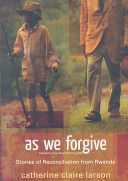
Can a country known for its radical brutality become a country known for an even more radical forgiveness? More than a decade after the 1994 genocide, the Rwandan government has released tens of thousands of murderers back into the communities they ravaged. Survivors and perpetrators have had to learn to live again as neighbors. Inspired by the award-winning film As We Forgive, this book explores the pain, the mystery, and the hope through seven compelling stories as victims, orphans, widows, and perpetrators journey toward reconciliation.
Undermining the fundamental place of freedom, equality and universal reason, Nietzsche’s philosophy recognises that we occupy multiple and contradictory subject positions within social life. With no metaphysical realm of reason, no divine inspiration for morality, and no transcendental basis for human essence, we are left with the embodied, reflective and creative self as a source of ethics. From this perspective arises Nietzsche’s bermensch, a continuous process of overcoming and becoming, interpreted as a metaphor for education that honours difference and incorporates otherness. The book explores the development of Nietzsche’s philosophy and its application to the problems of education, disturbing traditional liberal and democratic accounts of the relationship between individual and society. Threaded throughout is the author’s critique of the way educational institutions are driven by political and economic considerations, explored through notions of autonomy and subjectivity. The book is suitable for graduate students and academics wanting to engage either with postmodern interpretations of ethics in education, or with political philosophy in relation to development of self and community.
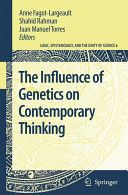
This volume reflects on the effects of recent discoveries in genetics on a broad range of scientific fields. In addition to neuroscience, evolutionary biology, anthropology and medicine, contributors analyze the effects of genetics on theories of health, law, epistemology and philosophy of biology. Social and moral concerns about the relationship between genetics, society and the individual also figure prominently. Genetic discoveries fuel central contemporary public policy debates concerning, for example, human cloning, equitable access to healthcare or the role of genetics in medicine. Perhaps more fundamentally, advances in genetics are altering our perception of human life and death.An interview with François Jacob by Anne Fagot-Largeault opens the volume. In this interview, Jacob, who shared a Nobel Prize with André Lwoff and Jacques Monod for their discoveries concerning genetic control of enzyme and virus synthesis, addresses many of the central methodological epistemological and ethical questions covered in the volume. The dynamic interdisciplinary character of this volume makes it relevant to scholars from many disciplines, from biology, philosophy and the social sciences.
An award-winning psychologist skillfully combines two genres-philosophical wisdom and scientific research-delighting the reader with surprising insights
ما از اخلاق چه انتظاری داریم؟ این سوال شاید تاحدودی برای عموم مردم و یا متخصصان این رشته قابل پاسخ باشد؛ اینکه خوب بودن را به ما بیاموزد و در تنظیم روابط فردی م...

جشن کتاب تهران به ایستگاه سی و یکم رسیده است. حال و احوال نشر کتاب خوب نیست و باید فرهنگدوستان را به خرید و هدیه دادن کتاب ترغیب نمود. خانه اخلاقپژوهان جوان ب...

بنیاد کتابهای اخلاق اسلامی عمدتا پالایش جان از آلودگیها و آراستن آن به زیباییها است. اندیشه محوری این قبیل کتابها آن است که انسان فعلی آنی نیست که باید باشد...

-
0 Comments