Notice: تابع WP_Block_Type_Registry::register به طورنادرست فراخوانی شد. نامهای نوع بلوک نباید حروف بزرگ داشته باشند. لطفاً برای اطلاعات بیشتر، اشکال زدایی در وردپرس را مشاهده کنید. (این پیام در نگارش 5.0.0 افزوده شده است.) in /home/ethicsho/public_html/wp-includes/functions.php on line 5313
Warning: Use of undefined constant TDC_PATH_LEGACY - assumed 'TDC_PATH_LEGACY' (this will throw an Error in a future version of PHP) in /home/ethicsho/public_html/wp-content/plugins/td-composer/td-composer.php on line 109
Warning: Use of undefined constant TDSP_THEME_PATH - assumed 'TDSP_THEME_PATH' (this will throw an Error in a future version of PHP) in /home/ethicsho/public_html/wp-content/plugins/td-composer/td-composer.php on line 113 بایگانیهای Juvenile Nonfiction / Reference / General - خانه اخلاق پژوهان جوان Notice: Trying to access array offset on value of type bool in /home/ethicsho/public_html/wp-content/plugins/wp-ulike/inc/general-functions.php on line 807
Every day, people face tough choices in which their basic moral principles seem to be in conflict. Now, the Director of the Institute for Global Ethics offers a clear strategy for solving ethical dilemmas. Rushworth Kidder explains ends-based, rule-based, and care-based decision making–and uses real-life examples to show how these principles can applied to thorny problems.
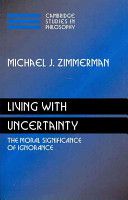
Every choice we make is set against a background of massive ignorance about our past, our future, our circumstances, and ourselves. Philosophers are divided on the moral significance of such ignorance. Some say that it has a direct impact on how we ought to behave – the question of what our moral obligations are; others deny this, claiming that it only affects how we ought to be judged in light of the behaviour in which we choose to engage – the question of what responsibility we bear for our choices. Michael Zimmerman claims that our ignorance has an important bearing on both questions, and offers an account of moral obligation and moral responsibility that is sharply at odds with the prevailing wisdom. His book will be of interest to a wide range of readers in ethics.
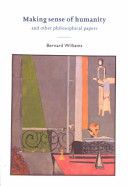
This new volume of philosophical papers by Bernard Williams is divided into three sections: the first Action, Freedom, Responsibility, the second Philosophy, Evolution and the Human Sciences; in which appears the essay which gives the collection its title; and the third Ethics, which contains essays closely related to his 1983 book Ethics and the Limits of Philosophy. Like the two earlier volumes of Williams’s papers published by Cambridge University Press, Problems of the Self and Moral Luck, this volume will be welcomed by all readers with a serious interest in philosophy. It is published alongside a volume of essays on Williams’s work, World, Mind, and Ethics: Essays on the Ethical Philosophy of Bernard Williams, edited by J. E. J. Altham and Ross Harrison, which provides a reappraisal of his work by other distinguished thinkers in the field.
‘We know much more about the global politics of intellectual property than we do about national political contests over the ownership of knowledge. Haunss and Shadlen have identified this gap in the literature and have done a fine job of bringing together a set of essays that helps to fill this gap in our understanding of the multi-layered nature of intellectual property politics.’ Peter Drahos, Australian National University ‘This thought-provoking volume provides invaluable new insights and is a major contribution to the debate on the politics of intellectual property rights.’ Duncan Matthews, Queen Mary, University of London, UK This book offers empirical analyses of conflicts over the ownership, control, and use of knowledge and information in developed and developing countries. Sebastian Haunss and Kenneth C. Shadlen, along with a collection of eminent contributors, focus on how business organizations, farmers, social movements, legal communities, state officials, transnational enterprises, and international organizations shape IP policies in areas such as health, information-communication technologies, indigenous knowledge, genetic resources, and many others. The innovative and original chapters examine conflicts over the rules governing various dimensions of IP, including patents, copyrights, traditional knowledge, and biosafety regulations. Written from a political perspective, this book is a must-read for political scientists, sociologists and anthropologists who study IP and conflicts over property. It is also an essential read for stakeholders in institutions, NGOs and industry interested in knowledge governance and IP politics.
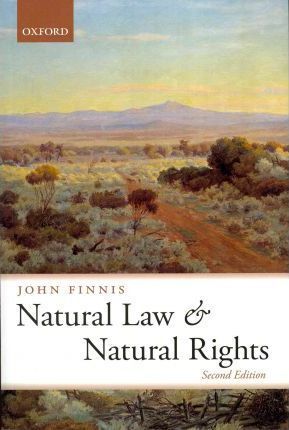
First published in 1980, Natural Law and Natural Rights is widely heralded as a seminal contribution to the philosophy of law, and an authoritative restatement of natural law doctrine. It has offered generations of students and other readers a thorough grounding in the central issues of legal, moral, and political philosophy from Finnis’s distinctive perspective. This new edition includes a substantial postscript by the author, in which he responds to thirty years of discussion, criticism and further work in the field to develop and refine the original theory.The book closely integrates the philosophy of law with ethics, social theory and political philosophy. The author develops a sustained and substantive argument; it is not a review of other people’s arguments but makes frequent illustrative and critical reference to classical, modern, and contemporary writers in ethics, social and political theory, and jurisprudence.The preliminary First Part reviews a century of analytical jurisprudence to illustrate the dependence of every descriptive social science upon evaluations by the theorist. A fully critical basis for such evaluations is a theory of natural law. Standard contemporary objections to natural law theory are reviewed and shown to rest on serious misunderstandings.The Second Part develops in ten carefully structured chapters an account of: basic human goods and basic requirements of practical reasonableness, community and ‘the common good’; justice; the logical structure of rights-talk; the bases of human rights, their specification and their limits; authority, and the formation of authoritative rules by non-authoritative persons and procedures; law, the Rule of Law, and the derivation of laws from the principles of practical reasonableness; the complex relation between legal and moral obligation; and the practical and theoretical problems created by unjust laws.A final Part develops a vigorous argument about the relation between ‘natural law’, ‘natural theology’ and ‘revelation’ – between moral concern and other ultimate questions.
ما از اخلاق چه انتظاری داریم؟ این سوال شاید تاحدودی برای عموم مردم و یا متخصصان این رشته قابل پاسخ باشد؛ اینکه خوب بودن را به ما بیاموزد و در تنظیم روابط فردی م...

جشن کتاب تهران به ایستگاه سی و یکم رسیده است. حال و احوال نشر کتاب خوب نیست و باید فرهنگدوستان را به خرید و هدیه دادن کتاب ترغیب نمود. خانه اخلاقپژوهان جوان ب...

بنیاد کتابهای اخلاق اسلامی عمدتا پالایش جان از آلودگیها و آراستن آن به زیباییها است. اندیشه محوری این قبیل کتابها آن است که انسان فعلی آنی نیست که باید باشد...

-
0 Comments