Notice: تابع WP_Block_Type_Registry::register به طورنادرست فراخوانی شد. نامهای نوع بلوک نباید حروف بزرگ داشته باشند. لطفاً برای اطلاعات بیشتر، اشکال زدایی در وردپرس را مشاهده کنید. (این پیام در نگارش 5.0.0 افزوده شده است.) in /home/ethicsho/public_html/wp-includes/functions.php on line 5313
Warning: Use of undefined constant TDC_PATH_LEGACY - assumed 'TDC_PATH_LEGACY' (this will throw an Error in a future version of PHP) in /home/ethicsho/public_html/wp-content/plugins/td-composer/td-composer.php on line 109
Warning: Use of undefined constant TDSP_THEME_PATH - assumed 'TDSP_THEME_PATH' (this will throw an Error in a future version of PHP) in /home/ethicsho/public_html/wp-content/plugins/td-composer/td-composer.php on line 113 بایگانیهای Judges - Biography. - United States - خانه اخلاق پژوهان جوان Notice: Trying to access array offset on value of type bool in /home/ethicsho/public_html/wp-content/plugins/wp-ulike/inc/general-functions.php on line 807
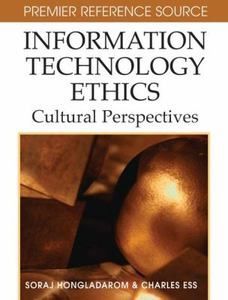
This book is the first publication that takes a genuinely global approach to the diverse ethical issues evoked by Information and Communication Technologies and their possible resolutions. Readers will gain a greater appreciation for the problems and possibilities of genuinely global information ethics, which are urgently needed as information and communication technologies continue their exponential growth
What happens when we engage with fictional characters? How do our imaginative engagements bear on our actions in the wider world? Moving between the literary and the philosophical, Sophie Ratcliffe onsiders the ways in which readers feel when they read, and how they understand ideas of feeling. On Sympathy uses dramatic monologues based on The Tempest as its focus, and broaches questions about fictional belief, morality, and the dynamics between readers, writers, and fictional characters. The book challenges conventionally accepted ideas of literary identification and sympathy, and asks why the idea of sympathy has been seen as so important to liberal humanist theories of literary value. Individual chapters on Robert Browning, W. H. Auden, and Samuel Beckett, who all drew on Shakespeare’s late play, offer new readings of some major works, while the book’s epilogue tackles questions of contemporary sympathy. Ranging from the nineteenth century to the present day, this important new study sets out to clarify and challenge current assumptions about reading and sympathetic belief, shedding new light on the idea and ideal of sympathy, the workings of affect and allusion, and the ethics of reading.
Why did a group of teenagers watch a friend die instead of putting their own reputations at risk? Why did a top White House official decide to come clean and accept a prison sentence during Watergate? Why did a finance executive turn down millions out of respect for her employer? Why are some willing to risk their futures to uphold principles? What gives us the strength to stand up for what we believe? As these questions suggest, the topic of moral courage is front and center in today’s culture. Enron, Arthur Andersen, the U.S. Olympic Committee, abusive priests, cheating students, domestic violence — all these remind us that taking ethical stands should be a higher priority in our culture. Why, when people discern wrongdoing, are they sometimes unready, unable, or unwilling to act? In a book rich with examples, Rushworth Kidder reveals that moral courage is the bridge between talking ethics and doing ethics. Defining it as a readiness to endure danger for the sake of principle, he explains that the courage to act is found at the intersection of three elements: action based on core values, awareness of the risks, and a willingness to endure necessary hardship. By exploring how moral courage spurs us to strive for core values, he demonstrates the benefits of ethical action to the individual and to society — and the severe consequences that can result from remaining morally dormant. Moral Courage puts indispensable concepts and tools into our hands, equipping us to respond to the increasingly complicated moral challenges we face at work, at home, and in our communities. It enables us to make clear, confident decisions by exploring some litmus-test questions: Is the benefit worth the risk? Am I motivated by my desire to uphold my beliefs or just to impose them on others? Will my actions create collateral damage among those with no stake in the outcome? While physical courage may no longer be a necessary survival skill or an essential rite of passage out of childhood, few would dispute the growing need for moral courage as the true gauge of maturity. Treating this subject not as an esoteric branch of philosophy but as a practical necessity for modern life, Kidder deftly leads us to a clear understanding of what moral courage is, what it does, and how to get it.
Are there things we should value because they are, quite simply, good? If so, such things might be said to have “absolute goodness.” They would be good simpliciter or full stop – not good for someone, not good of a kind, but nonetheless good (period). They might also be called “impersonal values.” The reason why we ought to value such things, if there are any, would merely be the fact that they are, quite simply, good things. In the twentieth century, G. E. Moore was the great champion of absolute goodness, but he is not the only philosopher who posits the existence and importance of this property. Against these friends of absolute goodness, Richard Kraut here builds on the argument he made in What is Good and Why, demonstrating that goodness is not a reason-giving property – in fact, there may be no such thing. It is, he holds, an insidious category of practical thought, because it can be and has been used to justify what is harmful and condemn what is beneficial. Impersonal value draws us away from what is good for persons. His strategy for opposing absolute goodness is to search for domains of practical reasoning in which it might be thought to be needed, and this leads him to an examination of a wide variety of moral phenomena: pleasure, knowledge, beauty, love, cruelty, suicide, future generations, bio-diversity, killing in self-defense, and the extinction of our species. Even persons, he proposes, should not be said to have absolute value. The special importance of human life rests instead on the great advantages that such lives normally offer. “When one reads this, one sees the possibility of real philosophical progress. If Kraut is right, I’d be wrong to say that this book is good, period. Or even great, period. But I will say that, as a work of philosophy, and for those who read it, it is excellent indeed.” –Russ Shafer-Landau, University of Wisconsin-Madison
ما از اخلاق چه انتظاری داریم؟ این سوال شاید تاحدودی برای عموم مردم و یا متخصصان این رشته قابل پاسخ باشد؛ اینکه خوب بودن را به ما بیاموزد و در تنظیم روابط فردی م...

جشن کتاب تهران به ایستگاه سی و یکم رسیده است. حال و احوال نشر کتاب خوب نیست و باید فرهنگدوستان را به خرید و هدیه دادن کتاب ترغیب نمود. خانه اخلاقپژوهان جوان ب...

بنیاد کتابهای اخلاق اسلامی عمدتا پالایش جان از آلودگیها و آراستن آن به زیباییها است. اندیشه محوری این قبیل کتابها آن است که انسان فعلی آنی نیست که باید باشد...

-
0 Comments