Notice: تابع WP_Block_Type_Registry::register به طورنادرست فراخوانی شد. نامهای نوع بلوک نباید حروف بزرگ داشته باشند. لطفاً برای اطلاعات بیشتر، اشکال زدایی در وردپرس را مشاهده کنید. (این پیام در نگارش 5.0.0 افزوده شده است.) in /home/ethicsho/public_html/wp-includes/functions.php on line 5313
Warning: Use of undefined constant TDC_PATH_LEGACY - assumed 'TDC_PATH_LEGACY' (this will throw an Error in a future version of PHP) in /home/ethicsho/public_html/wp-content/plugins/td-composer/td-composer.php on line 109
Warning: Use of undefined constant TDSP_THEME_PATH - assumed 'TDSP_THEME_PATH' (this will throw an Error in a future version of PHP) in /home/ethicsho/public_html/wp-content/plugins/td-composer/td-composer.php on line 113 بایگانیهای Jealousy - خانه اخلاق پژوهان جوان Notice: Trying to access array offset on value of type bool in /home/ethicsho/public_html/wp-content/plugins/wp-ulike/inc/general-functions.php on line 807
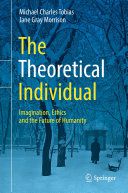
How can the one influence the many? From posing seminal questions about what comprises a human individual, to asking whether human evolution is alive and well, favoring individuals or the species, this work is a daring, up-to-the-minute overview of an urgent, multidisciplinary premise. It explores the extent to which human history provides empirical evidence for the capacity of an individual to exert meaningful suasion over their species, and asks: Can an individual influence the survival of the human species and the planet? If there are to be cultures of transformation dedicated to seeing us all through the Sixth Extinction Spasm, the Anthropocene, inflicting as little biological havoc as possible, what might such orientations—a collective, widespread biophilia, or reverence for nature—look like? In this powerful work, with a combination of data and direct observation, the authors invite readers to explore how such transformations might resonate throughout the human community; in what ways a person might overcome the seemingly insurmountable environmental tumult our species has unleashed; the clear and salient motives, ethics, aspirations and pragmatic idealism he/she might mirror and embrace in order to effect a profound difference—at the individual level—for all of life and life’s myriad habitats. Chapters illuminate an ambitiously broad digest of research from two-dozen disciplines. Those include ecodynamics, biosemiotics, neural plasticity, anthropology, paleontology and the history of science, among others. All converge upon a set of ethics-based scenarios for mitigating ecological damage to ourselves and other life forms. This highly readable and tightly woven treatise speaks to scientists, students and all those who are concerned about ethical activism and the future of the biosphere. Michael Charles Tobias and Jane Gray Morrison are ecological philosophers and animal liberation activists who have worked for decades to help enrich our understanding of ecosystem dynamics and humanity’s ambiguous presence amid that great orchestra that is nature.
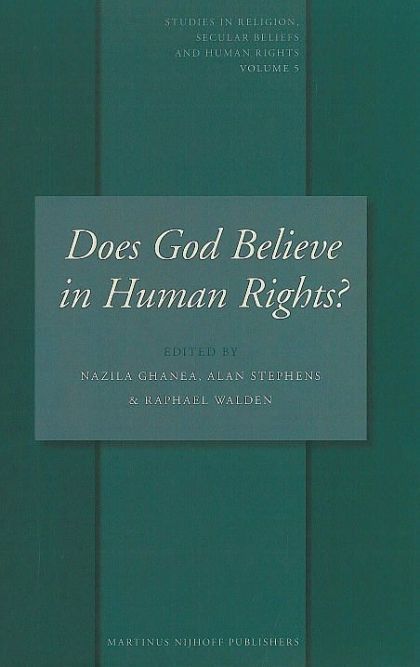
Where can religions find sources of legitimacy for human rights? How do, and how should, religious leaders and communities respond to human rights as defined in modern International Law? When religious precepts contradict human rights standards – for example in relation to freedom of expression or in relation to punishments – which should trump the other, and why? Can human rights and religious teachings be interpreted in a manner which brings reconciliation closer? Do the modern concept and system of human rights undermine the very vision of society that religions aim to impart? Is a reference to God in the discussion of human rights misplaced? Do human fallibilities with respect to interpretation, judicial reasoning and the understanding of human oneness and dignity provide the key to the undeniable and sometimes devastating conflicts that have arisen between, and within, religions and the human rights movement? In this volume, academics and lawyers tackle these most difficult questions head-on, with candour and creativity, and the collection is rendered unique by the further contributions of a remarkable range of other professionals, including senior religious leaders and representatives, journalists, diplomats and civil servants, both national and international. Most notably, the contributors do not shy away from the boldest question of all – summed up in the book’s title. The thoroughly edited and revised papers which make up this collection were originally prepared for a ground-breaking conference organised by the Clemens Nathan Research Centre, the University of London Institute of Commonwealth Studies and Martinus Nijhoff/Brill.
ما از اخلاق چه انتظاری داریم؟ این سوال شاید تاحدودی برای عموم مردم و یا متخصصان این رشته قابل پاسخ باشد؛ اینکه خوب بودن را به ما بیاموزد و در تنظیم روابط فردی م...

جشن کتاب تهران به ایستگاه سی و یکم رسیده است. حال و احوال نشر کتاب خوب نیست و باید فرهنگدوستان را به خرید و هدیه دادن کتاب ترغیب نمود. خانه اخلاقپژوهان جوان ب...

بنیاد کتابهای اخلاق اسلامی عمدتا پالایش جان از آلودگیها و آراستن آن به زیباییها است. اندیشه محوری این قبیل کتابها آن است که انسان فعلی آنی نیست که باید باشد...

-
0 Comments