Notice: تابع WP_Block_Type_Registry::register به طورنادرست فراخوانی شد. نامهای نوع بلوک نباید حروف بزرگ داشته باشند. لطفاً برای اطلاعات بیشتر، اشکال زدایی در وردپرس را مشاهده کنید. (این پیام در نگارش 5.0.0 افزوده شده است.) in /home/ethicsho/public_html/wp-includes/functions.php on line 5313
Warning: Use of undefined constant TDC_PATH_LEGACY - assumed 'TDC_PATH_LEGACY' (this will throw an Error in a future version of PHP) in /home/ethicsho/public_html/wp-content/plugins/td-composer/td-composer.php on line 109
Warning: Use of undefined constant TDSP_THEME_PATH - assumed 'TDSP_THEME_PATH' (this will throw an Error in a future version of PHP) in /home/ethicsho/public_html/wp-content/plugins/td-composer/td-composer.php on line 113 بایگانیهای JC574 .S34 2001 - خانه اخلاق پژوهان جوان Notice: Trying to access array offset on value of type bool in /home/ethicsho/public_html/wp-content/plugins/wp-ulike/inc/general-functions.php on line 807
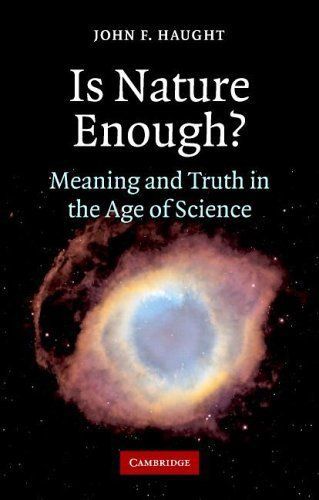
Is nature all there is? John Haught examines this question and in doing so addresses a fundamental issue in the dialogue of science with religion. The belief that nature is all there is and that no overall purpose exists in the universe is known broadly as ‘naturalism’. Naturalism, in this context, denies the existence of any realities distinct from the natural world and human culture. Since the rise of science in the modern world has had so much influence on naturalism’s intellectual acceptance, the author focuses on ‘scientific’ naturalism and the way in which its defenders are now attempting to put a distance between contemporary thought and humanity’s religious traditions. Haught seeks to provide a reasonable, scientifically informed alternative to naturalism. His approach will provide the basis for lively discussion among students, scholars, scientists, theologians and intellectually curious people in general.
These two volumes, edited by the distinguished Cornell University Plato scholar Gail Fine, contain some 37 articles on various aspects of Plato’s philosophy. Most of the articles have been previously published, although some have been revised for these volumes. None dates from before 1970 and almost all are by scholars from the English-speaking world. These volumes will be widely understood to be doing for Plato scholarship in the last thirty years what the three well-known volumes edited by Gregory Vlastos (two on Plato, one on Socrates) did for Plato scholarship in the period between the end of World War II and 1970. Just as Vlastos attempted to assemble the best of Anglo-American scholarship to provide a snapshot of the contemporary ‘state-of-the-art,’ so Fine’s volumes will no doubt be taken to have done the same. Remarkably, most of the essays in Fine’s volumes cover a range of topics and employ a method strikingly similar to those in Vlastos’ volumes.
The quality of the essays is uniformly very high. A number of them will become or already have become standard starting-points for further discussion of a topic. A re-reading of the essays in the Vlastos volumes after reading these would no doubt be illuminating. Having said this much, it is truly remarkable that in roughly 1000 pages of material there is hardly even a mention of approaches to Plato in the last generation other than that of what can best be termed the Anglo-American analytic tradition.
Literature often deals with moral issues. It focuses on human dilemmas and awakens our imagination to new possibilities. It compels us to rethink and revise our everyday assumptions, enabling us to consider ethical questions in creative ways. The Moral Life: An Introductory Reader in Ethics and Literature brings together an extensive and varied collection of 87 classical and contemporary readings on ethical theory and practice. The book is divided into four sections covering the nature of morality, moral theories, moral issues, and applied ethics. Integrating literature with philosophy in an innovative way, editor Louis Pojman uses literary works to enliven and make concrete the ethical theory or applied issues addressed in each chapter. Literary works by Hugo, Hawthorne, Melville, Tolstoy, Ibsen, Huxley, Orwell, Camus, LeGuin, Styron, and many others lead students into philosophical concepts and issues such as relativism, utilitarianism, virtue ethics, the meaning of life, freedom, sex, love and marriage, and environmental ethics. Once introduced, these topics are developed further through readings by philosophers including Aristotle, Sartre, Bernard Williams, Jane English, and Thomas E. Hill, Jr. This unique anthology emphasizes the personal dimension of ethics, which is often ignored or minimized in ethics texts. Featuring insightful part and chapter introductions as well as biographical sketches, abstracts, and study questions for each reading selection, The Moral Life is ideal for introductory ethics courses. It also provides an engaging gateway into personal and social ethics for the general reader.
ما از اخلاق چه انتظاری داریم؟ این سوال شاید تاحدودی برای عموم مردم و یا متخصصان این رشته قابل پاسخ باشد؛ اینکه خوب بودن را به ما بیاموزد و در تنظیم روابط فردی م...

جشن کتاب تهران به ایستگاه سی و یکم رسیده است. حال و احوال نشر کتاب خوب نیست و باید فرهنگدوستان را به خرید و هدیه دادن کتاب ترغیب نمود. خانه اخلاقپژوهان جوان ب...

بنیاد کتابهای اخلاق اسلامی عمدتا پالایش جان از آلودگیها و آراستن آن به زیباییها است. اندیشه محوری این قبیل کتابها آن است که انسان فعلی آنی نیست که باید باشد...

-
0 Comments