Notice: تابع WP_Block_Type_Registry::register به طورنادرست فراخوانی شد. نامهای نوع بلوک نباید حروف بزرگ داشته باشند. لطفاً برای اطلاعات بیشتر، اشکال زدایی در وردپرس را مشاهده کنید. (این پیام در نگارش 5.0.0 افزوده شده است.) in /home/ethicsho/public_html/wp-includes/functions.php on line 5313
Warning: Use of undefined constant TDC_PATH_LEGACY - assumed 'TDC_PATH_LEGACY' (this will throw an Error in a future version of PHP) in /home/ethicsho/public_html/wp-content/plugins/td-composer/td-composer.php on line 109
Warning: Use of undefined constant TDSP_THEME_PATH - assumed 'TDSP_THEME_PATH' (this will throw an Error in a future version of PHP) in /home/ethicsho/public_html/wp-content/plugins/td-composer/td-composer.php on line 113 بایگانیهای Islamic Ethics - خانه اخلاق پژوهان جوان Notice: Trying to access array offset on value of type bool in /home/ethicsho/public_html/wp-content/plugins/wp-ulike/inc/general-functions.php on line 807
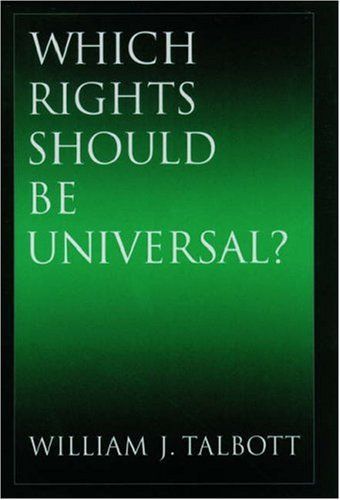
“We hold these truths to be self-evident…” So begins the U.S. Declaration of Independence. What follows those words is a ringing endorsement of universal rights, but it is far from self-evident. Why did the authors claim that it was? William Talbott suggests that they were trapped by a presupposition of Enlightenment philosophy: That there was only one way to rationally justify universal truths, by proving them from self-evident premises. With the benefit of hindsight, it is clear that the authors of the U.S. Declaration had no infallible source of moral truth. For example, many of the authors of the Declaration of Independence endorsed slavery. The wrongness of slavery was not self-evident; it was a moral discovery. In this book, William Talbott builds on the work of John Rawls, Jurgen Habermas, J.S. Mill, Amartya Sen, and Henry Shue to explain how, over the course of history, human beings have learned how to adopt a distinctively moral point of view from which it is possible to make universal, though not infallible, judgments of right and wrong. He explains how this distinctively moral point of view has led to the discovery of the moral importance of nine basic rights. Undoubtedly, the most controversial issue raised by the claim of universal rights is the issue of moral relativism. How can the advocate of universal rights avoid being a moral imperialist? In this book, Talbott shows how to defend basic individual rights from a universal moral point of view that is neither imperialistic nor relativistic. Talbott avoids moral imperialism by insisting that all of us, himself included, have moral blindspots and that we usually depend on others to help us to identify those blindspots. Talbott’s book speaks to not only debates on human rights but to broader issues of moral and cultural relativism, and will interest a broad range of readers.
Written toward the end of World War I, this study of economics tackles the issue from the standpoint of religion and philosophy by summarizing the Catholic school of economics, which insists that the welfare of human beings belongs at the center of any real economy and that other systems that place either the individual or the state at the center of their schemes are not only false, but actually injurious to individuals, families, communities, and nations. Extensive documentation and citations from leading economic theorists are provided.
The Second Edition of Computerization and Controversy: Value Conflicts and Social Choices is a collection of 78 articles that examine the social aspects of computerization from a variety of perspectives, many presenting important viewpoints not often discussed in the conventional literature. A number of paired articles comprise thought-provoking head-on debate. Fields represented include computer science, information systems, management, journalism, psychology, law, library science, and sociology.This volume introduces some of the major controversies surrounding the computerization of society and helps readers recognize the social processes that drive and shape computerization.Division into eight provocatively titled sections facilitates course planning for classroom or seminar use. A lead article for each section frames the major controversies, locates the selections within the debates, and points to other relevant literature.Key Features* A fully revised and updated version of the first anthological treatment of the subject* Organized to facilitate course planning for classroom or seminar use* Provides coverage of the influence of computers on a wide variety of fields including computer science, information systems, management, journalism, psychology, law, library science, and sociology* Includes discussion of the following issues related to computerization:* Does computerization demonstrably improve the productivity of organizations?* Should computer systems be designed to empower workers?* Does electronic mail facilitate the formation of new communities, or does it undermine intimate interaction?* Is computerization likely to reduce privacy and personal freedom?
ما از اخلاق چه انتظاری داریم؟ این سوال شاید تاحدودی برای عموم مردم و یا متخصصان این رشته قابل پاسخ باشد؛ اینکه خوب بودن را به ما بیاموزد و در تنظیم روابط فردی م...

جشن کتاب تهران به ایستگاه سی و یکم رسیده است. حال و احوال نشر کتاب خوب نیست و باید فرهنگدوستان را به خرید و هدیه دادن کتاب ترغیب نمود. خانه اخلاقپژوهان جوان ب...

بنیاد کتابهای اخلاق اسلامی عمدتا پالایش جان از آلودگیها و آراستن آن به زیباییها است. اندیشه محوری این قبیل کتابها آن است که انسان فعلی آنی نیست که باید باشد...

-
0 Comments