Notice: تابع WP_Block_Type_Registry::register به طورنادرست فراخوانی شد. نامهای نوع بلوک نباید حروف بزرگ داشته باشند. لطفاً برای اطلاعات بیشتر، اشکال زدایی در وردپرس را مشاهده کنید. (این پیام در نگارش 5.0.0 افزوده شده است.) in /home/ethicsho/public_html/wp-includes/functions.php on line 5313
Warning: Use of undefined constant TDC_PATH_LEGACY - assumed 'TDC_PATH_LEGACY' (this will throw an Error in a future version of PHP) in /home/ethicsho/public_html/wp-content/plugins/td-composer/td-composer.php on line 109
Warning: Use of undefined constant TDSP_THEME_PATH - assumed 'TDSP_THEME_PATH' (this will throw an Error in a future version of PHP) in /home/ethicsho/public_html/wp-content/plugins/td-composer/td-composer.php on line 113 بایگانیهای Intensive Care Units, Neonatal - Trends - United States - خانه اخلاق پژوهان جوان Notice: Trying to access array offset on value of type bool in /home/ethicsho/public_html/wp-content/plugins/wp-ulike/inc/general-functions.php on line 807
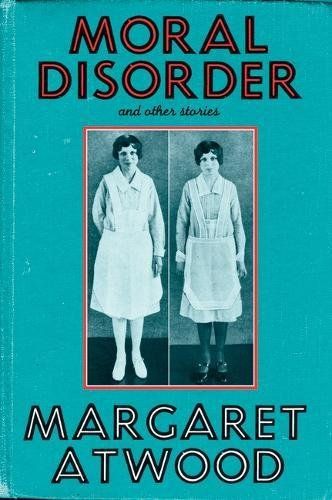
Margaret Atwood has frequently been cited as one of the foremost writers of our time. Moral Disorder, her new work of fiction, could be seen as a collection of ten stories that is almost a novel … or a novel broken up into ten stories. It resembles a photograph album – a series of clearly observed moments that trace the course of a life, and the lives intertwined with it – those of parents, siblings, children, friends, enemies, teachers and even animals. And as in a photograph album, times change; every decade is here, from the 1930s through the 50s, 60s and 70s to the present day. The settings are equally varied: large cities, suburbs, farms, northern forests. The first story, ‘The Bad News,’ is set in the present, as a couple no longer young situate themselves in a larger world no longer safe. Then the narrative switches time, as the central character moves through childhood and adolescence, in ‘The Art of Cooking and Serving’, ‘The Headless Horseman’ and ‘My Last Duchess’. We follow her into young adulthood in ‘The Other Place’, and then through a complex relationship, traced in three of the stories – ‘Monopoly’, ‘Moral Disorder’ and ‘The Entities’. The last two stories, ‘The Labrador Fiasco’ and ‘The Boys at the Lab’, deal with the heartbreaking old age of parents, but circle back to childhood again, to complete the cycle. By turns funny, moving, lyrical, incisive, tragic, earthy, shocking and deeply personal, Moral Disorder displays Atwood’s celebrated storytelling gifts and inimitable style to their best advantage. As the New York Times has said, ‘Atwood has complete access to her people’s emotional histories, complete understanding of their hearts and imaginations.’
Epistemology has for a long time focused on the concept of knowledge and tried to answer questions such as whether knowledge is possible and how much of it there is. Often missing from this inquiry, however, is a discussion on the value of knowledge. In The Value of Knowledge and the Pursuit of Understanding Jonathan Kvanvig argues that epistemology properly conceived cannot ignore the question of the value of knowledge. He also questions one of the most fundamental assumptions in epistemology, namely that knowledge is always more valuable than the value of its subparts. Taking Platos’ Meno as a starting point of his discussion, Kvanvig tackles the different arguments about the value of knowledge and comes to the conclusion that knowledge is less valuable than generally assumed. Clearly written and well argued, the book will appeal to students and professionals in epistemology.
One in the series New Dialogues in Philosophy, edited by Dale Jacquette, J. Kellenberger brings together a group of hypothetical individuals from different backgrounds with real philosophical views to discuss their ideas on morality and moral relativism. The dialogues examine arguments for and against adopting a relativistic stance on morality.
This book provides a novel formulation and defence of moral error theory. It also provides a novel solution to the so-called now what question; viz., the question what we should do with our moral thought and talk after moral error theory. The novel formulation of moral error theory uses pragmatic presupposition rather than conceptual entailment to argue that moral judgments carry a non-negotiable commitment to categorical moral reasons. The new answer to the now what question is pragmatic presupposition substitutionism: we should substitute our current moral judgments, which pragmatically presuppose the existence of categorical moral reasons with ‘schmoral’ judgments that pragmatically presuppose the existence of a specific class of prudential reasons. These are prudential reasons that, when we act on them, contribute to the satisfaction of what the author calls ‘the fundamental desire’; namely, the desire to live in a world with mutually beneficial cooperation.
ما از اخلاق چه انتظاری داریم؟ این سوال شاید تاحدودی برای عموم مردم و یا متخصصان این رشته قابل پاسخ باشد؛ اینکه خوب بودن را به ما بیاموزد و در تنظیم روابط فردی م...

جشن کتاب تهران به ایستگاه سی و یکم رسیده است. حال و احوال نشر کتاب خوب نیست و باید فرهنگدوستان را به خرید و هدیه دادن کتاب ترغیب نمود. خانه اخلاقپژوهان جوان ب...

بنیاد کتابهای اخلاق اسلامی عمدتا پالایش جان از آلودگیها و آراستن آن به زیباییها است. اندیشه محوری این قبیل کتابها آن است که انسان فعلی آنی نیست که باید باشد...

-
0 Comments