Notice: تابع WP_Block_Type_Registry::register به طورنادرست فراخوانی شد. نامهای نوع بلوک نباید حروف بزرگ داشته باشند. لطفاً برای اطلاعات بیشتر، اشکال زدایی در وردپرس را مشاهده کنید. (این پیام در نگارش 5.0.0 افزوده شده است.) in /home/ethicsho/public_html/wp-includes/functions.php on line 5313
Warning: Use of undefined constant TDC_PATH_LEGACY - assumed 'TDC_PATH_LEGACY' (this will throw an Error in a future version of PHP) in /home/ethicsho/public_html/wp-content/plugins/td-composer/td-composer.php on line 109
Warning: Use of undefined constant TDSP_THEME_PATH - assumed 'TDSP_THEME_PATH' (this will throw an Error in a future version of PHP) in /home/ethicsho/public_html/wp-content/plugins/td-composer/td-composer.php on line 113 بایگانیهای Intellectual Property - Philosophy - خانه اخلاق پژوهان جوان Notice: Trying to access array offset on value of type bool in /home/ethicsho/public_html/wp-content/plugins/wp-ulike/inc/general-functions.php on line 807
This monograph is based on qualitative and inductive research. All the cases treated in it are based on current events and try to find the common aspects and basic rules that govern the wrongdoing to the minority shareholders. In the four cases of US, French and Israeli companies, most of them in high tech, the minority shareholders lose almost all their investment. Those are not pervert cases but the norm in many companies, which is illustrated by qualitative cases, without being able of course to quantify them. Case studies are the preferred strategy when “how” and “why” questions are being posed. The purpose of this monograph is therefore to analyze why and how companies do not act ethically towards their minority shareholders, not how many, not which, not to what degree and not where.
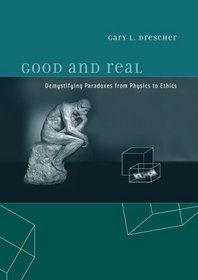
In Good and Real, Gary Drescher examines a series of provocative paradoxes about consciousness, choice, ethics, quantum mechanics, and other topics, in an effort to reconcile a purely mechanical view of the universe with key aspects of our subjective impressions of our own existence.Many scientists suspect that the universe can ultimately be described by a simple (perhaps even deterministic) formalism; all that is real unfolds mechanically according to that formalism. But how, then, is it possible for us to be conscious, or to make genuine choices? And how can there be an ethical dimension to such choices? Drescher sketches computational models of consciousness, choice, and subjunctive reasoning—what would happen if this or that were to occur?—to show how such phenomena are compatible with a mechanical, even deterministic universe. Analyses of Newcomb’s Problem (a paradox about choice) and the Prisoner’s Dilemma (a paradox about self-interest vs. altruism, arguably reducible to Newcomb’s Problem) help bring the problems and proposed solutions into focus. Regarding quantum mechanics, Drescher builds on Everett’s relative-state formulation—but presenting a simplified formalism, accessible to laypersons—to argue that, contrary to some popular impressions, quantum mechanics is compatible with an objective, deterministic physical reality, and that there is no special connection between quantum phenomena and consciousness.In each of several disparate but intertwined topics ranging from physics to ethics, Drescher argues that a missing technical linchpin can make the quest for objectivity seem impossible, until the elusive technical fix is at hand.
The language of human rights has become the public vocabulary of our contemporary world. Ironically, as the political influence of human rights has grown, their philosophical justification has become ever more controversial. Building on a theory of discourse ethics and communicative rationality, this book addresses the politics and philosophy of human rights against the background of the broader social transformations that are shaping the modern world. Rejecting the reduction of international human rights to the Trojan horse of a neo-liberal empire’s bid for world power, as well as the conservative objections to legal cosmopolitanism as encroachments upon democratic sovereignty, Benhabib develops two key concepts to move beyond these false antitheses. International human rights norms need contextualization in specific polities through processes of what she calls ‘democratic iterations.’ Furthermore, such norms have a ‘jurisgenerative power, ‘ in that they enable new actors to enter fields of social and political contestation; they promote new vocabularies for public claim-making and anticipate a justice to come. — Book Description.
ما از اخلاق چه انتظاری داریم؟ این سوال شاید تاحدودی برای عموم مردم و یا متخصصان این رشته قابل پاسخ باشد؛ اینکه خوب بودن را به ما بیاموزد و در تنظیم روابط فردی م...

جشن کتاب تهران به ایستگاه سی و یکم رسیده است. حال و احوال نشر کتاب خوب نیست و باید فرهنگدوستان را به خرید و هدیه دادن کتاب ترغیب نمود. خانه اخلاقپژوهان جوان ب...

بنیاد کتابهای اخلاق اسلامی عمدتا پالایش جان از آلودگیها و آراستن آن به زیباییها است. اندیشه محوری این قبیل کتابها آن است که انسان فعلی آنی نیست که باید باشد...

-
0 Comments