Notice: تابع WP_Block_Type_Registry::register به طورنادرست فراخوانی شد. نامهای نوع بلوک نباید حروف بزرگ داشته باشند. لطفاً برای اطلاعات بیشتر، اشکال زدایی در وردپرس را مشاهده کنید. (این پیام در نگارش 5.0.0 افزوده شده است.) in /home/ethicsho/public_html/wp-includes/functions.php on line 5313
Warning: Use of undefined constant TDC_PATH_LEGACY - assumed 'TDC_PATH_LEGACY' (this will throw an Error in a future version of PHP) in /home/ethicsho/public_html/wp-content/plugins/td-composer/td-composer.php on line 109
Warning: Use of undefined constant TDSP_THEME_PATH - assumed 'TDSP_THEME_PATH' (this will throw an Error in a future version of PHP) in /home/ethicsho/public_html/wp-content/plugins/td-composer/td-composer.php on line 113 بایگانیهای Intangible Property - Valuation - Japan - خانه اخلاق پژوهان جوان Notice: Trying to access array offset on value of type bool in /home/ethicsho/public_html/wp-content/plugins/wp-ulike/inc/general-functions.php on line 807
Before his death in 2003, Bernard Williams planned to publish a collection of historical essays, focusing primarily on the ancient world. This posthumous volume brings together a much wider selection, written over some forty years. His legacy lives on in this masterful work, the first collection ever published of Williams’s essays on the history of philosophy. The subjects range from the sixth century B.C. to the twentieth A.D., from Homer to Wittgenstein by way of Socrates, Plato, Aristotle, Descartes, Hume, Sidgwick, Collingwood, and Nietzsche. Often one would be hard put to say which part is history, which philosophy. Both are involved throughout, because this is the history of philosophy written philosophically. Historical exposition goes hand in hand with philosophical scrutiny. Insights into the past counteract blind acceptance of present assumptions. In his touching and illuminating introduction, Myles Burnyeat writes of these essays: “They show a depth of commitment to the history of philosophy seldom to be found nowadays in a thinker so prominent on the contemporary philosophical scene.” The result celebrates the interest and importance to philosophy today of its near and distant past.The Sense of the Past is one of three collections of essays by Bernard Williams published by Princeton University Press since his death. In the Beginning Was the Deed: Realism and Moralism in Political Argument, selected, edited, and with an introduction by Geoffrey Hawthorn, and Philosophy as a Humanistic Discipline, selected, edited, and with an introduction by A. W. Moore, make up the trio.
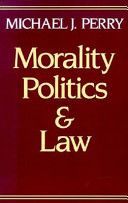
Addressing the proper relation of moral and religious belief to politics and law, especially constitutional law, Perry here discusses whether a common moral foundation exists that is capable of providing, in a diverse social system like ours, consistent guidelines for handling divisive political, policy, religious and constitutional disputes. His study represents a distinctive position in the vast and growing literature on the moral foundations of liberal political and legal life.
This book examines the ways in which reasonable people can disagree about the requirements of political morality. Christopher McMahon argues that there will be a ‘zone of reasonable disagreement’ surrounding most questions of political morality. Moral notions of right and wrong evolve over time as new zones of reasonable disagreement emerge out of old ones; thus political morality is both different in different societies with varying histories, and different now from what it was in the past. McMahon explores this feature of his theory in detail and traces its implications for the possibility of making moral judgments about other polities, past or present. His study sheds light on an important and often overlooked aspect of political life, and will be of interest to a wide range of readers in moral and political philosophy and in political theory.
Information and Communication Technologies (ICTs) have profoundly changed many aspects of life, including the nature of entertainment, work, communication, education, healthcare, industrial production and business, social relations and conflicts. They have had a radical and widespread impact on our moral lives and hence on contemporary ethical debates. The Cambridge Handbook of Information and Computer Ethics provides an ambitious and authoritative introduction to the field, with discussions of a range of topics including privacy, ownership, freedom of speech, responsibility, technological determinism, the digital divide, cyber warfare, and online pornography. It offers an accessible and thoughtful survey of the transformations brought about by ICTs and their implications for the future of human life and society, for the evaluation of behaviour, and for the evolution of moral values and rights. It will be a valuable book for all who are interested in the ethical aspects of the information society in which we live.
ما از اخلاق چه انتظاری داریم؟ این سوال شاید تاحدودی برای عموم مردم و یا متخصصان این رشته قابل پاسخ باشد؛ اینکه خوب بودن را به ما بیاموزد و در تنظیم روابط فردی م...

جشن کتاب تهران به ایستگاه سی و یکم رسیده است. حال و احوال نشر کتاب خوب نیست و باید فرهنگدوستان را به خرید و هدیه دادن کتاب ترغیب نمود. خانه اخلاقپژوهان جوان ب...

بنیاد کتابهای اخلاق اسلامی عمدتا پالایش جان از آلودگیها و آراستن آن به زیباییها است. اندیشه محوری این قبیل کتابها آن است که انسان فعلی آنی نیست که باید باشد...

-
0 Comments