Notice: تابع WP_Block_Type_Registry::register به طورنادرست فراخوانی شد. نامهای نوع بلوک نباید حروف بزرگ داشته باشند. لطفاً برای اطلاعات بیشتر، اشکال زدایی در وردپرس را مشاهده کنید. (این پیام در نگارش 5.0.0 افزوده شده است.) in /home/ethicsho/public_html/wp-includes/functions.php on line 5313
Warning: Use of undefined constant TDC_PATH_LEGACY - assumed 'TDC_PATH_LEGACY' (this will throw an Error in a future version of PHP) in /home/ethicsho/public_html/wp-content/plugins/td-composer/td-composer.php on line 109
Warning: Use of undefined constant TDSP_THEME_PATH - assumed 'TDSP_THEME_PATH' (this will throw an Error in a future version of PHP) in /home/ethicsho/public_html/wp-content/plugins/td-composer/td-composer.php on line 113 بایگانیهای Industries/ Social Aspects - خانه اخلاق پژوهان جوان Notice: Trying to access array offset on value of type bool in /home/ethicsho/public_html/wp-content/plugins/wp-ulike/inc/general-functions.php on line 807
Freedom of the sort implicated in acting freely or with free will is important to the truth of different sorts of moral judgment, such as judgments of moral responsibility and those of moral obligation. Little thought, however, has been invested into whether appraisals of good or evil presuppose free will. This important topic has not commanded the attention it deserves owing to what is perhaps a prevalent assumption that freedom leaves judgments concerning good and evil largely unaffected. The central aim of this book is to dispute this assumption by arguing for the relevance of free will to the truth of two sorts of such judgment: welfare-ranking judgments or judgments of personal well-being (when is one’s life intrinsically good for the one who lives it?), and world-ranking judgments (when is a possible world intrinsically better than another?). The book also examines free will’s impact on the truth of such judgments for central issues in moral obligation and in the free will debate. This book should be of interest to those working on intrinsic value, personal well-being, moral obligation, and free will.
Explores concepts of vengeance, revenge fantasies, and the granting or withholding of forgiveness as they are manifested to the therapist during treatment. Argues that revenge is usually expressed in one of two ways, and categorizes patients into two archetypes: the Exploited- Repressive Individual and the Vindictive Character. Includes separate chapters on revenge and forgiveness as they are expressed by children and adolescents, and by offenders.
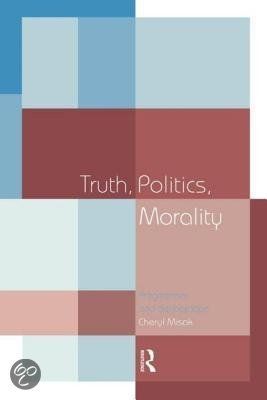
Can we criticize those who hold beliefs which are likely to be wrong? Or must we abandon notions of truth and objectivity and claim that certain beliefs are best for us while incompatible beliefs are best for others? Truth, Politics, Moralityaddresses this crucial issue and its implications for democracy by arguing that the notion of truth ought to be returned to the center of moral and political philosophy. Cheryl Misak persuasively makes a case for a certain kind of pragmatism in which a true belief is one that could not be improved by inquiry, nor defeated by experience or argument. Her compelling discussion makes sense of the idea that, despite conflict, pluralism, and the expression of difference, our moral and political beliefs aim at truth and can be subject to justified criticism.
ما از اخلاق چه انتظاری داریم؟ این سوال شاید تاحدودی برای عموم مردم و یا متخصصان این رشته قابل پاسخ باشد؛ اینکه خوب بودن را به ما بیاموزد و در تنظیم روابط فردی م...

جشن کتاب تهران به ایستگاه سی و یکم رسیده است. حال و احوال نشر کتاب خوب نیست و باید فرهنگدوستان را به خرید و هدیه دادن کتاب ترغیب نمود. خانه اخلاقپژوهان جوان ب...

بنیاد کتابهای اخلاق اسلامی عمدتا پالایش جان از آلودگیها و آراستن آن به زیباییها است. اندیشه محوری این قبیل کتابها آن است که انسان فعلی آنی نیست که باید باشد...

-
0 Comments