Notice: تابع WP_Block_Type_Registry::register به طورنادرست فراخوانی شد. نامهای نوع بلوک نباید حروف بزرگ داشته باشند. لطفاً برای اطلاعات بیشتر، اشکال زدایی در وردپرس را مشاهده کنید. (این پیام در نگارش 5.0.0 افزوده شده است.) in /home/ethicsho/public_html/wp-includes/functions.php on line 5313
Warning: Use of undefined constant TDC_PATH_LEGACY - assumed 'TDC_PATH_LEGACY' (this will throw an Error in a future version of PHP) in /home/ethicsho/public_html/wp-content/plugins/td-composer/td-composer.php on line 109
Warning: Use of undefined constant TDSP_THEME_PATH - assumed 'TDSP_THEME_PATH' (this will throw an Error in a future version of PHP) in /home/ethicsho/public_html/wp-content/plugins/td-composer/td-composer.php on line 113 بایگانیهای Hobbes, Thomas - Ethics - خانه اخلاق پژوهان جوان Notice: Trying to access array offset on value of type bool in /home/ethicsho/public_html/wp-content/plugins/wp-ulike/inc/general-functions.php on line 807
The modern university is sustained by academic freedom; it guarantees higher education’s independence, its quality, and its success in educating students. The need to uphold those values would seem obvious. Yet the university is presently under siege from all corners; workers are being exploited with paltry salaries for full-time work, politics and profit rather than intellectual freedom govern decision-making, and professors are being monitored for the topics they teach.No University Is an Islandoffers a comprehensive account of the social, political, and cultural forces undermining academic freedom. At once witty and devastating, it confronts these threats with exceptional frankness, then offers a prescription for higher education’s renewal. In an insider’s account of how the primary organization for faculty members nationwide has fought the culture wars, Cary Nelson, the current President of the American Association of University Professors, unveils struggles over governance and unionization and the increasing corporatization of higher education. Peppered throughout with previously unreported, and sometimes incendiary, higher education anecdotes, Nelson is at his flame-throwing best.The book calls on higher education’s advocates of both the Left and the Right to temper conviction with tolerance and focus on higher education’s real injustices. Nelson demands we stop denying teachers, student workers, and other employees a living wage and basic rights. He urges unions to take up the larger cause of justice. And he challenges his own and other academic organizations to embrace greater democracy.With broad and crucial implications for the future,No University Is an Islandwill be the benchmark against which we measure the current definitive struggle for academic freedom.
Sullivan and Kymlicka seek to provide an alternative to post-9/11 pessimism about the ability of serious ethical dialogue to resolve disagreements and conflict across national, religious, and cultural differences. It begins by acknowledging the gravity of the problem: on our tightly interconnected planet, entire populations look for moral guidance to a variety of religious and cultural traditions, and these often stiffen, rather than soften, opposing moral perceptions. How, then, to set minimal standards for the treatment of persons while developing moral bases for coexistence and cooperation across different ethical traditions? The Globalization of Ethics argues for a tempered optimism in approaching these questions. Its distinguished contributors report on some of the most globally influential traditions of ethical thought in order to identify the resources within each tradition for working toward consensus and accommodation among the ethical traditions that shape the contemporary world.
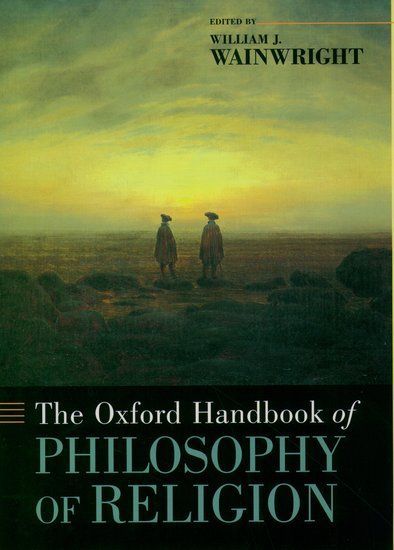
The philosophy of religion as a distinct discipline is an innovation of the last two hundred years, but its central topics–the existence and nature of the divine, humankind’s relation to it, the nature of religion and its place in human life–have been with us since the inception ofphilosophy. Philosophers have long critically examined the truth of (and rational justification for) religious claims, and have explored such philosophically interesting phenomena as faith, religious experience and the distinctive features of religious discourse. The second half of thetwentieth-century has been an especially fruitful period, with philosophers using new developments in logic and epistemology to mount both sophisticated defenses of, and attacks on, religious claims. The Oxford Handbook of Philosophy of Religion contains newly commissioned chapters by 21 prominent experts who cover the field in a comprehensive but accessible manner. Each chapter is expository, critical, and representative of a distinctive viewpoint. The Handbook is divided into two sections.The first, “Problems,” covers the most frequently discussed topics, among them arguments for God’s existence, the problem of evil, and religious epistemology. The second is called “Approaches” and contains four essays assessing the advantages and disadvantages of different methods of practicingphilosophy of religion. The Handbook offers contributors of high stature who present substantive and in-depth treatment of the most central topics. It is a must-have reference for anyone with an interest in philosophy and religion.
Jesse Prinz argues that recent work in philosophy, neuroscience, and anthropology supports two radical hypotheses about the nature of morality: moral values are based on emotional responses, and these emotional responses are inculcated by culture, not hard-wired through natural selection. In the first half of the book, Jesse Prinz defends the hypothesis that morality has an emotional foundation. Evidence from brain imaging, social psychology, and psychopathology suggest that, when we judge something to be right or wrong, we are merely expressing our emotions. Prinz argues that these emotions do not track objective features of reality; rather, the rightness and wrongness of an act consists in the fact that people are disposed to have certain emotions towards it. In the second half of the book, he turns to a defense of moral relativism. Moral facts depend on emotional responses, and emotional responses vary from culture to culture. Prinz surveys the anthropological record to establish moral variation, and he draws on cultural history to show how attitudes toward practices such as cannibalism and marriage change over time. He also criticizes evidence from animal behavior and child development that has been taken to support the claim that moral attitudes are hard-wired by natural selection. Prinz concludes that there is no single true morality, but he also argues that some moral values are better than others; moral progress is possible. Throughout the book, Prinz relates his views to contemporary and historical work in philosophical ethics. His views echo themes in the writings of David Hume and Friedrich Nietzsche, but Prinz supports, extends, and revises these classic theories using the resources of cutting-edge cognitive science. The Emotional Construction of Morals will stimulate and challenge anyone who is curious about the nature and origin of moral values.
ما از اخلاق چه انتظاری داریم؟ این سوال شاید تاحدودی برای عموم مردم و یا متخصصان این رشته قابل پاسخ باشد؛ اینکه خوب بودن را به ما بیاموزد و در تنظیم روابط فردی م...

جشن کتاب تهران به ایستگاه سی و یکم رسیده است. حال و احوال نشر کتاب خوب نیست و باید فرهنگدوستان را به خرید و هدیه دادن کتاب ترغیب نمود. خانه اخلاقپژوهان جوان ب...

بنیاد کتابهای اخلاق اسلامی عمدتا پالایش جان از آلودگیها و آراستن آن به زیباییها است. اندیشه محوری این قبیل کتابها آن است که انسان فعلی آنی نیست که باید باشد...

-
0 Comments