Notice: تابع WP_Block_Type_Registry::register به طورنادرست فراخوانی شد. نامهای نوع بلوک نباید حروف بزرگ داشته باشند. لطفاً برای اطلاعات بیشتر، اشکال زدایی در وردپرس را مشاهده کنید. (این پیام در نگارش 5.0.0 افزوده شده است.) in /home/ethicsho/public_html/wp-includes/functions.php on line 5313
Warning: Use of undefined constant TDC_PATH_LEGACY - assumed 'TDC_PATH_LEGACY' (this will throw an Error in a future version of PHP) in /home/ethicsho/public_html/wp-content/plugins/td-composer/td-composer.php on line 109
Warning: Use of undefined constant TDSP_THEME_PATH - assumed 'TDSP_THEME_PATH' (this will throw an Error in a future version of PHP) in /home/ethicsho/public_html/wp-content/plugins/td-composer/td-composer.php on line 113 بایگانیهای Heroes - خانه اخلاق پژوهان جوان Notice: Trying to access array offset on value of type bool in /home/ethicsho/public_html/wp-content/plugins/wp-ulike/inc/general-functions.php on line 807
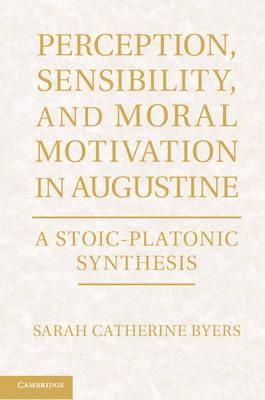
“This book argues that Augustine assimilated the Stoic theory of perception into his theories of motivation, affectivity, therapy for the passions, and moral progress. Using his sermons to elucidate his treatises, Sarah Catherine Byers demonstrates how Augustine enriched Stoic cognitivism with Platonism to develop a fuller and coherent theory of action. That theory underlies his account of moral development, including his account of the mind,Ŵs reception of grace. By analyzing Augustine,Ŵs engagement with Cicero, Seneca, Plotinus, Ambrose, Jerome, Origen, and Philo of Alexandria, Byers sheds new light on a major thinker of the early Christian world whose work is of critical importance for understanding key and recurring themes in Western philosophy”–
Bosses, partners, governments, corporations – all can act as bullies in our lives, intimidating us to their will. But changing their behavior may be in our power. In this provocative, visionary book, Carol Bly examines some of this century’s most far-ranging concepts about how to nurture ethical human beings and presents them through the lens of excellent contemporary literature. Changing the Bully Who Rules the World is a book of hopeful, practical ideas that can hasten ethical change both in our thinking and in our behavior. Through an anthology of exceptional literature, Bly’s book asks the reader to contemplate anew the voices she presents – including works by Charles Baxter, Donald Hall, Jim Harrison, Mark Helprin, Denise Levertov, Thomas McGrath, Joyce Carol Oates, Mary Oliver, Katha Pollitt, Alice Walker, Tobias Wolff, and many others – and to consider them in terms of the ideas of important thinkers in human behavior and our own experiences.
Does Farmer Field really know his prize cow, Daisy, is in the field? When is an unexpected exam not wholly unexpected? Are all bachelors (really) unmarried? Martin Cohen’s bestselling 101 Philosophy Problems is a witty and engaging introduction to philosophy, covering classical as well as contemporary problems from the fields of medical ethics, modern physics and artificial intelligence. For the third edition, many of the problems have been revised and there are several brand new ones, including Lewis Carroll’s problem of people who don’t eat lentils and Poincare’s problem of the gaseous people whose measurements keep changing. With an updated glossary of helpful terms and possible solutions to the problems at the end of the book, 101 Philosophy Problems is essential reading for anyone coming to philosophy for the first time.
Why do people lie? Do gender and personality differences affect how people lie? How can lies be detected? Detecting Lies and Deceit provides the most comprehensive review of deception to date. This revised edition provides an up-to-date account of deception research and discusses the working and efficacy of the most commonly used lie detection tools, including: Behaviour Analysis Interview Statement Validity Assessment Reality Monitoring Scientific Content Analysis Several different polygraph tests Voice Stress Analysis Thermal Imaging EEG-P300 Functional Magnetic Resonance Imaging (fMRI) All three aspects of deception are covered: nonverbal cues, speech and written statement analysis and (neuro)physiological responses. The most common errors in lie detection are discussed and practical guidelines are provided to help professionals improve their lie detection skills. Detecting Lies and Deceit is a must-have resource for students, academics and professionals in psychology, criminology, policing and law. Published in the Wiley Series in the Psychology of Crime, Policing and Law Seried Editors: Professor Graham Davies and Professor Ray Bull, University of Leicester, UK
ما از اخلاق چه انتظاری داریم؟ این سوال شاید تاحدودی برای عموم مردم و یا متخصصان این رشته قابل پاسخ باشد؛ اینکه خوب بودن را به ما بیاموزد و در تنظیم روابط فردی م...

جشن کتاب تهران به ایستگاه سی و یکم رسیده است. حال و احوال نشر کتاب خوب نیست و باید فرهنگدوستان را به خرید و هدیه دادن کتاب ترغیب نمود. خانه اخلاقپژوهان جوان ب...

بنیاد کتابهای اخلاق اسلامی عمدتا پالایش جان از آلودگیها و آراستن آن به زیباییها است. اندیشه محوری این قبیل کتابها آن است که انسان فعلی آنی نیست که باید باشد...

-
0 Comments