Notice: تابع WP_Block_Type_Registry::register به طورنادرست فراخوانی شد. نامهای نوع بلوک نباید حروف بزرگ داشته باشند. لطفاً برای اطلاعات بیشتر، اشکال زدایی در وردپرس را مشاهده کنید. (این پیام در نگارش 5.0.0 افزوده شده است.) in /home/ethicsho/public_html/wp-includes/functions.php on line 5313
Warning: Use of undefined constant TDC_PATH_LEGACY - assumed 'TDC_PATH_LEGACY' (this will throw an Error in a future version of PHP) in /home/ethicsho/public_html/wp-content/plugins/td-composer/td-composer.php on line 109
Warning: Use of undefined constant TDSP_THEME_PATH - assumed 'TDSP_THEME_PATH' (this will throw an Error in a future version of PHP) in /home/ethicsho/public_html/wp-content/plugins/td-composer/td-composer.php on line 113 بایگانیهای Health Services Administration/ Moral And Ethical Aspects - خانه اخلاق پژوهان جوان Notice: Trying to access array offset on value of type bool in /home/ethicsho/public_html/wp-content/plugins/wp-ulike/inc/general-functions.php on line 807
Neuroscience has dramatically increased understanding of how mental states and processes are realized by the brain, thus opening doors for treating the multitude of ways in which minds become dysfunctional. This book explores questions such as when is it permissible to alter a person’s memories, influence personality traits or read minds? What can neuroscience tell us about free will, self-control, self-deception and the foundations of morality? The view of neuroethics offered here argues that many of our new powers to read ,alter and control minds are not entirely unparalleled with older ones. They have, however, expanded to include almost all our social, political and ethical decisions. Written primarily for graduate students, this book will appeal to anyone with an interest in the more philosophical and ethical aspects of the neurosciences.
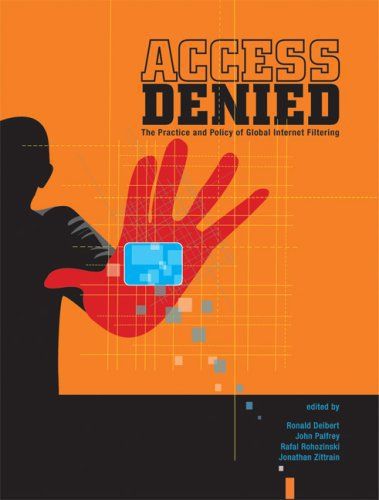
Many countries around the world block or filter Internet content, denying access to information—often about politics, but also relating to sexuality, culture, or religion—that they deem too sensitive for ordinary citizens. Access Denied documents and analyzes Internet filtering practices in over three dozen countries, offering the first rigorously conducted study of this accelerating trend.Internet filtering takes place in at least forty states worldwide including many countries in Asia and the Middle East and North Africa. Related Internet content control mechanisms are also in place in Canada, the United States and a cluster of countries in Europe. Drawing on a just-completed survey of global Internet filtering undertaken by the OpenNet Initiative (a collaboration of the Berkman Center for Internet and Society at Harvard Law School, the Citizen Lab at the University of Toronto, the Oxford Internet Institute at Oxford University, and the University of Cambridge) and relying on work by regional experts and an extensive network of researchers, Access Denied examines the political, legal, social, and cultural contexts of Internet filtering in these states from a variety of perspectives. Chapters discuss the mechanisms and politics of Internet filtering, the strengths and limitations of the technology that powers it, the relevance of international law, ethical considerations for corporations that supply states with the tools for blocking and filtering, and the implications of Internet filtering for activist communities that increasingly rely on Internet technologies for communicating their missions.Reports on Internet content regulation in forty different countries follow, with each country profile outlining the types of content blocked by category and documenting key findings.Contributors: Ross Anderson, Malcolm Birdling, Ronald Deibert, Robert Faris, Vesselina Haralampieva, Steven Murdoch, Helmi Noman, John Palfrey, Rafal Rohozinski, Mary Rundle, Nart Villeneuve, Stephanie Wang, and Jonathan Zittrain
This collection of essays, memoirs, poems, stories, and artwork looks at globalization as a worldwide exchange of art and ideas. Writing the World focuses on the cultural realities of globalism—the opportunities it provides to learn from other cultures. This knowledge, argue David Rothenberg and Wandee Pryor in their introduction, can be power: “When all of us learn enough about our differences to respect the diversity that exists, we will be unable to pretend we are the same. We will never accept the old innocence and ignorance bred by oppression and exploitation.” For the contributors to Writing the World, to dream of the global village is to see the world not as a vast market but as a place of shared values and linked wonder.”It is time to listen to the many literate voices the world speaks,” say Rothenberg and Pryor. The voices of Writing the World range from Arundhati Roy on the “colonization of knowledge” in her essay “The Ladies Have Feelings, So… Shall We Leave It to the Experts?” to Naomi Klein’s meditation on fences, ownership, and property. They include Bill McKibben on women farmers in Bangladesh, Hannes Westberg’s account of being shot by Swedish police at a demonstration, James Barilla on invading and indigenous plant species in “The Aliens in the Garden,” and many other vivid, compelling, and provocative writings that celebrate—and illustrate—”the poetry of cultural contact.” Artists and photographers whose work appears in the book include Adam Clayman, Jenny Matthews, Richard Robinson, and Arpita Singh.
ما از اخلاق چه انتظاری داریم؟ این سوال شاید تاحدودی برای عموم مردم و یا متخصصان این رشته قابل پاسخ باشد؛ اینکه خوب بودن را به ما بیاموزد و در تنظیم روابط فردی م...

جشن کتاب تهران به ایستگاه سی و یکم رسیده است. حال و احوال نشر کتاب خوب نیست و باید فرهنگدوستان را به خرید و هدیه دادن کتاب ترغیب نمود. خانه اخلاقپژوهان جوان ب...

بنیاد کتابهای اخلاق اسلامی عمدتا پالایش جان از آلودگیها و آراستن آن به زیباییها است. اندیشه محوری این قبیل کتابها آن است که انسان فعلی آنی نیست که باید باشد...

-
0 Comments