Notice: تابع WP_Block_Type_Registry::register به طورنادرست فراخوانی شد. نامهای نوع بلوک نباید حروف بزرگ داشته باشند. لطفاً برای اطلاعات بیشتر، اشکال زدایی در وردپرس را مشاهده کنید. (این پیام در نگارش 5.0.0 افزوده شده است.) in /home/ethicsho/public_html/wp-includes/functions.php on line 5313
Warning: Use of undefined constant TDC_PATH_LEGACY - assumed 'TDC_PATH_LEGACY' (this will throw an Error in a future version of PHP) in /home/ethicsho/public_html/wp-content/plugins/td-composer/td-composer.php on line 109
Warning: Use of undefined constant TDSP_THEME_PATH - assumed 'TDSP_THEME_PATH' (this will throw an Error in a future version of PHP) in /home/ethicsho/public_html/wp-content/plugins/td-composer/td-composer.php on line 113 بایگانیهای Governmental Investigations - Saskatchewan - خانه اخلاق پژوهان جوان Notice: Trying to access array offset on value of type bool in /home/ethicsho/public_html/wp-content/plugins/wp-ulike/inc/general-functions.php on line 807
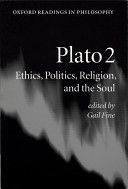
These two volumes, edited by the distinguished Cornell University Plato scholar Gail Fine, contain some 37 articles on various aspects of Plato’s philosophy. Most of the articles have been previously published, although some have been revised for these volumes. None dates from before 1970 and almost all are by scholars from the English-speaking world. These volumes will be widely understood to be doing for Plato scholarship in the last thirty years what the three well-known volumes edited by Gregory Vlastos (two on Plato, one on Socrates) did for Plato scholarship in the period between the end of World War II and 1970. Just as Vlastos attempted to assemble the best of Anglo-American scholarship to provide a snapshot of the contemporary ‘state-of-the-art,’ so Fine’s volumes will no doubt be taken to have done the same. Remarkably, most of the essays in Fine’s volumes cover a range of topics and employ a method strikingly similar to those in Vlastos’ volumes.
The quality of the essays is uniformly very high. A number of them will become or already have become standard starting-points for further discussion of a topic. A re-reading of the essays in the Vlastos volumes after reading these would no doubt be illuminating. Having said this much, it is truly remarkable that in roughly 1000 pages of material there is hardly even a mention of approaches to Plato in the last generation other than that of what can best be termed the Anglo-American analytic tradition.
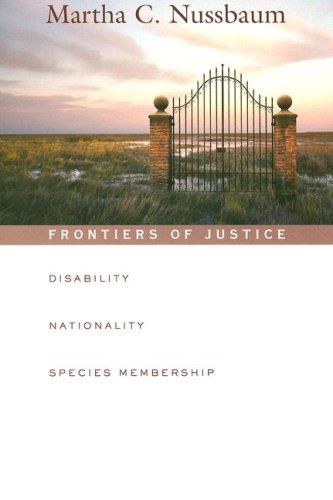
Theories of social justice are necessarily abstract, reaching beyond the particular and the immediate to the general and the timeless. Yet such theories, addressing the world and its problems, must respond to the real and changing dilemmas of the day. A brilliant work of practical philosophy, Frontiers of Justice is dedicated to this proposition. Taking up three urgent problems of social justice neglected by current theories and thus harder to tackle in practical terms and everyday life, Martha Nussbaum seeks a theory of social justice that can guide us to a richer, more responsive approach to social cooperation.The idea of the social contract–especially as developed in the work of John Rawls–is one of the most powerful approaches to social justice in the Western tradition. But as Nussbaum demonstrates, even Rawls’s theory, suggesting a contract for mutual advantage among approximate equals, cannot address questions of social justice posed by unequal parties. How, for instance, can we extend the equal rights of citizenship–education, health care, political rights and liberties–to those with physical and mental disabilities? How can we extend justice and dignified life conditions to all citizens of the world? And how, finally, can we bring our treatment of nonhuman animals into our notions of social justice? Exploring the limitations of the social contract in these three areas, Nussbaum devises an alternative theory based on the idea of “capabilities.” She helps us to think more clearly about the purposes of political cooperation and the nature of political principles–and to look to a future of greater justice for all.
ما از اخلاق چه انتظاری داریم؟ این سوال شاید تاحدودی برای عموم مردم و یا متخصصان این رشته قابل پاسخ باشد؛ اینکه خوب بودن را به ما بیاموزد و در تنظیم روابط فردی م...

جشن کتاب تهران به ایستگاه سی و یکم رسیده است. حال و احوال نشر کتاب خوب نیست و باید فرهنگدوستان را به خرید و هدیه دادن کتاب ترغیب نمود. خانه اخلاقپژوهان جوان ب...

بنیاد کتابهای اخلاق اسلامی عمدتا پالایش جان از آلودگیها و آراستن آن به زیباییها است. اندیشه محوری این قبیل کتابها آن است که انسان فعلی آنی نیست که باید باشد...

-
0 Comments