Notice: تابع WP_Block_Type_Registry::register به طورنادرست فراخوانی شد. نامهای نوع بلوک نباید حروف بزرگ داشته باشند. لطفاً برای اطلاعات بیشتر، اشکال زدایی در وردپرس را مشاهده کنید. (این پیام در نگارش 5.0.0 افزوده شده است.) in /home/ethicsho/public_html/wp-includes/functions.php on line 5313
Warning: Use of undefined constant TDC_PATH_LEGACY - assumed 'TDC_PATH_LEGACY' (this will throw an Error in a future version of PHP) in /home/ethicsho/public_html/wp-content/plugins/td-composer/td-composer.php on line 109
Warning: Use of undefined constant TDSP_THEME_PATH - assumed 'TDSP_THEME_PATH' (this will throw an Error in a future version of PHP) in /home/ethicsho/public_html/wp-content/plugins/td-composer/td-composer.php on line 113 بایگانیهای Global Warming - خانه اخلاق پژوهان جوان Notice: Trying to access array offset on value of type bool in /home/ethicsho/public_html/wp-content/plugins/wp-ulike/inc/general-functions.php on line 807
Jeremy Carrette argues that the psychology of religion is no longer sustainable without a social critique, and that as William James predicted, the project of the modernist psychology of religion has failed. Controversially he champions greater social and philosophical analysis within the field to challenge the political naivety and disciplinary illusions of the traditional approaches to psychology of religion. Carrette discusses the relevance of the social and economic factors surrounding the debates of psychology and religion, through three critical examples: psychoanalysis humanistic psychology cognitive neuroscience. A Critical Psychology of Religion provides a new dimension to the debates surrounding religious experience. It will be of interest to students and researchers in the fields of critical psychology, religious experience and the psychology of religion and extends aninterdisciplinary challenge to the separation of psychology, sociology, politics, economics and religion.
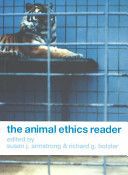
The Animal Ethics Readeris the first comprehensive, state-of-the-art anthology of readings on this substantial area of study and interest. A subject that regularly captures the headlines, the book is designed to appeal to anyone interested in tracing the history of the subject, as well as providing a powerful insight into the debate as it has developed. The recent wealth of material published in this area has not, until now, been collected in one volume. Readings are arranged thematically, carefully presenting a balanced representation of the subject as it stands. It will be essential reading for students taking a course in the subject as well as being of considerable interest to the general reader. Articles are arranged under the following headings: Theories of Animal Ethics; Animal Capacities; Animals for Food; Animal Experimentation; Genetic Engineering of Animals; Ethics and Wildlife; Zoos, Aquaria, and Animals in Entertainment; Companion Animals; Legal Rights for Animals. Readings from leading experts in the field including Peter Singer, Mary Midgley and Bernard Rollin are featured as well as selections from Donald Griffin, Mark Bekoff, Jane Goodall, Raymond Frey, Barbara Orlans, Tom Regan, and Baird Callicott. There is an emphasis on balancing classic and contemporary readings with a view to presenting debates as they stand at this point in time. Each chapter is introduced by the editors and study questions feature at the end. The foreword has been written by Bernard Rollin.
Alasdair MacIntyre argues that Freud’s conception of the unconscious is complicated by his tendency to use the term in two different ways. MacIntyre shows how Freud uses the term “unconscious” both as a straightforward description of psychological phenomena, and as an evaluative notion to explain the links between childhood events and adult behavior. This clarification helps to shed light on the many misunderstandings of psychoanalysis, and to separate out what is and what is not of lasting value in Freud’s account of the unconscious. This new edition includes a substantial new preface by the author, in which he discusses repression, determinism, transference, and “practical rationality,” and offers a rare comparison of Aristotle and Lacan on the concept of desire. MacIntyre takes the opportunity to reflect both on the reviews and criticisms of the first edition and also on his own philosophical stance.
ما از اخلاق چه انتظاری داریم؟ این سوال شاید تاحدودی برای عموم مردم و یا متخصصان این رشته قابل پاسخ باشد؛ اینکه خوب بودن را به ما بیاموزد و در تنظیم روابط فردی م...

جشن کتاب تهران به ایستگاه سی و یکم رسیده است. حال و احوال نشر کتاب خوب نیست و باید فرهنگدوستان را به خرید و هدیه دادن کتاب ترغیب نمود. خانه اخلاقپژوهان جوان ب...

بنیاد کتابهای اخلاق اسلامی عمدتا پالایش جان از آلودگیها و آراستن آن به زیباییها است. اندیشه محوری این قبیل کتابها آن است که انسان فعلی آنی نیست که باید باشد...

-
0 Comments