Notice: تابع WP_Block_Type_Registry::register به طورنادرست فراخوانی شد. نامهای نوع بلوک نباید حروف بزرگ داشته باشند. لطفاً برای اطلاعات بیشتر، اشکال زدایی در وردپرس را مشاهده کنید. (این پیام در نگارش 5.0.0 افزوده شده است.) in /home/ethicsho/public_html/wp-includes/functions.php on line 5313
Warning: Use of undefined constant TDC_PATH_LEGACY - assumed 'TDC_PATH_LEGACY' (this will throw an Error in a future version of PHP) in /home/ethicsho/public_html/wp-content/plugins/td-composer/td-composer.php on line 109
Warning: Use of undefined constant TDSP_THEME_PATH - assumed 'TDSP_THEME_PATH' (this will throw an Error in a future version of PHP) in /home/ethicsho/public_html/wp-content/plugins/td-composer/td-composer.php on line 113 بایگانیهای Generosity - خانه اخلاق پژوهان جوان Notice: Trying to access array offset on value of type bool in /home/ethicsho/public_html/wp-content/plugins/wp-ulike/inc/general-functions.php on line 807
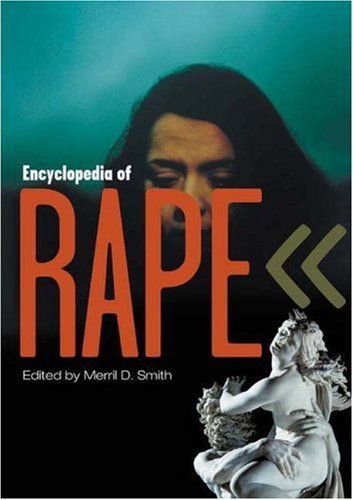
Rape has been perpetrated throughout history and worldwide, and today ours has been called a rape culture, because sexual violence, mainly against women and children, is prevalent and tolerated to some extent. The Encyclopedia of Rape offers 185 entries in an A-to-Z essay format covering the historical scope and magnitude of the issue in the United States and globally. Written by a host of scholars from diverse fields, it provides informed perspectives on the key dimensions of the topic, from concepts, social movements, offenders, high-profile cases, legislation, influential activists, landmark texts, and victimology to representations in literature and art. This solid, accessible ready-reference will allow students and the general reader to contextualize current events and reading and viewing in history, literature and the Bible, film, art history, gender studies, psychology, criminology, popular culture, and more. Rape is a topic of perpetual relevance and remains deeply controversial, as it involves the sexual act. Although women are the primary targets of rape and thus the focus of discussion of it, the rape of men, children, and animals is also considered in the encyclopedia. Up to date, it contains insight on the manifestations of rape today, including as a tool of ethnic cleansing in Bosnia and genocide in Rwanda, the Catholic Church priest scandals, and drug-facilitated date rape. Added value comes from an abundance of statistics, suggested reading for further research per entry, chronology, resource guide, and appendix listing entries by topic.
This is a 3-in-1 reference book. It gives a complete medical dictionary covering hundreds of terms and expressions relating to abortion. It also gives extensive lists of bibliographic citations. Finally, it provides information to users on how to update their knowledge using various Internet resources. The book is designed for physicians, medical students preparing for Board examinations, medical researchers, and patients who want to become familiar with research dedicated to abortion. If your time is valuable, this book is for you. First, you will not waste time searching the Internet while missing a lot of relevant information. Second, the book also saves you time indexing and defining entries. Finally, you will not waste time and money printing hundreds of web pages.
What is good? How can we know, and how important is it? In this book Richard Kraut, one of our most respected analytical philosophers, reorients these questions around the notion of what causes human beings to flourish–that is, what is good for us. Observing that we can sensibly talk about what is good for plants and animals no less than what is good for people, Kraut advocates a general principle that applies to the entire world of living things: what is good for complex organisms consists in the maturation and exercise of their natural powers.Drawing on the insights of ancient Greek philosophy, Kraut develops this thought into a good-centered moral philosophy, an “ethics of well-being” that requires all of our efforts to do some good. Even what is good of a kind–good poems no less than good people–must be good for someone. Pleasure plays a key role in this idea of flourishing life, but Kraut opposes the current philosophical orthodoxy of well-being, which views a person’s welfare as a construct of rational desires or plans, actual or ideal. The practical upshot of Kraut’s theory is that many common human pursuits–for riches, fame, domination–are in themselves worthless, while some of the familiar virtues–justice, honesty, and autonomy–are good for every human being.
ما از اخلاق چه انتظاری داریم؟ این سوال شاید تاحدودی برای عموم مردم و یا متخصصان این رشته قابل پاسخ باشد؛ اینکه خوب بودن را به ما بیاموزد و در تنظیم روابط فردی م...

جشن کتاب تهران به ایستگاه سی و یکم رسیده است. حال و احوال نشر کتاب خوب نیست و باید فرهنگدوستان را به خرید و هدیه دادن کتاب ترغیب نمود. خانه اخلاقپژوهان جوان ب...

بنیاد کتابهای اخلاق اسلامی عمدتا پالایش جان از آلودگیها و آراستن آن به زیباییها است. اندیشه محوری این قبیل کتابها آن است که انسان فعلی آنی نیست که باید باشد...

-
0 Comments